

Lao Cai – a mountainous border province in Northwest Vietnam with great potential.
Strategically located within the Kunming – Lao Cai – Hanoi – Hai Phong – Quang Ninh economic belt, Lao Cai province serves as an important gateway connecting Vietnam and ASEAN with Southwest China.
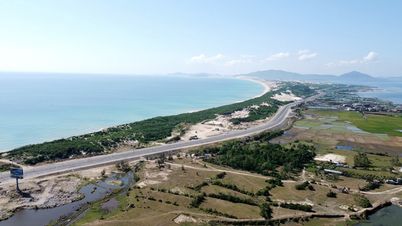
Lao Cai currently possesses a relatively comprehensive transportation network, including the Noi Bai – Lao Cai expressway, which is part of the Kunming (China) – Hai Phong economic belt. Recently, the Ministry of Construction, in coordination with the Provincial People's Committee, commenced the Lao Cai – Hanoi – Hai Phong railway project. In addition, the province is preparing to implement the Sa Pa Airport project, a domestic airport of category 4C, combined with a category II military airport.
On June 12, 2025, the 15th National Assembly passed a resolution merging the former Yen Bai and Lao Cai provinces into the new Lao Cai province. The merger of the two provinces into the new Lao Cai province is a strategic step aimed at streamlining the administrative apparatus, optimizing resources, and promoting sustainable development.
Currently, Lao Cai has over 7,000 operating businesses, creating an annual recruitment demand of approximately 25,000-30,000 skilled workers. This reality requires the Education and Training sector to flexibly apply science and technology, linking training with practical requirements.
Rethink, act decisively.
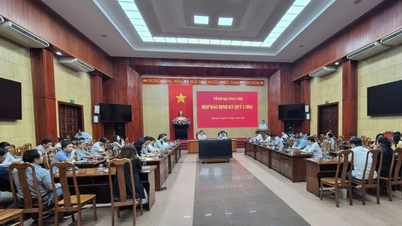
Sharing his vision for overall development, Mr. Nguyen Tuan Anh, Chairman of the People's Committee of Lao Cai province, said: “2025 will be a historically significant year for Lao Cai as we merge the two provinces of Lao Cai and Yen Bai to form the new Lao Cai province. Facing the central government's demands for innovative thinking, decisive action, and using tangible results as a measure, we have determined that this is not just an administrative addition, but a multiplication of combined strength to achieve breakthroughs.”
Following the directives of the Chairman of the People's Committee of Lao Cai province, the province has concretized this spirit in key areas: boldly changing the management method, shifting from management based on experience to management based on data and evidence; promoting the linkage of decentralization and delegation of power with accountability of leaders, creating proactiveness for localities and grassroots levels; and proactively creating a legal framework and resources for the new development phase.
The results of the political system's operation in Lao Cai province are reflected in concrete figures across the fields of education; administrative reform and digital transformation; and labor and vocational training.
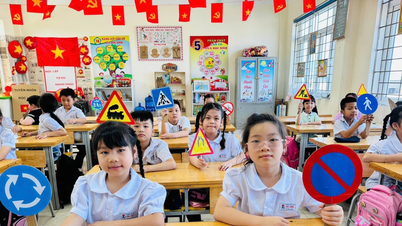
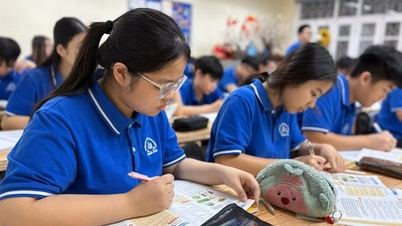
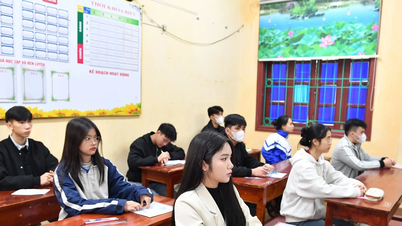
In the field of education, the province won 128 national awards for outstanding students, an increase of 25 awards compared to 2024; the high school graduation rate reached 99.15%.
In the field of administrative reform and digital transformation, the province has uploaded 114 administrative procedures to the National Public Service Portal at levels 3 and 4, with a 100% rate of timely and early processing of applications. 100% of documents have been digitized, and digital school records have been implemented.
Regarding labor and vocational training, by the end of 2025, the province had provided vocational training to 29,500 people, achieving 100% of the plan. The rate of trained workers reached approximately 70%, meeting the needs of more than 7,000 businesses operating in the area.
Speaking to the Education and Times newspaper, Mr. Nguyen Tuan Anh emphasized: “The spirit of matching words with actions in Lao Cai has become a guiding principle in all our actions. We believe that a transparent governance system based on data, centered on human development and citizen satisfaction, is the foundation for Lao Cai to enter a new era of prosperous and civilized development.”
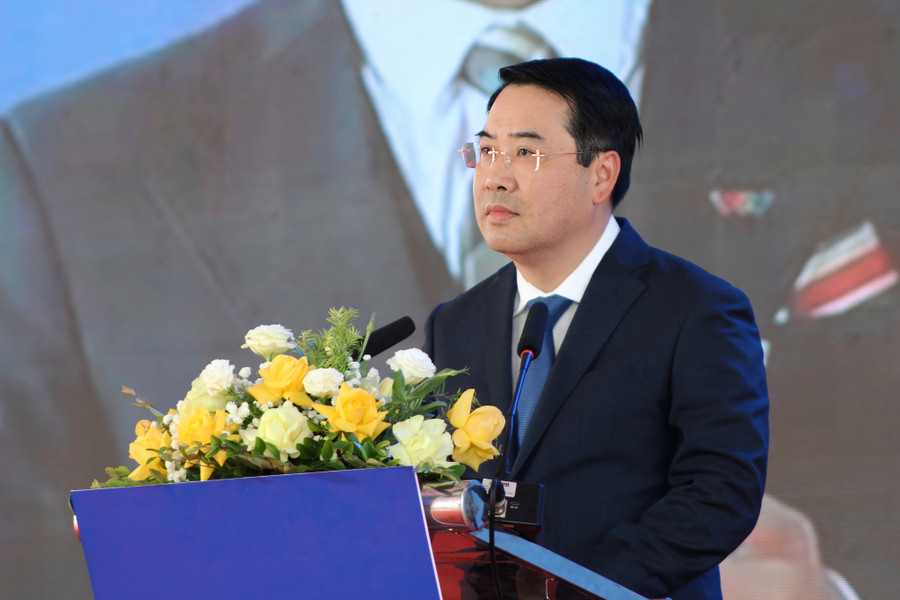
Education – “breakthrough of breakthroughs” in development strategy
In the overall development strategy of Lao Cai province, the Chairman of the Provincial People's Committee affirmed that education and training are placed at the center.
“We recognize that people are the central focus, the subject, and the most important driving force. Therefore, Lao Cai places education and training in a position of ‘breakthrough within breakthrough,’ especially in the context of digital transformation and green economic development,” Mr. Nguyen Tuan Anh shared.
To realize this goal, Lao Cai focuses on four major directions: closely linking training with the needs of businesses; breakthroughs in language for international integration; modernization of management and teaching through digital transformation; and upgrading key training institutions.
Lao Cai's education sector has shifted significantly from a "school as the training institution" model to a "school and enterprise-led training" model, with practical training accounting for 60-70% of the curriculum. The goal is for 85% of graduates to find employment immediately after graduation, directly supporting key economic sectors such as tourism, logistics, and border trade.
Simultaneously, the province is implementing a policy to make English the second language in schools in urban areas; and promoting the teaching of Chinese in border communes and wards to directly serve trade and tourism at border gates.
Lao Cai province has flexibly applied digital transformation, not only as a tool but also as a new educational environment. This includes implementing an electronic education management system, operating with data and evidence; researching and piloting the integration of artificial intelligence into management and teaching; implementing 100% digital student records in general and continuing education institutions; and building an open learning resource repository and a "smart school in mountainous areas" model.
Focus efforts on building key training facilities.
In recent years, Lao Cai province has actively focused its efforts on developing its human resources. The province aims to transform Lao Cai College and Yen Bai Vocational College into leading modern vocational training institutions in the region by 2030; and to support the Thai Nguyen University branch in Lao Cai in becoming a training and research center for the Northwest region.
Speaking about the direction of education and training, the Chairman of the People's Committee of Lao Cai province said:
“The province is not training what it has, but what the economy and society need. We are building a new generation of workers with solid professional skills, digital literacy, and language abilities to confidently enter the new era of national development.”
With its strategically important location and central role in the Northwest region, and in the context of mergers and numerous important political tasks, Lao Cai province is gradually rising and developing rapidly to achieve many outstanding accomplishments.
In the joyous atmosphere of the success of the 14th National Party Congress, the Chairman of the People's Committee of Lao Cai province conveyed a consistent message: Discipline – Creativity – Breakthrough – Development, considering it as the guiding principle for the sustainable development of the locality in the new period.
Source: https://giaoducthoidai.vn/lao-cai-dat-giao-duc-va-dao-tao-la-dot-pha-cua-dot-pha-post765323.html
![[Photo] General Secretary and President To Lam holds telephone conversation with Chairman of the Liberal Democratic Party of Japan and Prime Minister of Japan Takaichi Sanae](https://vphoto.vietnam.vn/thumb/1200x675/vietnam/resource/IMAGE/2026/04/13/1776077840503_a1-bnd-7942-6402-jpg.webp)
![[Image] Expediting land clearance at Alley 310 Nghi Tam to facilitate the construction of Tu Lien Bridge](https://vphoto.vietnam.vn/thumb/1200x675/vietnam/resource/IMAGE/2026/04/14/1776160406551_ndo_br_z7724148990408-9e5d4777e3c4504998b4286178b2e66e-jpg.webp)
![[Photo] General Secretary and President To Lam presents the Politburo's Decision on personnel matters to 4 Party Committees directly under the Central Committee.](https://vphoto.vietnam.vn/thumb/1200x675/vietnam/resource/IMAGE/2026/04/13/1776077847172_a1-bnd-8005-950-jpg.webp)














![[Photo] Prime Minister Le Minh Hung and Prime Minister Robert Fico attend the Slovakia-Vietnam Business Forum](https://vphoto.vietnam.vn/thumb/1200x675/vietnam/resource/IMAGE/2026/04/13/1776075264359_ndo_br_dsc-6775-jpg.webp)




































Comment (0)