 |
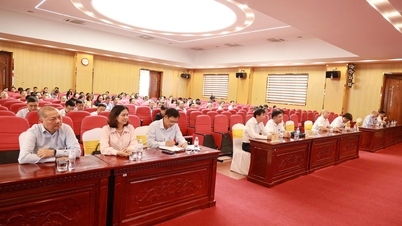
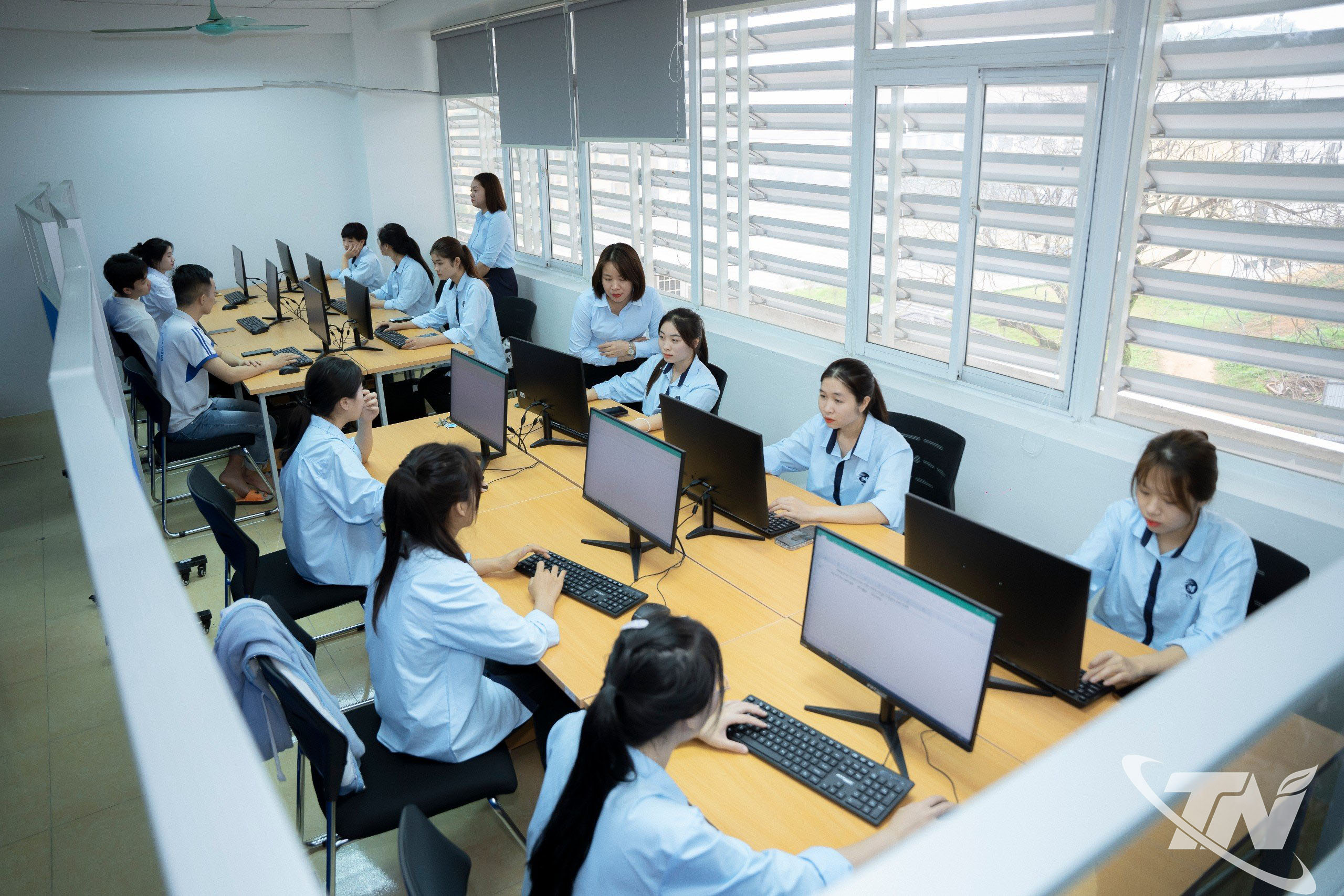
| The learning and research space for students of the University of Information Technology and Communications. |
Faced with a growing demand for skilled labor, many young people and workers in the province have proactively learned Chinese or chosen fields of study that integrate technology and Chinese language to increase their competitive advantage.
According to our survey, the demand for Chinese-speaking personnel is currently twice as high as for Japanese and 5.5 times higher than for Korean . Given the increasingly stringent requirements from foreign employers, the shift from "purely technical labor" to "multitasking labor"—combining technical expertise with proficiency in Chinese—is becoming inevitable. This is seen as a "ticket" for workers to seize high-quality job opportunities right in their homeland.
In reality, proficiency in Chinese provides a clear competitive advantage, resulting in 30-50% higher income compared to regular employees.



Mr. Nguyen Van Son, a machinery maintenance and repair engineer at DBG Technology Vietnam Co., Ltd., shared: “Recognizing that foreign language skills are a crucial advantage, I proactively studied and obtained the HSK 4 certificate. Thanks to this, after only 3 months of working, I earned 18 million VND/month – about 4-5 million VND higher than colleagues in the same position who didn't know a foreign language.”
 |
| Workers participate in job interviews at a Chinese company in the province. |
To address the shortage of high-quality human resources in the locality, educational and training institutions in the province have undergone significant transformation. The training system, from regular university programs to short-term training centers, has been upgraded to closely align with the practical needs of businesses.
Associate Professor Phung Trung Nghia, Rector of the University of Information Technology and Communications (Thai Nguyen University), stated: “Given the wave of FDI investment relocation, mastering specialized foreign languages has become an urgent requirement. The university has opened two new majors: Chinese for Communication and Chinese for Engineering and Technology. The training program focuses on practical application, aiming to build a workforce with practical skills to meet the demands of the digital transformation era and international integration.”
Alongside formal training, the local short-term education market is also thriving to meet the demand for accelerated learning among working professionals. Mr. Pham Dinh Cong, Director of External Relations at Tuan Kiet Foreign Language Center, commented: “Foreign language proficiency provides a significant competitive advantage. Currently, the common salary for workers fluent in Chinese ranges from 15-17 million VND per month. For high-level positions such as assistant managers, income can reach 20-30 million VND per month. This is a segment of personnel currently sought after by Chinese businesses in Thai Nguyen such as DBG, HQ, and Grand Leisure.”



It is evident that, thanks to support from training institutions, career opportunities for workers are increasingly expanding. Foreign languages not only help reduce the risk of unemployment when working in factories, but also become a "golden key" to developing diverse professions and increasing income through jobs such as online teaching, translation, content writing for the international market, or participating in freelance platforms.
Source: https://baothainguyen.vn/xa-hoi/202606/lao-dong-biet-ngoai-ngu-dat-gia-a9215d3/
![[Image] National conference summarizing one year of operation of the overall organizational model of the political system, the three-tiered government model.](https://vphoto.vietnam.vn/thumb/1200x675/vietnam/resource/IMAGE/2026/07/01/1782882811691_ndo_br_1-jpg.webp)