

.jpg)
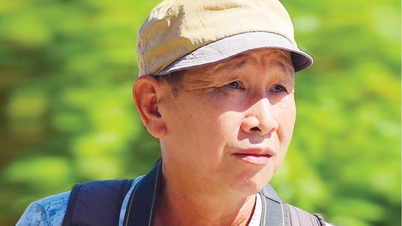
Born and raised in Muong Quang, Vi Van Thoai's youth was closely linked to the military. Years of fighting on the northern battlefields and then in Cambodia forged in him courage, perseverance, and an unwavering spirit in the face of hardship. Upon his discharge from the army and return to his hometown, he started a family and moved out on his own. Life at that time was full of hardships: poverty, little land, children were born one after another, and food and clothing depended entirely on the labor of the couple.
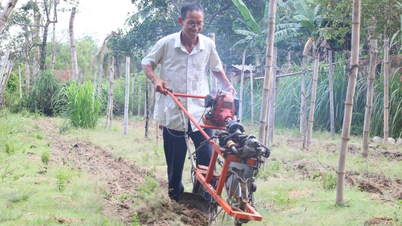
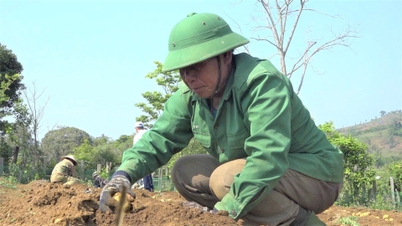
Unwilling to accept their stagnant lives, Mr. Thoai and his wife and children left their old home and ventured deep into the hilly, mountainous areas to reclaim and cultivate the land. That was the most arduous period. The hills were overgrown with weeds, the land steep and rocky; during the day they tilled the soil and cleared the land, and at night they built makeshift huts to sleep in the forest. "At that time, I simply thought that we needed land and manpower to provide a sustainable livelihood for our children," he recalled.
.jpg)
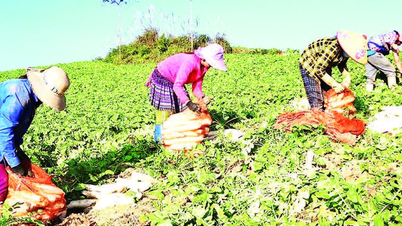
During those years, the barren hillsides were gradually covered with green cassava and corn.
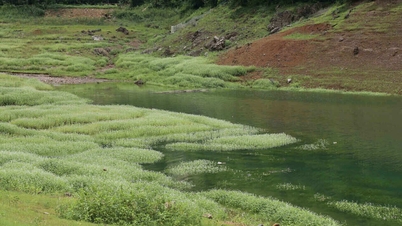
At the foot of the hill, where a small stream flowed through, he dammed the stream and dug a pond to raise fish. The model of "planting trees on the hillside and raising fish in the pond" formed naturally, suited to the terrain. Thanks to hard work and careful planning, the family's economy gradually stabilized. From that income, he and his wife raised three children, providing them with a good education, all of whom graduated from university and found stable jobs—something he himself had never dared to dream of before.
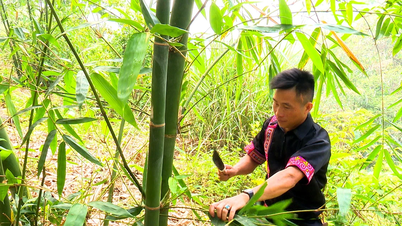
After decades of "conquering" the hilly land, Mr. Vi Van Thoai's family now owns about 6 hectares of hillside garden land. What's remarkable is not just the area, but also the way he has planned and divided the land rationally according to different ecological layers. At the highest hilltop, where the soil is barren and nutrient-poor, he has dedicated nearly 2 hectares to planting bamboo. This type of bamboo is suitable for arid conditions, requires little care, but provides stable economic value. Every year, he sells the raw bamboo to traders and harvests the shoots seasonally, creating a steady income.
Further down, in the foothills where the soil is well-hydrated, he planted nearly 2,000 cinnamon trees. These newly planted rows, about two years old, are thriving. Mr. Thoai shared that his family had previously planted cinnamon, but only on an experimental basis, without investing in proper care, resulting in low yields. In early 2024, with support from production development projects, he decided to expand the area, considering cinnamon as a long-term key crop.
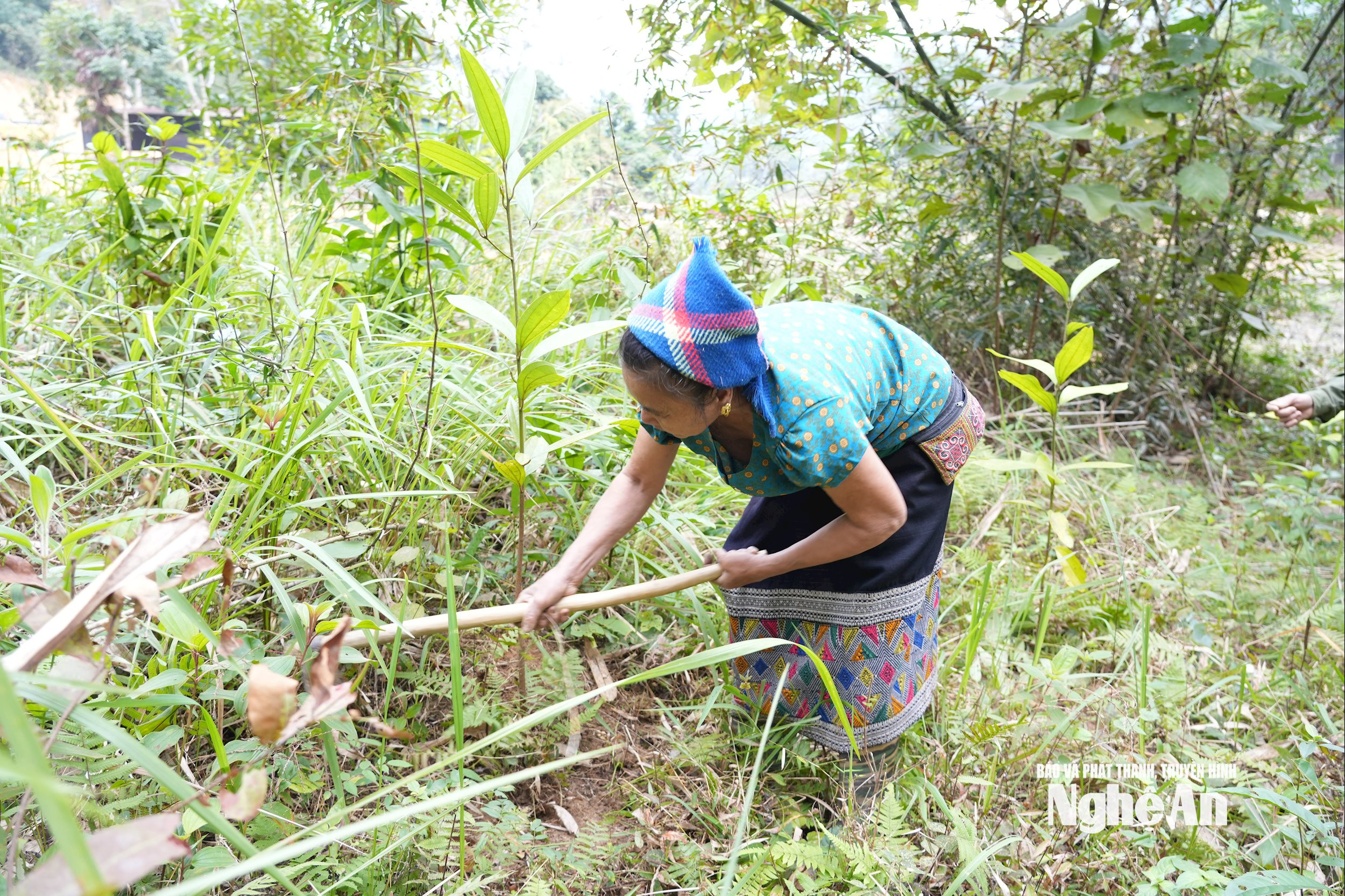
According to him, cinnamon trees yield a continuous harvest once they reach maturity. Not only the trunk, but also the branches, leaves, and other by-products from the thinning process can all be sold, bringing in money regardless of the quantity. Traders buy directly from the source, ensuring a relatively stable market. Although the lifespan is 10 to 14 years, cinnamon trees begin yielding harvests after only about 3 years of planting.
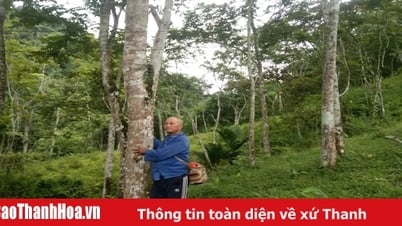
On the other side of the hill, another shade of green is rising – the Lagerstroemia indica forest. Mr. Thoai recounted that in the past, Lagerstroemia indica trees covered the forest, but due to its high economic value and uncontrolled, indiscriminate exploitation, it has become increasingly rare. Ancient Lagerstroemia trees with diameters of over a meter are almost nonexistent. Recognizing its potential and wanting to contribute to the restoration of this valuable species, he decided to plant thousands of Lagerstroemia indica trees on his family's hillside.
According to his experience, growing flowering teak is not too difficult if you understand its growth characteristics. It's a sun-loving tree; young trees can tolerate partial shade, but absolutely cannot tolerate waterlogging. Flowering teak thrives in limestone soil that is sufficiently moist, slightly acidic, and well-drained. Thanks to choosing the right soil and providing proper care, many teak trees in his garden have now grown to 13-14 meters tall and 50-60 centimeters in diameter; some of them are already producing fruit, bringing significant economic value.
Alongside forest development, Mr. Thoai also invested in digging ponds and building sturdy embankments to raise fish and spiny softshell turtles. On the pond banks, he and his wife utilize the empty land to grow various herbs and spices to supply restaurants and eateries in the area. This integrated economic model is self-contained, making maximum use of land, water resources, and labor, ensuring that income is distributed evenly throughout the year.
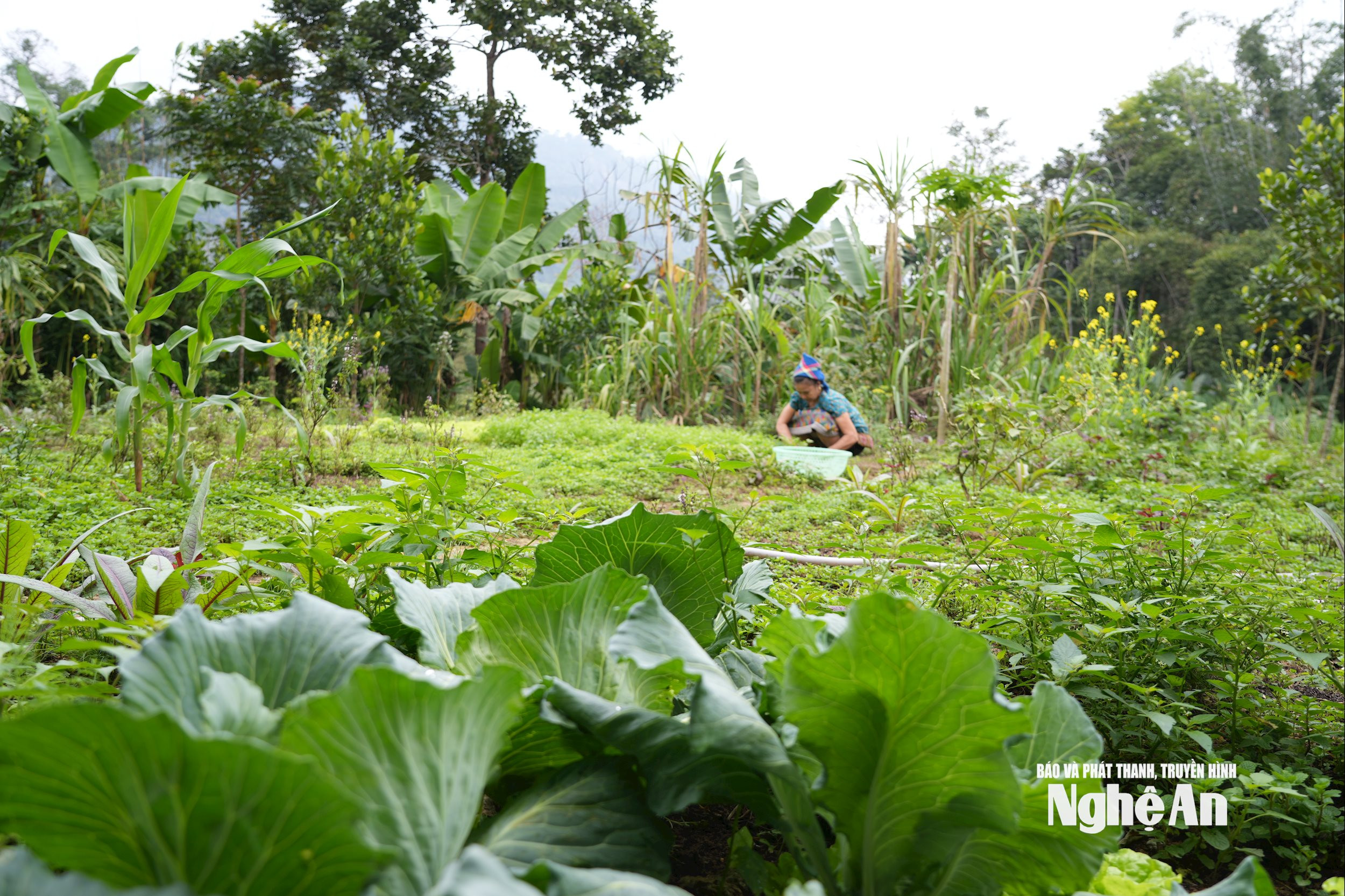
Not only is Mr. Vi Van Thoai a successful businessman for his own family, but he is also a respected figure in Hung Tien village. He readily shares his experience in farming and developing forest-based economy with the villagers. He is always willing to guide anyone who needs seeds or advice on planting and caring for the trees. To the villagers, he is not only a pioneer but also a source of experience and trust.
Source: https://baonghean.vn/lao-nong-thuan-hoa-dat-doi-muong-quang-10324360.html






















































Comment (0)