 |
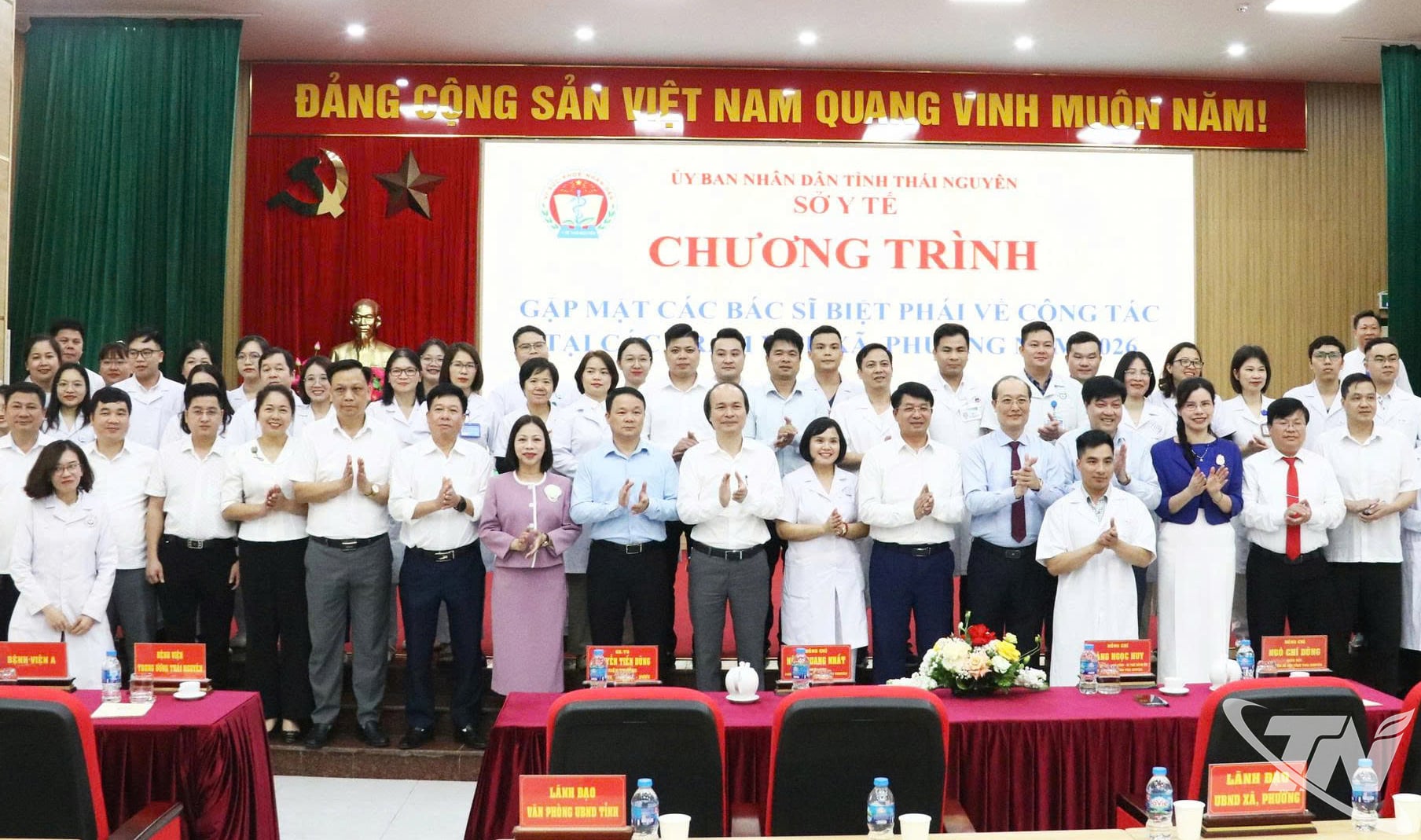
| In March 2026, the Thai Nguyen Department of Health will second 46 doctors from 18 hospitals and the Provincial Center for Disease Control to 41 health stations to contribute to improving the quality of medical examination, treatment, and primary healthcare for the people. |
The workload is increasing, and pressure is mounting on the grassroots level.
According to the administrative reorganization plans, the two provinces of Thai Nguyen and Bac Kan previously had 280 commune-level administrative units. After the reorganization and merger of the provinces, the entire province now has only 92 communes and wards, a reduction of more than 67% in the number of commune-level administrative units, placing it among the localities with the largest reduction in administrative units nationwide. This is an important step towards building a streamlined, effective, and efficient administrative apparatus.
Reducing the number of organizational units does not necessarily mean reducing the workload. Many tasks previously under the district level have been significantly decentralized to the commune level. With a larger administrative area, a larger population, and an increased number of administrative documents, the staffing levels have not been increased proportionally to the demands of the tasks.
According to the Thai Nguyen Department of Internal Affairs, when operating the two-tiered local government model, the province was temporarily allocated 29,370 commune-level personnel positions. By mid-July 2025, the actual number of personnel present was 27,487, a shortfall of 1,883 positions compared to the allocated target.
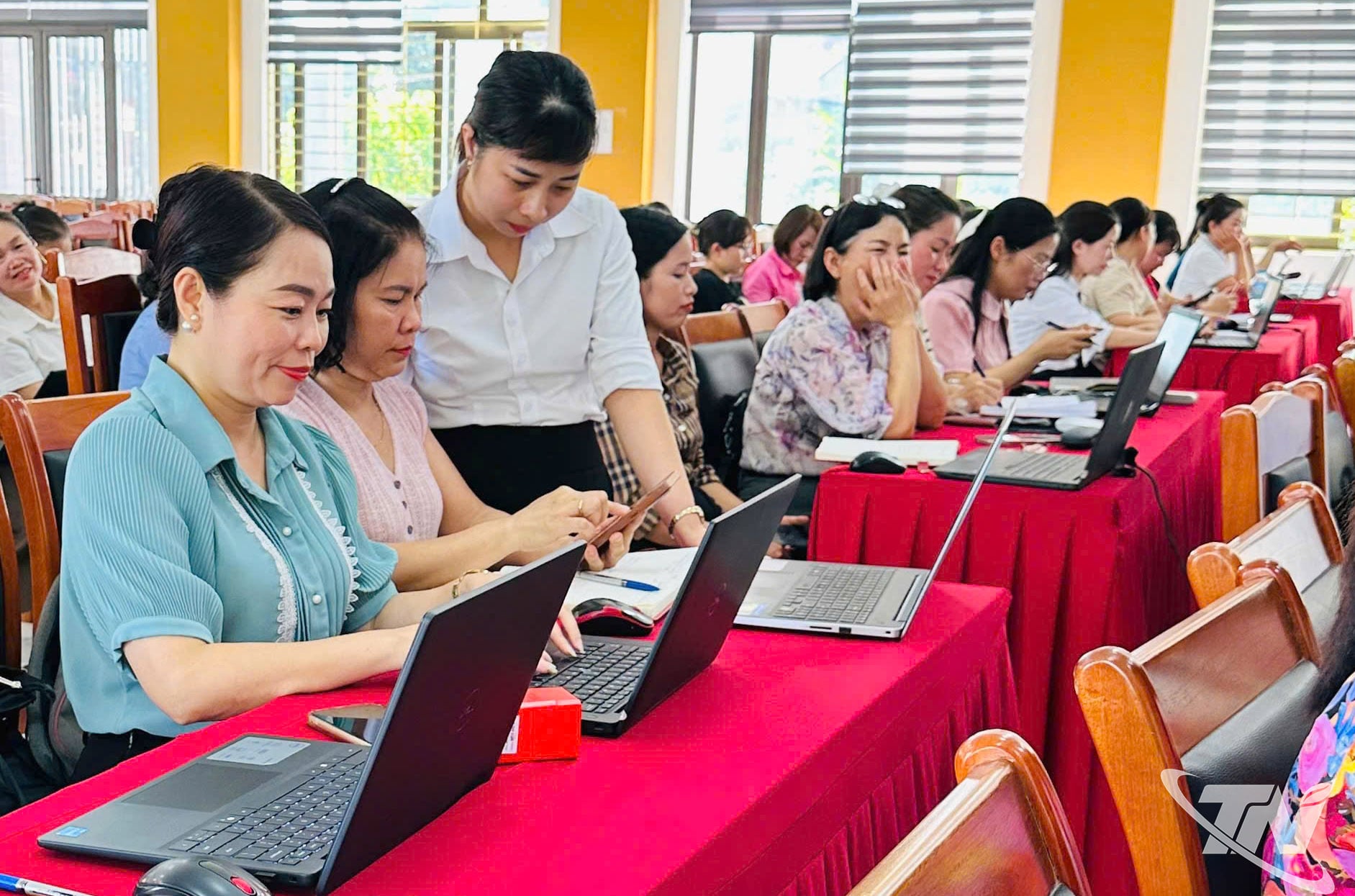 |
| Officials in Phu Luong commune assist residents in accessing online public services. |
In many communes after mergers, officials have to take on multiple responsibilities. Many land administration officials also handle environmental and construction matters; office staff take on additional tasks related to administrative reform and digital transformation. In some places, a single civil registry official has to process many times more files than before.
Mr. Do Duy Hung, Deputy Head of the Economic Department of La Hien Commune: After the merger, the management area is much larger. The volume of land records, land use conversion, and land origin verification is constantly increasing. Meanwhile, the specialized department only has a few people, so the workload is very heavy.
Pressure is concentrated in the areas of land, environmental resources, finance and accounting, and administrative procedures. These are all areas directly related to the needs of citizens and businesses. Mr. Kieu Van Thinh, Vice Chairman of the People's Committee of Nam Hoa commune, said: Many procedures that people previously handled at the district level have now been transferred to the commune. Citizens find it easier to resolve their issues, and at the same time, local officials have taken on more new responsibilities.
Following the restructuring, a number of experienced staff members retired early or were laid off under the downsizing scheme. While restructuring the workforce is a sound policy, it also necessitates the rapid recruitment and training of successor personnel.
Mr. Hua Xuan Binh, Chairman of the People's Committee of Bach Quang Ward, shared: "The ward is implementing many large projects. With the current 40 officials and civil servants, the locality must prioritize each field to ensure both socio-economic development and the successful implementation of assigned tasks. The staff needs to be reviewed and assessed for their capabilities according to each job position and receive enhanced training to meet the new requirements of the two-level government."
The pressures of the workload reveal that the human resource problem at the commune level is not simply a shortage of personnel. After the restructuring process, many localities still ensure the required number of officials, but disparities arise in professional structure, human resource quality, and the ability to meet the new requirements of a modern administrative system.
It is necessary to ensure a balance in both structure and quality.



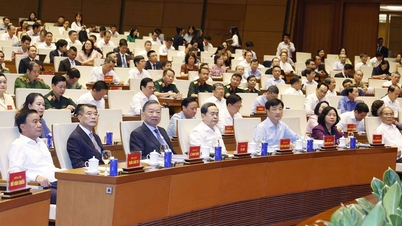
At the conference summarizing one year of implementing the reorganization of administrative units and the operation of two-tiered local governments, the leaders of Thai Nguyen province pointed out issues that need further improvement regarding organizational structure and personnel work. Among these, the imbalance in the human resource structure between localities was a matter of particular concern.
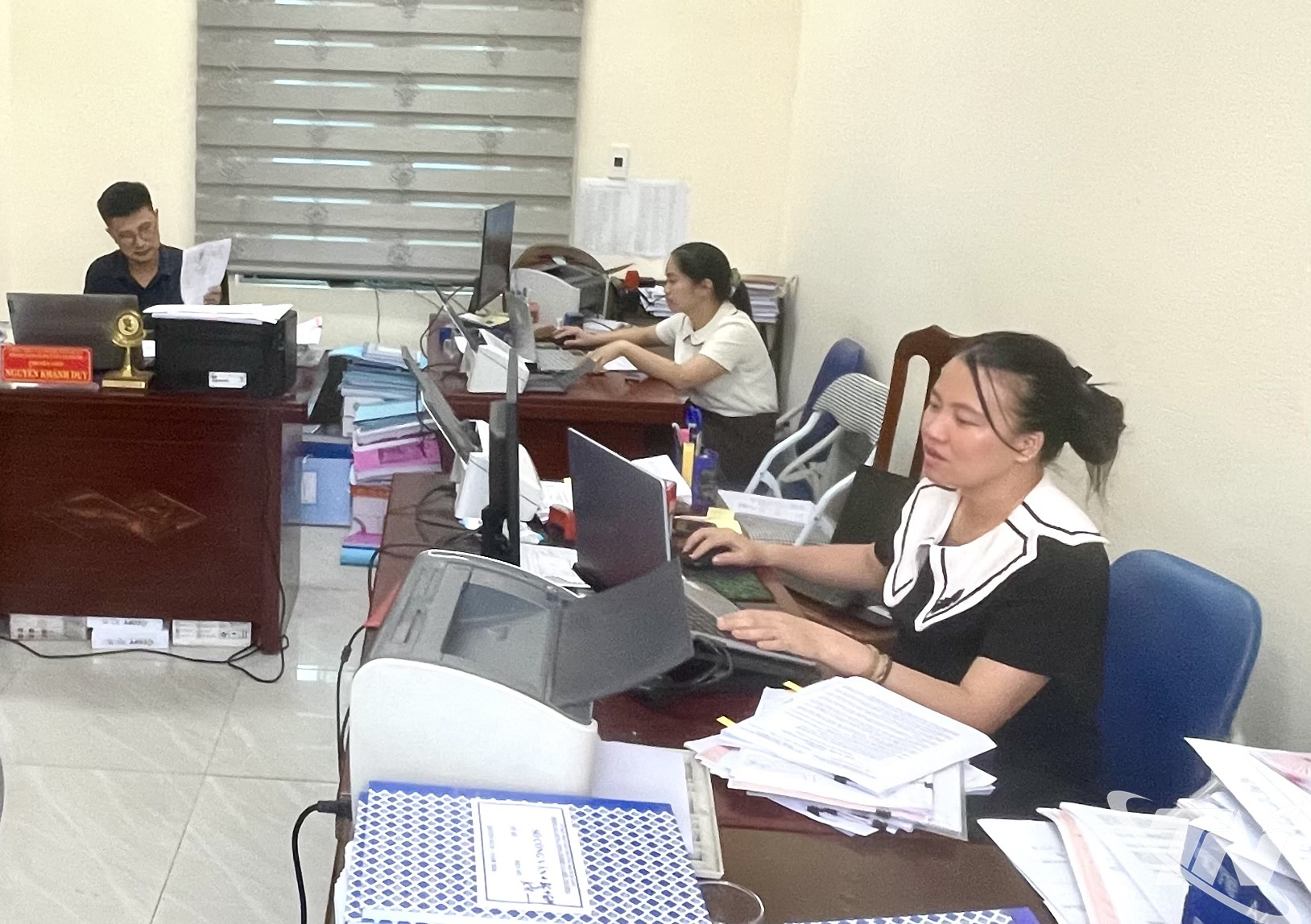 |
| To ensure timely completion of tasks and better service to the public, many officials and civil servants in Bach Quang ward frequently work outside of regular office hours. |
With a staffing quota of 38 officials and civil servants per commune, many localities basically meet the quantitative requirements but lack uniformity in professional structure. Some areas lack staff specializing in land administration, natural resources and environment, finance and accounting, or justice and civil registration; in other areas, the existing staff does not meet the requirements of digital transformation and administrative reform.
Some remote and rural communes face difficulties in attracting high-quality human resources. Meanwhile, central localities generally have more favorable working environments and career development opportunities. According to the head of the Department of Internal Affairs, many central communes have a concentration of highly qualified professionals, while some mountainous communes lack staff in the fields of land administration, natural resources and environment, finance and accounting, justice and civil registration, and information technology.
To support the grassroots level in the initial phase of operating the new model, the province has deployed 274 provincial-level officials and civil servants to reinforce communes and wards; including 85 from the Party and mass organizations and 189 from the government.
Along with professional requirements, digital transformation is placing new demands on grassroots officials. Most areas of management are now conducted in a digital environment, from handling administrative procedures to managing data and providing public services.
Mr. Hua Xuan Binh, Chairman of the People's Council of Bach Quang Ward: After the merger, the requirements for grassroots officials are higher than before. Officials must have a solid grasp of their professional expertise, be proficient in digital technology, handle administrative procedures in an electronic environment, and effectively meet the needs of serving the people.
Put the right people in the right jobs.
Based on the initial results and requirements arising from the administrative unit reorganization, the province is implementing many solutions in a coordinated manner. The focus is on improving the quality of grassroots officials, ensuring a match between job positions, professional capabilities, and the requirements of performing tasks in the new phase.
 |
| Officials at the Van Xuan Ward Public Administrative Service Center guide residents through administrative procedures. |
Increasing staffing levels is one of the proposed solutions, but it is not the only one. The important thing is to continue restructuring the workforce in a rational manner, ensuring the right people are in the right jobs and that the requirements of each locality are met.
The province has directed a review of job positions and the appropriate deployment and placement of personnel to address the imbalance in human resources between units. This is a long-term solution that contributes to improving the efficiency of the grassroots administrative apparatus.
In addition, the rotation and transfer of officials between localities should be carried out flexibly based on task requirements. Communes lacking specialized personnel can be supplemented with capable officials from other units or from qualified civil servants who can be transferred to public service positions.



According to the head of the Department of Internal Affairs, in the coming period, the province will continue to transfer civil servants between localities, recruit qualified public employees to become civil servants, and strengthen provincial-level staff to support grassroots levels. Simultaneously, training and professional development need to be intensified in a practical manner, closely linked to job requirements.
In addition to professional knowledge, grassroots officials need to be equipped with digital skills, public relations skills, problem-solving skills, and the ability to adapt to modern management methods.
For mountainous and particularly disadvantaged areas, research into appropriate support mechanisms to attract and retain qualified personnel is also necessary. Policies on public housing, support for education, and professional development can create additional motivation for officials to work long-term with peace of mind.
Along with improving the quality of human resources, digital transformation continues to be an important solution to reduce pressure on grassroots officials. When data is interconnected and processes are digitized synchronously, many manual processing steps will be shortened, creating conditions for officials to focus on their professional tasks and improve the quality of service to the people.
After a year of operating the two-tiered local government model, initial results have confirmed the correctness of the policy on reorganizing administrative units. To ensure the new model is even more effective, further improving the staff at the commune level in terms of quantity, structure, and quality is crucial. This is both an immediate task and a long-term foundation for building a professional and modern grassroots administration that meets the province's development needs in the new phase.
Source: https://baothainguyen.vn/chinh-polit/202606/lap-khoang-trong-nhan-luc-cho-cap-xa-0f62517/




![[Photo] Strengthening character and expertise: Intense training for artillery soldiers.](https://vphoto.vietnam.vn/thumb/1200x675/vietnam/resource/IMAGE/2026/06/30/1782815602541_lu-368-1875-4571-jpg.webp)