

The semiconductor craze, particularly for memory chips, is becoming increasingly evident in the global AI development wave. Tech companies are opting for moderate upgrades, seeking to improve user experience while keeping price increases to a minimum, despite significant price hikes for SSDs and RAM in recent months.
Asus has just unveiled a new laptop powered by an AMD processor, focusing on edge AI processing capabilities. Along with that, refinements result in significantly better battery life in a slim and lightweight body. Amidst rising prices, the device retains the same memory capacity as last year and is only 1 million VND more expensive.
Changes between memory chip variations
The Zenbook 14 is the first laptop using the Ryzen AI 400 processor to arrive in the Vietnamese market. Positioned in the mid-to-high segment, it targets business professionals and content creators. The starting price is 30 million VND for the 16GB RAM and 512GB storage version, similar to its predecessor.
The product still uses the old 2025 framework. The main upgrade lies in updating the configuration with a new AMD processor, just launched at CES. Asus's approach could be a model for the entire industry this year. Amidst the soaring prices of components, especially SSDs and RAM, creating major upgrades can result in a price gap that customers find difficult to accept.
Overall, the design is not significantly different, making it difficult to distinguish from its predecessor. However, internally, the new processor makes the difference. The AMD Ryzen 7 445 features a dual-core Zen 5 and quad-core Zen 5c architecture, focusing on maximizing energy efficiency. This design clearly reflects the need to create a device with better battery life rather than solely focusing on processing performance.
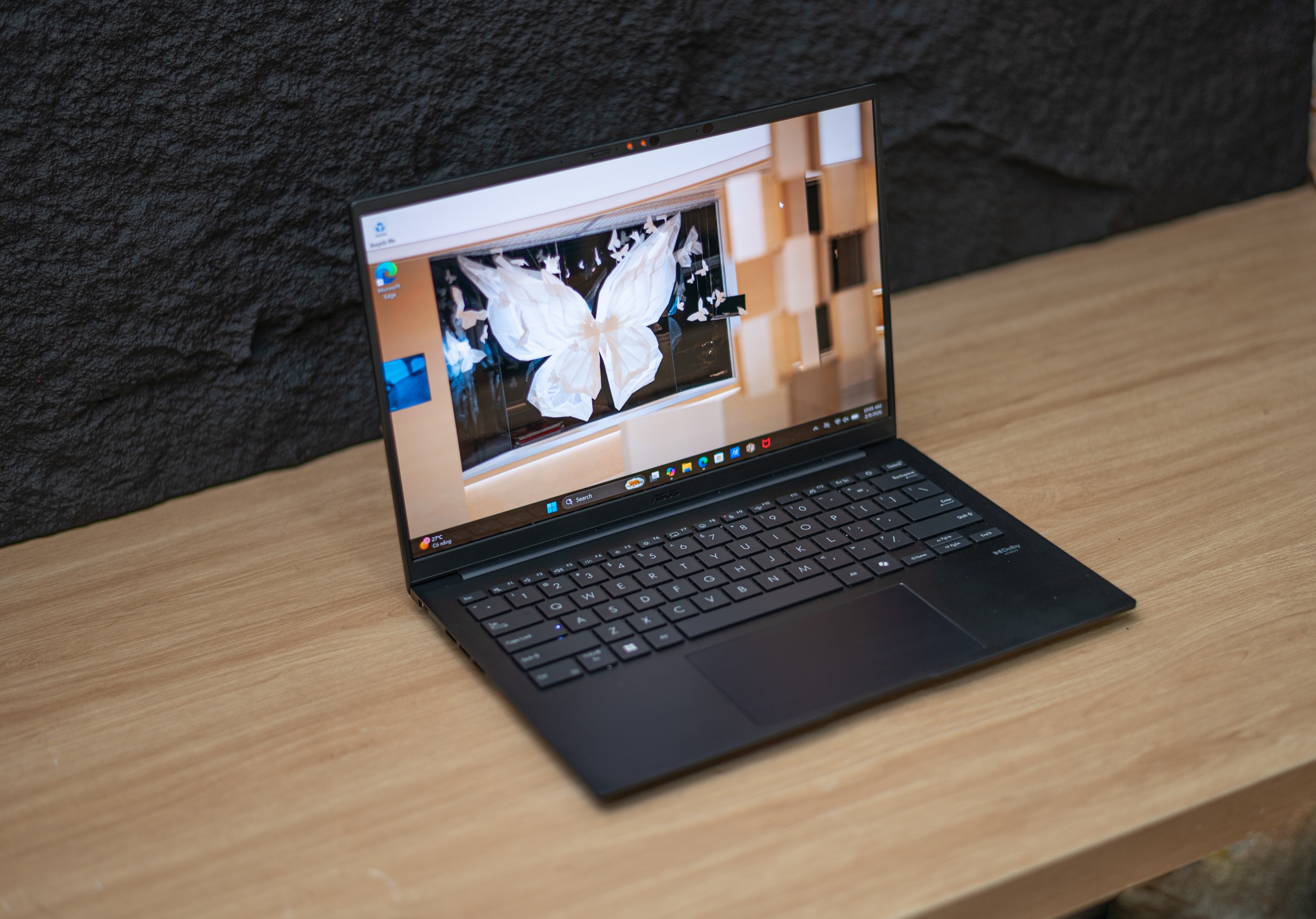 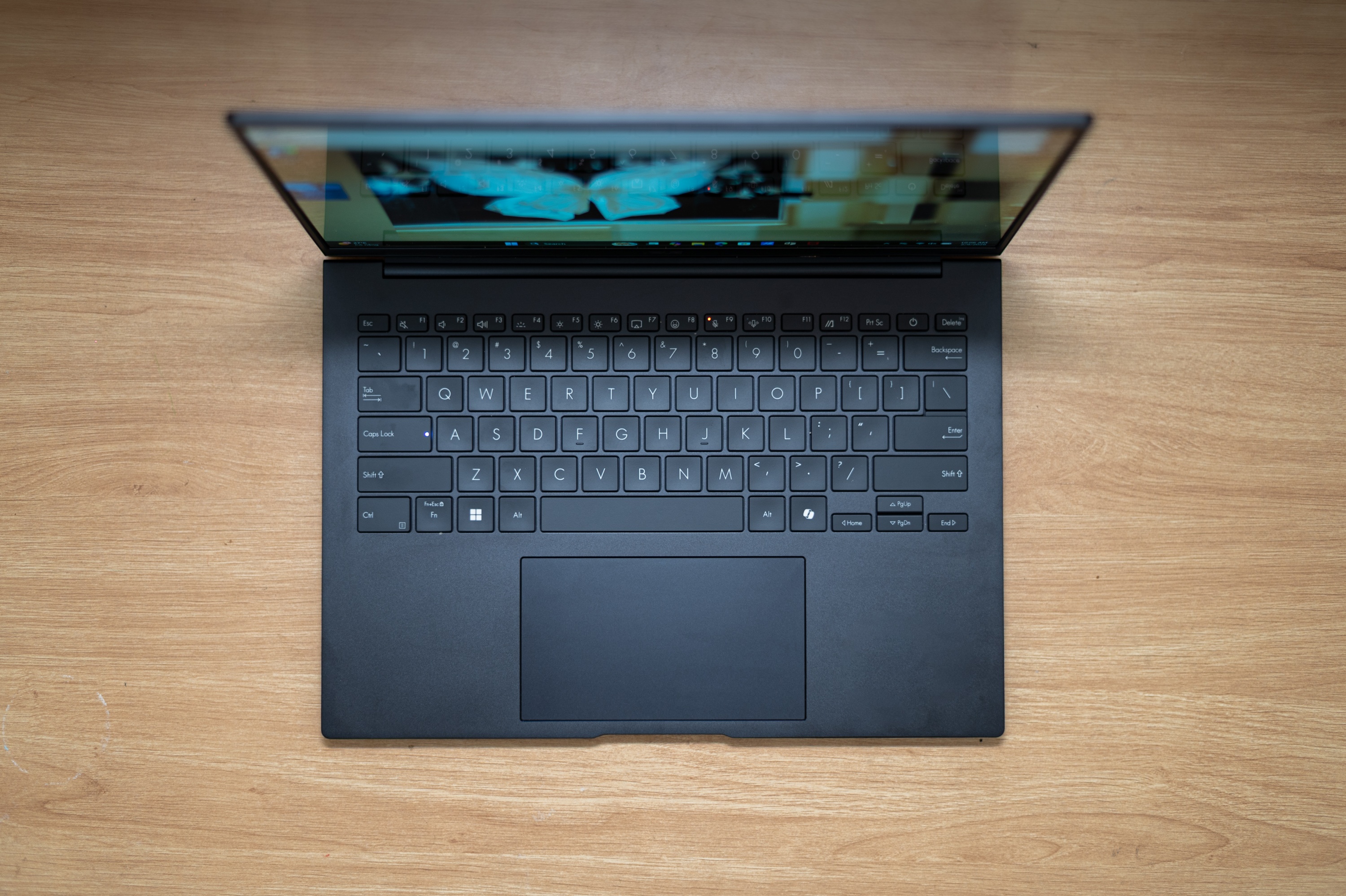 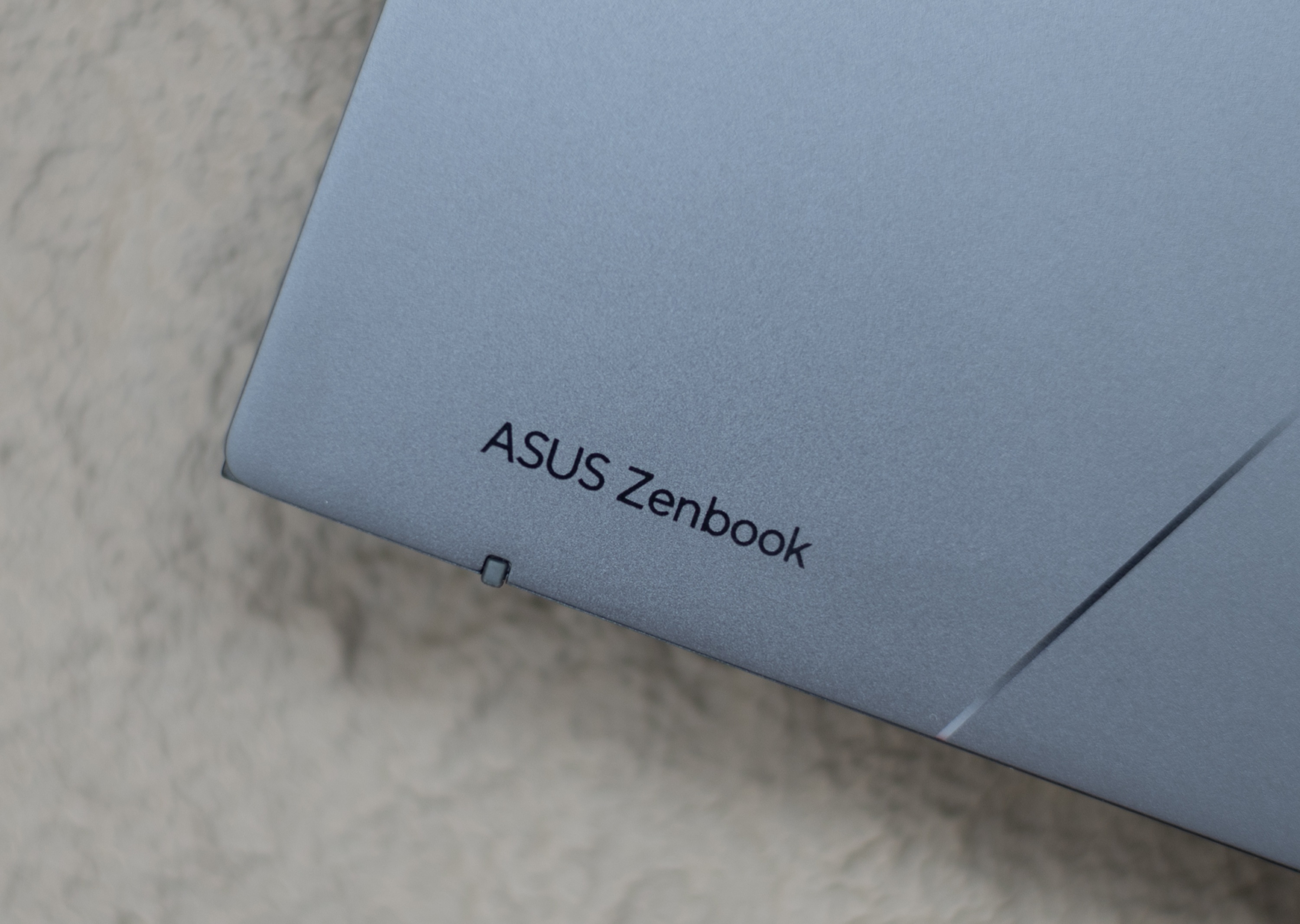 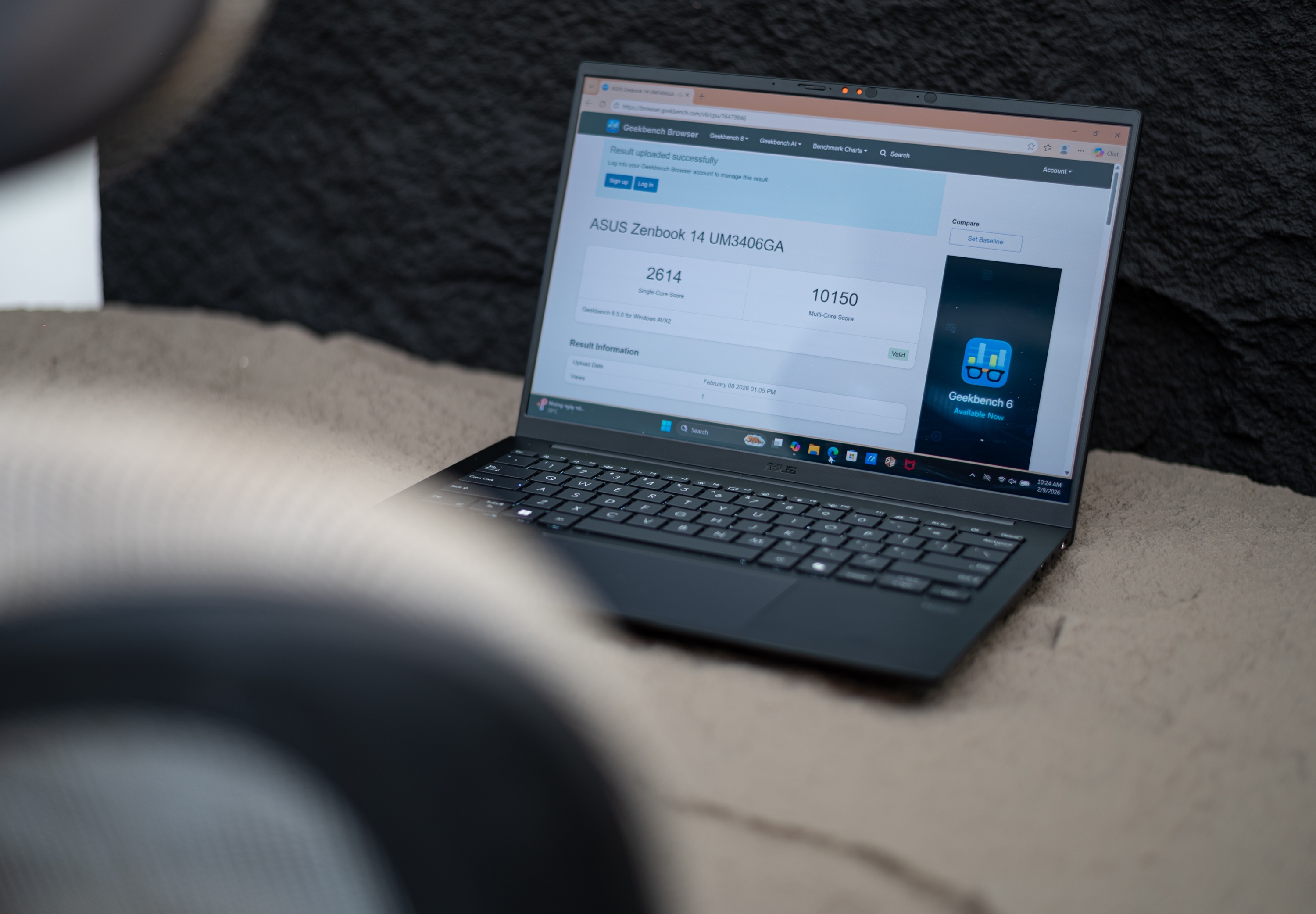 |
The newly released version features a redesigned configuration while retaining most of the structure of the previous generation. |
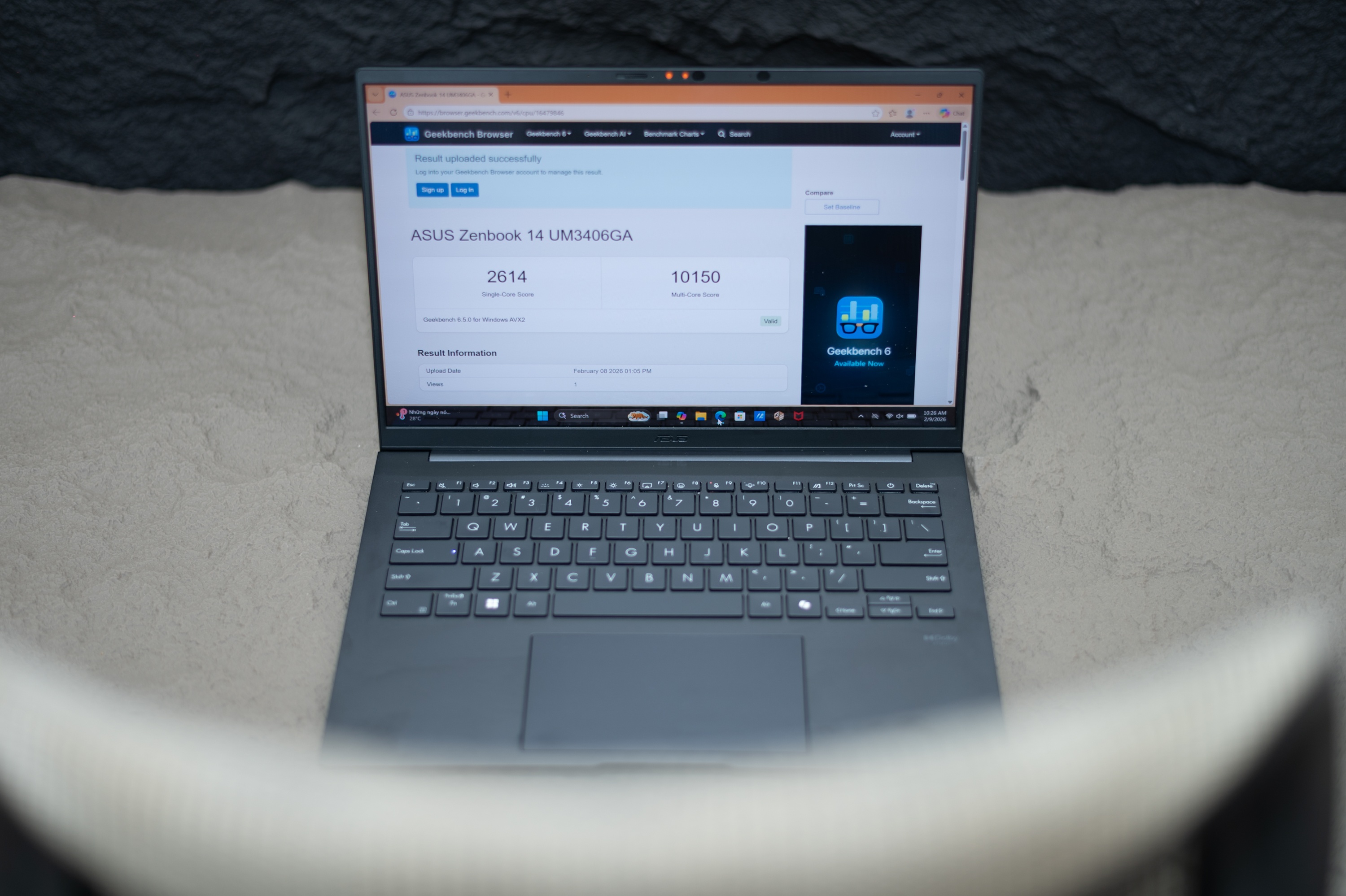
The benchmark performance of the machine with various software applications is not significantly different from the previous generation 350 chip. For customers who purchased the machine last year, power is not the main reason to upgrade. The primary difference lies in the improved battery life. In mixed office and entertainment tasks, the machine provides 12-15 hours of operation. This is even higher than the 14-inch MacBook Pro, demonstrating the increasingly better optimization capabilities of Windows computers.
Furthermore, the difference in performance between battery power and charging is almost negligible. These factors help bridge the significant gap in user experience between Apple computers running on the M-series chips and Windows laptops. Currently, office experiences between the two product lines are not significantly different. In return, Asus's x86 platform products offer greater software compatibility and a broader ecosystem.
However, keeping the old chassis also means users have to accept the continued use of a 60Hz screen. This is still a product with a very bright OLED panel and high color coverage. But compared to other models, the refresh rate is still lower. If it weren't for the rising prices of RAM and SSDs, Asus might upgrade these components for the Zenbook 14.
Widespread AI adoption
AMD's 400 series chips have an advantage with their powerful NPU cores. The Ryzen 7 445 isn't a flagship, but it's still a powerful AI processor with a 50 TOPS rating, higher than Microsoft's 40 TOPS standard for Copilot+ PCs. Adding the power of other components, the total capability could reach nearly 60 TOPS.
This amount is sufficient to run moderately sized models like DeepSeek R1 or Llama 3.2 3B. These may be complex to set up and not as versatile as online chatbots. In return, users don't need to pay expensive monthly fees. Furthermore, running AI chatbots at the edge ensures data security, preventing information leaks in high-standard environments like businesses.
 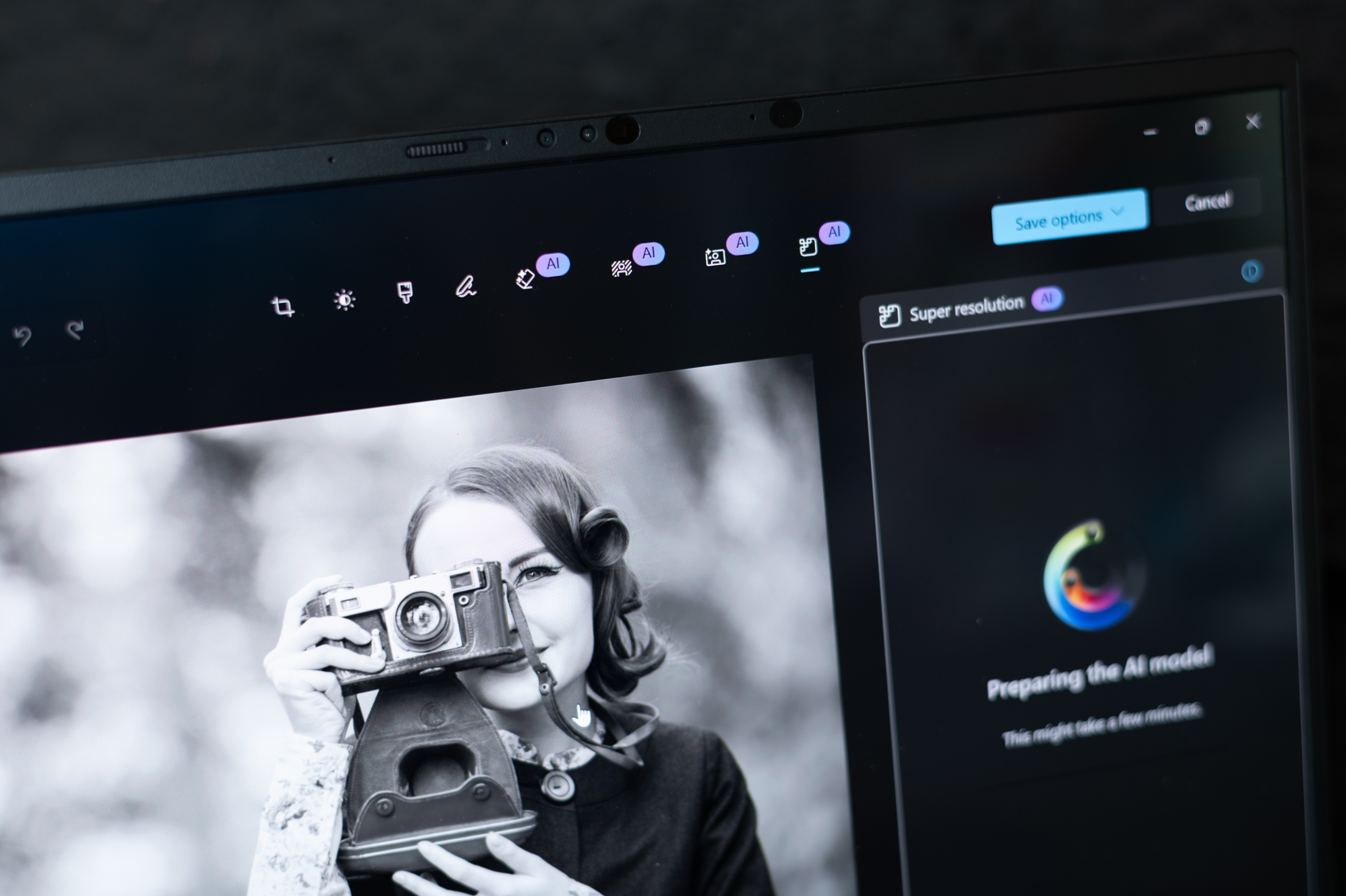  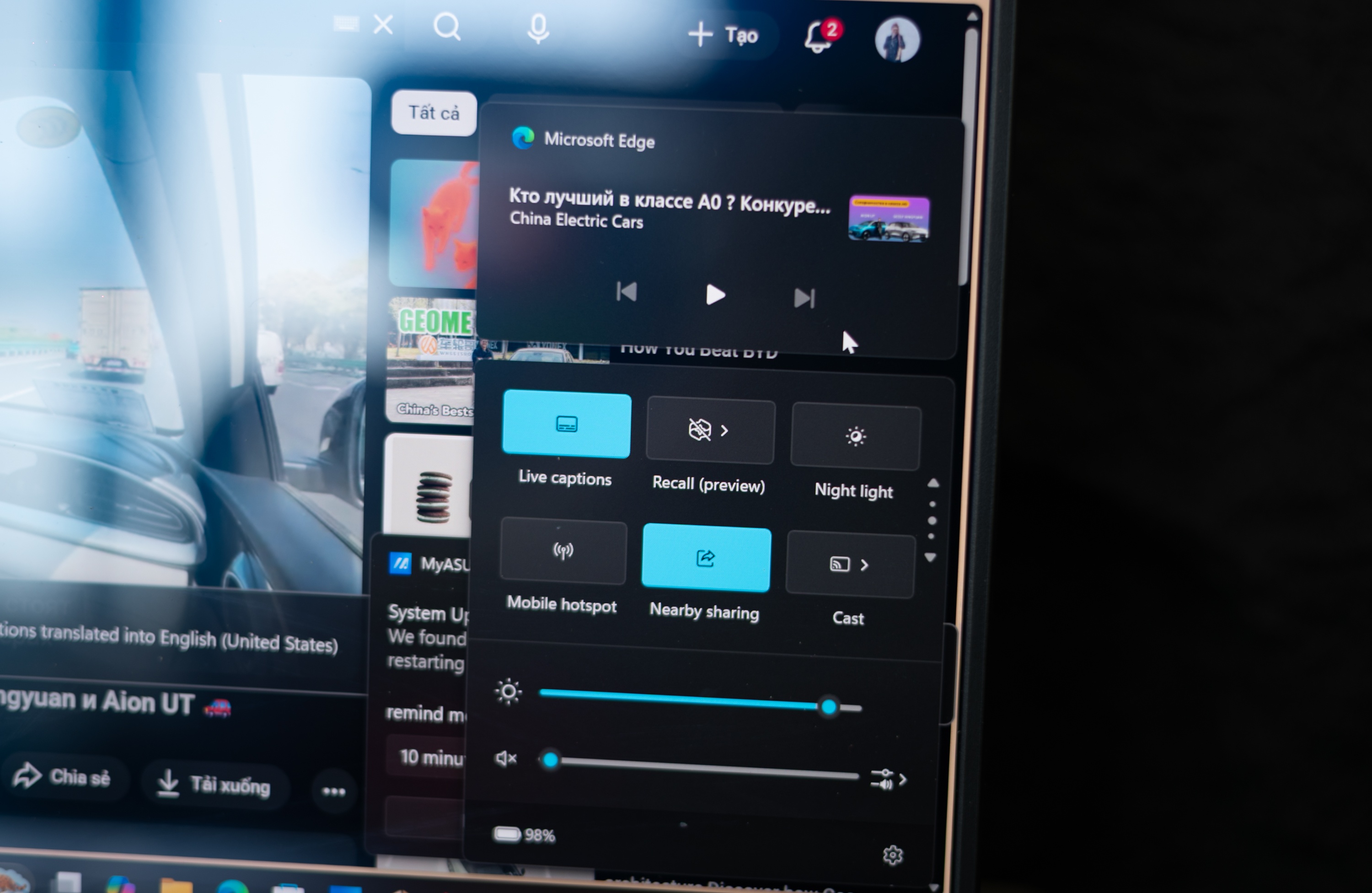 |
Microsoft is working to integrate AI into Windows, but developers are still slow to optimize it for the NPU. |
Microsoft is also gradually adding AI features to its powerful computers. The Zenbook 14 2026 model has Studio Effect, which adjusts the webcam to recognize faces and eye movements in real time. This solution consumes a lot of NPU resources and is difficult to handle if run on a GPU or CPU. Live Caption and Recall are also useful and easy-to-use tools.
However, third-party software has yet to expand AI functionality or support NPUs on Windows. Investing in a computer with a powerful NPU will pay off later, when this hardware-based computing power becomes more widespread.
Priced at 30 million VND, the Zenbook 14 2026 edition represents Asus's effort to maintain stable pricing amidst fluctuating exchange rates and significantly rising memory chip costs. The product retains its slim and lightweight design, long battery life, high portability, and hardware sufficient for office work, ready to handle AI tasks.
In the 30 million VND price range, a competitor to Asus's slim and light laptop is the 15-inch MacBook Air M4, which boasts premium build quality and a stable operating system. The LG Gram is also a highly portable product; however, only older models with Intel chips are currently available.
Source: https://znews.vn/laptop-thay-doi-giua-thoi-bao-gia-post1627091.html




































































































Comment (0)