The new document updates and adapts the 2011 bilateral defense cooperation agreement to the context of fundamentally and profoundly changed political and security landscapes in the world and in Europe. This move by Germany and Poland is particularly noteworthy in Europe as evidence of a significant rapprochement between the two countries, while their current bilateral relationship is fraught with more complex and sensitive issues than before.
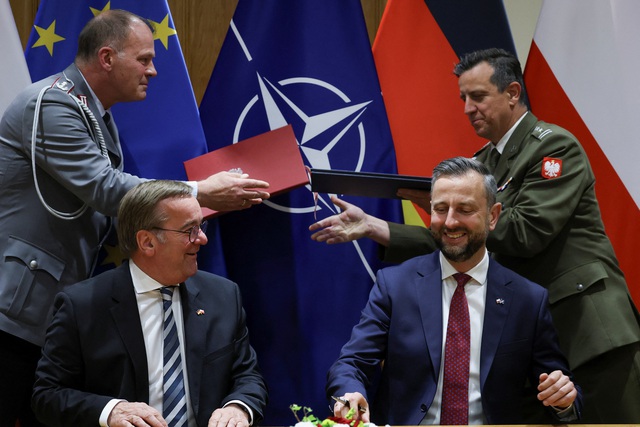
Polish Deputy Prime Minister and Minister of Defence Wladyslaw Kosiniak-Kamysz and German Defence Minister Boris Pistorius after signing a defence agreement in Poland on June 17, 2026.
Photo: Reuters



The only explanation is that the current situation in Europe forces both sides to be pragmatic and realistic, drawing closer together, while simultaneously using expressions of friendliness and mutual trust to ensure that disagreements and conflicts do not hinder their shared goal of building the most prominent political and security role in the region.
Both are aware that they need to secure that role in order to guarantee security in a context where they can no longer rely on the US as before. At the same time, both believe they now have the opportunity to build that role.
Currently and in the future, the most direct security challenges for Europe are in the east, bordering Russia. Europe is simultaneously striving for security self-reliance and clinging to the United States. European countries are both strengthening their armaments and forming bilateral, trilateral, or multilateral alliances on military , defense, and security matters.
Germany wants to establish the most decisive and dominant role, while Poland wants to be needed and cannot be ignored. The new alliance will help both countries achieve that prominent importance.

Source: https://thanhnien.vn/lien-thu-de-cung-noi-troi-18526061820295965.htm
![[Photo] The 13th National Congress of the Youth Union conducts personnel work.](https://vphoto.vietnam.vn/thumb/1200x675/vietnam/resource/IMAGE/2026/06/24/1782299943080_ndo_br_1-6868-jpg.webp)

![[Photo] Opening Ceremony of the 13th National Congress of the Ho Chi Minh Communist Youth Union](https://vphoto.vietnam.vn/thumb/1200x675/vietnam/resource/IMAGE/2026/06/24/1782286753905_ndo_br_1-8510-jpg.webp)
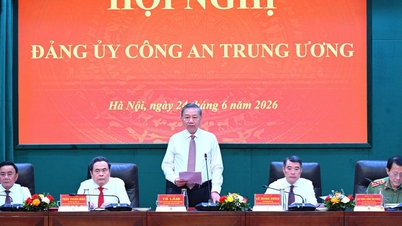
![[Photo] General Secretary and President To Lam attends the Central Public Security Party Committee Conference](https://vphoto.vietnam.vn/thumb/1200x675/vietnam/resource/IMAGE/2026/06/24/1782302063612_a1-bnd-9302-9166-jpg.webp)