


DISASTER FIGURES REACH RECORD HIGH
The first goal of the 2026 World Cup came from a personal error by South Africa's defensive midfielder Sphephelo Sithole. Receiving the ball from goalkeeper Ronwen Williams, Sithole handled it carelessly, allowing the opponent to steal it, leading to Julian Quinones' goal for Mexico.

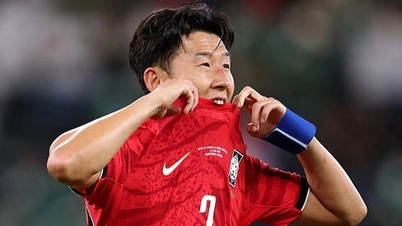
Goalkeeper Kim Seung-gyu's mistake led to South Korea's defeat against Mexico.
PHOTO: REUTERS
In the final match of yesterday morning's games (Vietnam time), Mexico scored the only goal, winning 1-0 against South Korea, thanks to a personal error by goalkeeper Kim Seung-gyu. The ball was perfectly within Seung-gyu's control, but he dropped it, right to Luis Romo's feet, who immediately took a shot and scored.
Host nation Mexico became the first team to officially advance from the group stage. Notably, they only scored 3 goals in their two wins, and two of those 3 goals came from individual errors in the opposing defense.


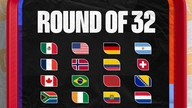
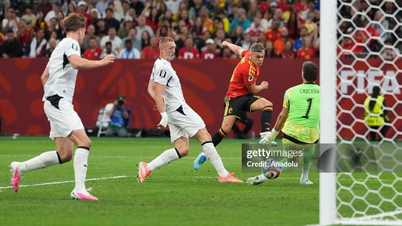
These are just a few typical examples of goals gifted by opposing defenses at this World Cup. Individual errors by defenders, leading to situations where the opponent gets a shot on goal, were rampant in the matches. Specifically, there were 52 such situations in the 24 matches of the first round – a record number. On average, each match saw more than two instances of defenders making individual errors, giving the opponent a chance to score.
Never before have individual errors been so prevalent in the World Cup. The entire 2022 World Cup (64 matches) saw only 42 individual errors leading to scoring opportunities for the opposition. Now, there have been 52 such situations in just the first 24 matches. The consequence: Goalkeepers have had to pick the ball out of the net 12 times, meaning that for every two matches, there's a goal "falling from the sky".
CAUSES FROM BOTH SIDES
Of the two goals Erling Haaland (Norway) scored in his World Cup debut, the second was credited as a result of an opponent's individual error. However, Haaland deserves more praise than his opponent. He applied intense and proactive pressure when the opposing player passed the ball back to the goalkeeper. As a result, Haaland intercepted the ball and scored.
The aggressive pressing style was also noteworthy in Kai Havertz's (Germany) decisive goal in their 7-1 victory over Curacao. The match was practically decided, but the German players continued to press aggressively to win the ball from Curacao captain Leandro Bacuna, creating the opportunity for Havertz to score.
In the first goal of this World Cup, the Mexican player was also very aggressive in pressing, which allowed him to steal the ball from Sithole and then pass it to his teammate to score. But from another perspective, we can discuss South Africa's "playing from the back" mentality. That's a high-level style of play, but the players involved lacked the necessary caution and professional skill to execute it effectively.
The most striking example of this situation is Tunisia – the first team in World Cup history to sack their coach after their first match. Their possession-oriented approach, focusing on building play from the back, proved costly: losing possession led to six scoring opportunities for the opposition, and they conceded three goals in those situations. In the World Cup qualifiers, Tunisia was one of the few teams that didn't concede a single goal. But this is the finals. And Sweden (who beat Tunisia 5-1) is a team renowned for its efficient, simple style of play, specializing in "lying in wait" for opportunities.



With all 48 teams having completed their first match at the 2026 World Cup, a surprising statistic emerges regarding the prevailing playing style: Only 4 out of 48 teams made fewer than 50 short passes in their own half. This means that the majority of teams prioritize possession, using short passes to retain the ball. Even teams considered weaker, like New Zealand or Curacao, favor keeping possession.
Of course, there is no right or wrong style of play. The problem here is that a style of play that emphasizes ball possession and building play from the back is only suitable for teams with high technical skill, and this style of play easily leads to counter-attacks when there are individual mistakes.
Source: https://thanhnien.vn/loi-ca-nhan-tran-ngap-world-cup-2026-185260619221121188.htm



![[Photo] "Hanoi Lotus Festival" honors the lotus flower that has been associated with Vietnam for thousands of years.](https://vphoto.vietnam.vn/thumb/1200x675/vietnam/resource/IMAGE/2026/06/27/1782516943048_sen-ha-noi-2026-minh-duy-1-jpg.webp)




















































![[Infographic] 16 fireworks display locations to celebrate the 50th anniversary of Ho Chi Minh City being honored with the name of President Ho Chi Minh](https://vphoto.vietnam.vn/thumb/402x226/vietnam/resource/IMAGE/2026/06/27/1782539591308_man-ban-phao-hoa-ruc-ro-dem-khai-mac-638jpg-17242995540161175940469.jpeg)