

The risks were foreseen.
Even before the massive container ship crashed into the Francis Scott Key Bridge in Baltimore on March 26, sending a span of the bridge tumbling into the Patapsco River and disrupting cargo shipping at a major U.S. port, there were already reasons to worry about the troubles hindering global supply chains.
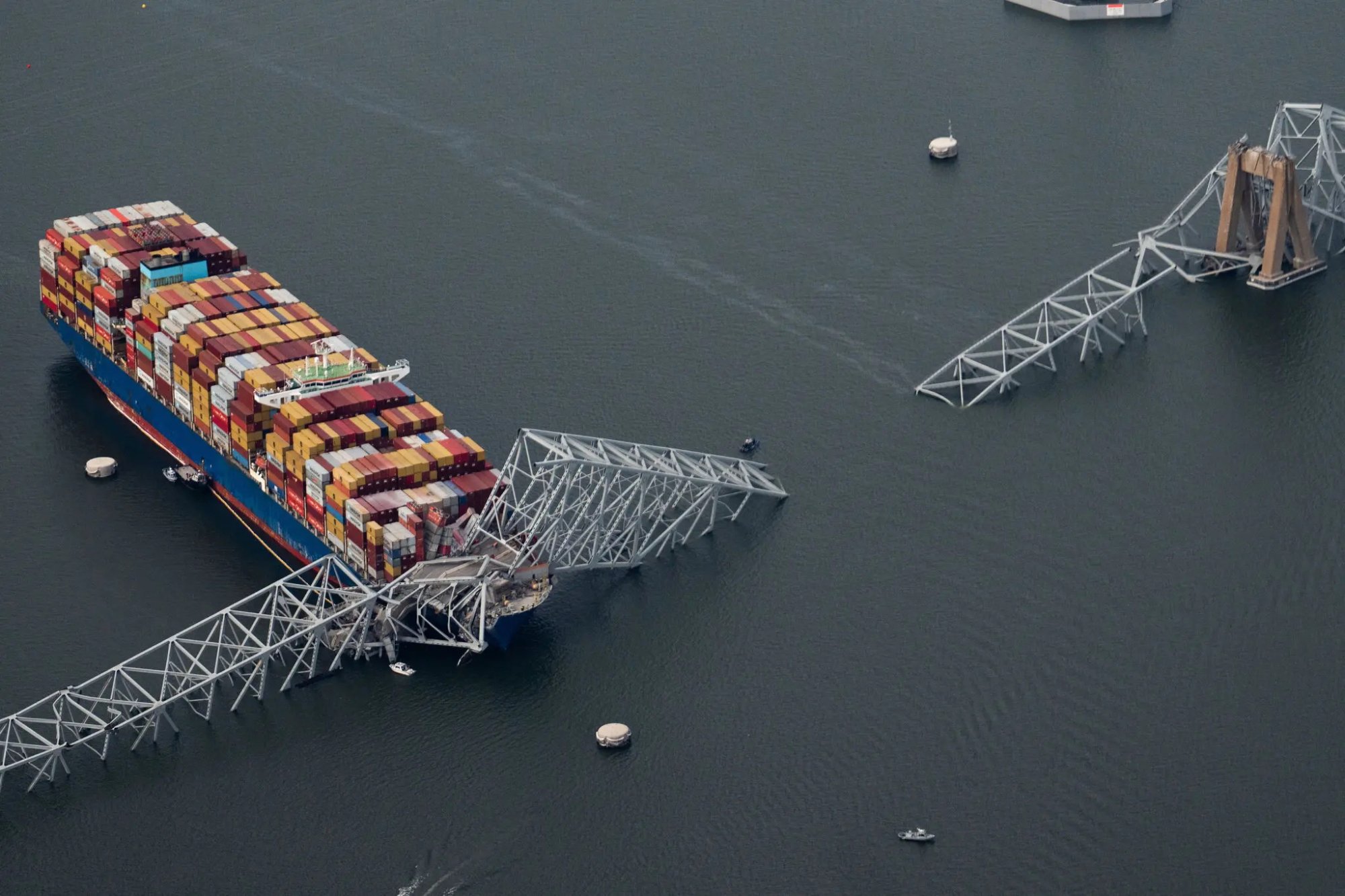
A container ship crashed into the Francis Scott Key Bridge in Baltimore, causing the more than 40-year-old bridge to collapse. Photo: NYT
Amidst geopolitical winds, the looming effects of climate change, and ongoing disruptions caused by pandemics, the risks of relying on ships for the transportation of goods across the planet have become clear.
The pitfalls of relying on factories around the world to supply everyday items like clothing and essential items like medical equipment have always been clear and persistent.
Off the coast of Yemen, Houthi rebels fired missiles at container ships in what they said was a show of solidarity with Palestinians in the Gaza Strip.
This forced shipping companies to largely bypass the Suez Canal, a vital waterway connecting Asia to Europe, and instead绕 around Africa – adding days and weeks to the journey and requiring ships to burn more fuel.
In Central America, scarce rainfall, linked to climate change, has restricted passage through the Panama Canal. This has hampered the vital link between the Atlantic and Pacific Oceans, delaying shipments from Asia to the U.S. East Coast.
These events unfold amidst memories of another recent shock to trade: the closure of the Suez Canal three years earlier, when the container ship Ever Given struck the edge of the waterway and became stuck.
While the ship was out of service and social media was flooded with memes about modern life coming to a standstill, traffic through the canal was halted for six days, and trading activity froze, causing estimated losses of $10 billion per day.
Even a small fault can have a big impact.
Now, the world has gained another visual summary of the fragility of globalization through the abrupt and shocking removal of a major bridge in a large industrial city with bustling ports in the United States.
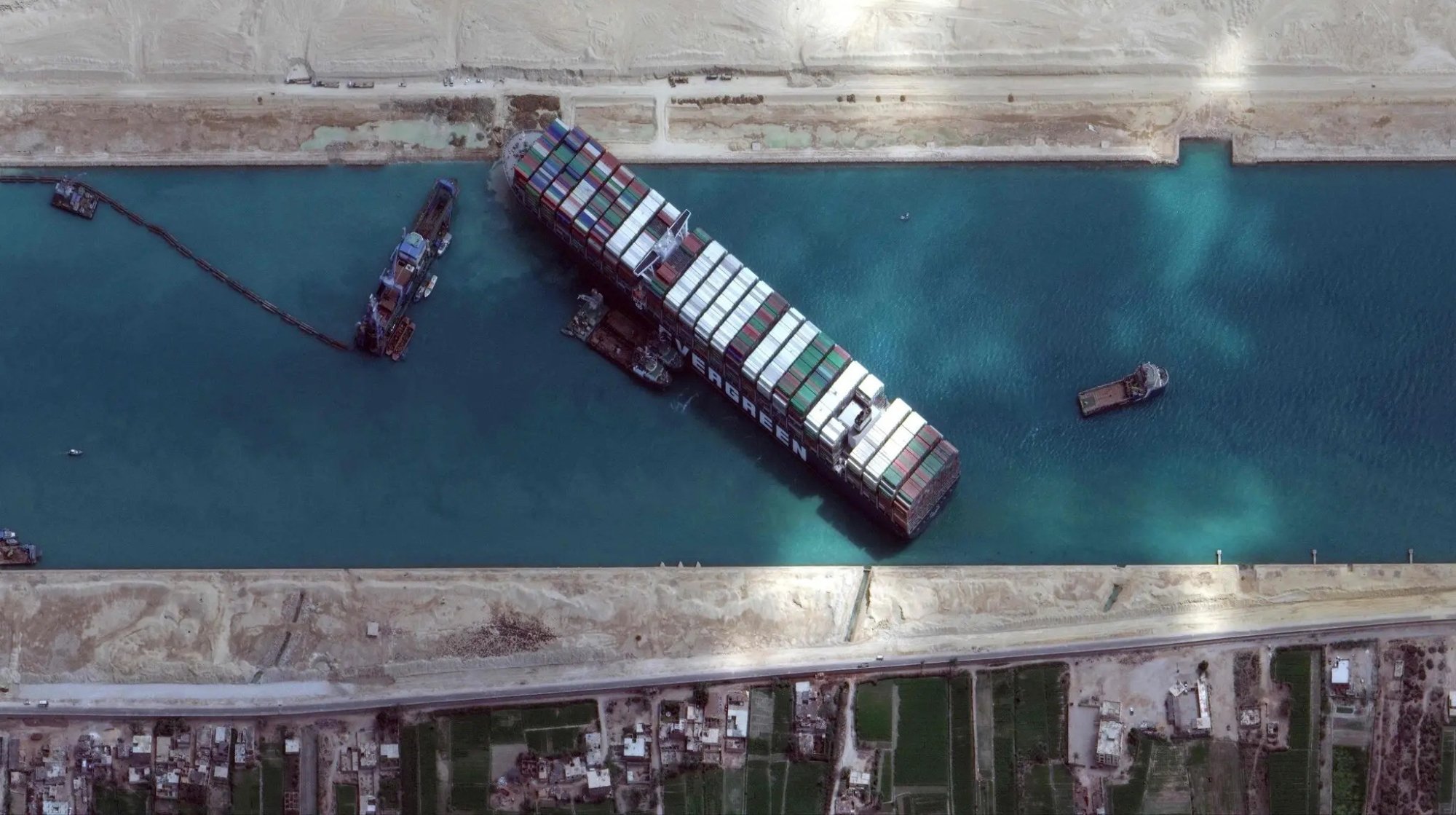
The superboat Ever Given clogged the Suez Canal in 2021. Photo: AFP
The Port of Baltimore is smaller than the largest container terminals in the U.S. – those in Southern California, Newark, New Jersey, and Savannah – but it is a key component of the vehicle supply chain, serving as a landing site for cars and trucks arriving from factories in Europe and Asia. It is also a crucial starting point for U.S. coal exports.
Many of these goods may experience delays in reaching their final destination, forcing shippers to make alternative plans and limit inventory. In an interconnected age, problems at one point can quickly be felt more widely.
Jason Eversole, CEO at FourKites, a supply chain consulting firm, said: “The collapse of the Francis Scott Key bridge will put pressure on alternative transportation methods and port alternatives.” Some goods that would have passed through Baltimore will likely end up in Charleston, Norfolk, or Savannah.
This will increase the demand for road and rail transport services, making it more complicated and expensive to get goods to their destination.
"Even if they clear the debris from the water, traffic in the area will be affected because truck drivers will become reluctant to transport goods in and out of the area if prices don't increase," said Mr. Eversole.
Anxiety is now gripping the supply chain, a topic no longer just a concern for trade professionals but also a subject of conversation among those trying to understand why they can't complete their kitchen renovations.
The fragility of global supply chains
We surely haven't forgotten the vivid memories of the alarming shortage of personal protective equipment during the first wave of COVID-19, which forced doctors in some of the wealthiest countries to go without masks or gowns while caring for patients. Households remember being unable to order hand sanitizer and scrambling for toilet paper, a scenario previously unimaginable.
Many of the worst impacts of major supply chain disruptions have significantly diminished or disappeared. The cost of shipping a container of goods from a factory in China to a warehouse in the U.S. skyrocketed from around $2,500 before the pandemic, to tenfold during the turmoil. Now that price has returned to historical levels.
Container ships are no longer lining up at ports like Los Angeles and Long Beach, California, as Americans flooded the system with orders for exercise bikes and barbecues during lockdown.
But many products remain scarce, partly because the industry has long employed just-in-time production: Instead of paying to stockpile more goods, for decades companies have reduced inventory to save costs.
They have become dependent on container shipping and global trade networks to get what they need. This leaves the world vulnerable to any unexpected impacts from freight transportation.
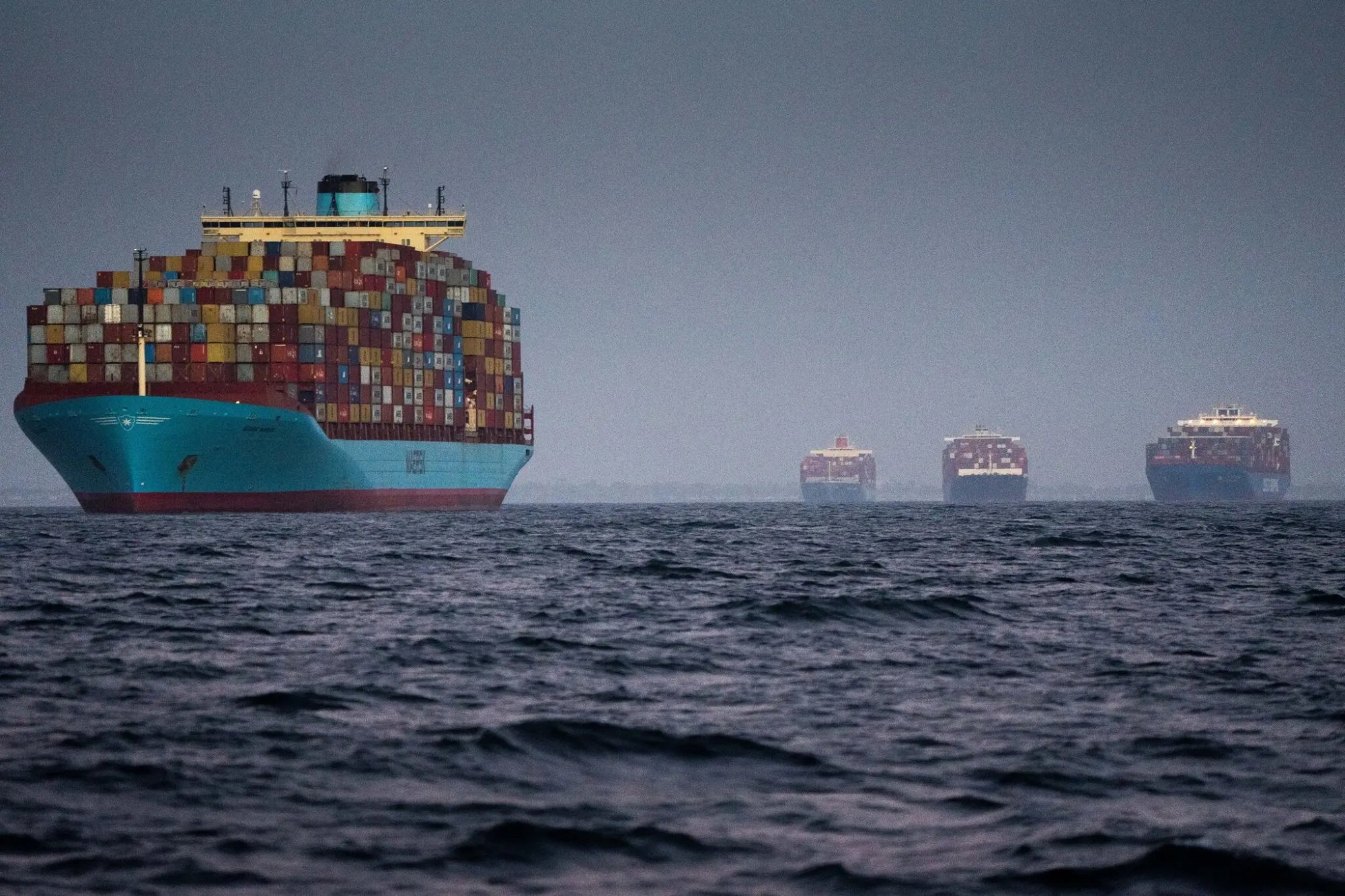
Container ships waiting to dock at the Port of Los Angeles were congested in 2021, at a time when the COVID-19 pandemic had not yet been brought under control. Photo: NYT
In America's rapidly developing cities, the housing shortage that is driving up home prices continues because contractors are still unable to secure items like electrical switches and water meters, which can take more than a year to arrive.
"The supply chain is still holding back construction," said Jan Ellingson, a real estate broker at Keller Williams in Casa Grande, Arizona.
Phil Levy, former chief economist at the logistics company Flexport, argues that it would be a mistake to infer from stubborn container ships that globalization itself is flawed.
"Why don't we do everything in one place so we don't have to worry about shipping?" he said. "Because it would be significantly more expensive. We save a huge amount of money by allowing companies to source components from the cheapest place."
However, companies are increasingly looking to limit their exposure to the vulnerabilities of shipping and changing geopolitical landscape. Walmart has shifted its industrial goods manufacturing operations from China to Mexico.
Other US retailers like Columbia Sportswear are looking for factories in Central America, while Western European companies are focusing on moving production closer to customers, expanding factories in Eastern Europe and Türkiye.
Given these transformative changes, the Baltimore disaster could be a temporary or long-lasting challenge to freight transportation. With supply chains, the consequences of any single disruption can be unpredictable.
A factory near Philadelphia might have hundreds of the raw materials needed to produce paint. However, a single delayed material—perhaps stuck on a container ship off the coast of California, or a shortage due to a factory in the Gulf of Mexico shutting down because of weather—could be enough to bring production to a halt.
The absence of a single critical component—a computer chip or a part that assembles it—can force automakers from South Korea to the American Midwest to freeze finished vehicles in parking lots, waiting for the missing part.
Somewhere on Earth—perhaps in America, and perhaps across the ocean—someone is waiting for a container stuck on a ship docked in Baltimore harbor.
And, that waiting may become more familiar, given the fragile nature of today's global trade flows.
Nguyen Khanh
Source

![[Photo] General Secretary and President visit the China-ASEAN AI Application Cooperation Center](https://vphoto.vietnam.vn/thumb/1200x675/vietnam/resource/IMAGE/2026/04/17/1776404277677_vna-potal-tong-bi-thu-chu-tich-nuoc-tham-trung-tam-hop-tac-ung-dung-ai-trung-quoc-asean-8706616-2286-jpg.webp)




















![[Photo] National Assembly Chairman Tran Thanh Man attends the policy seminar to promote Vietnam-Türkiye cooperation.](https://vphoto.vietnam.vn/thumb/1200x675/vietnam/resource/IMAGE/2026/04/16/1776351415367_vna-potal-chu-tich-quoc-hoi-tran-thanh-man-du-toa-dam-chinh-sach-thuc-day-hop-tac-viet-nam-tho-nhi-ky-8705791-jpg.webp)



















































![[Video] Preserving the "green gold" on Hong Thai Mountain](https://vphoto.vietnam.vn/thumb/402x226/vietnam/resource/IMAGE/2026/04/18/1776468522858_a1-jpg.webp)





Comment (0)