Inspiring ocean conservation
The project “Conserving Our Oceans: Building Healthy Relationships with the Ocean Through Education for Sustainable Development” is being implemented in collaboration with UNESCO and the Management Board of the Cu Lao Cham - Hoi An World Biosphere Reserve.
As the unit directly implementing the project, the representative of the Cu Lao Cham Nature Reserve Management Board stated that the project has exceeded expectations, with the number of participating students and teachers far exceeding the initial target. Over the two years of implementation, 12,385 students and 396 teachers participated in the project's activities.
Notably, 11,027 students were reached through formal education programs, contributing to making knowledge about the ocean, marine ecosystem conservation, and plastic waste reduction a regular part of school education, rather than being limited to occasional extracurricular activities. This is considered a crucial foundation for fostering awareness, responsibility, and environmentally friendly behavior towards the marine environment in young people while they are still in school.
Another significant achievement is the successful development and testing of the "Ocean Conservation Education" curriculum for primary and secondary school students, teachers, and the community in the Hoi An area. In addition, 35 core teachers and 9 administrators received intensive training on integrated teaching methods, creating a workforce to maintain and expand the model in the future.
Building on this foundation, the project implemented 273 lessons integrating marine conservation content at 4 pilot schools, attracting 7,407 students. Content on marine ecosystems, plastic waste, environmental change, and civic responsibility was integrated into various subjects and experiential activities, helping students access knowledge in a more visual and practical way.
According to Mr. Nguyen Hung Linh, Deputy Director in charge of the Cu Lao Cham Nature Reserve Management Board, the project's special feature lies in its field experience activities.
Students from six secondary schools participated in an environmental survey at the Cu Lao Cham - Hoi An World Biosphere Reserve, directly learning about the process of collecting and analyzing microplastic particles at Cua Dai beach; thereby gaining a clearer understanding of the connection between land-based activities and the health of the marine ecosystem.


Beyond classroom education, the project has successfully built a core network of students known as "Blue Gen." This group of young people participates in communication, proposes initiatives, and spreads actions to reduce plastic waste in schools and communities.
The event "When the Ocean is a School - The 'Blue Gen' Journey of the Cu Lao Cham - Hoi An World Biosphere Reserve" alone attracted 848 students and 85 teachers, creating a strong ripple effect in the message of ocean protection.
Through the project's activities, the Cu Lao Cham - Hoi An World Biosphere Reserve is gradually becoming an "open classroom" for ocean conservation. Students not only gain knowledge about marine ecosystems, coral reefs, seagrass beds, plastic and microplastic waste, but also directly observe, experience, discuss, and propose solutions for environmental protection.

Building the foundation for the future.
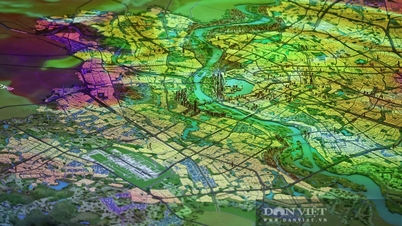
One of the project's long-term valuable products is the interactive diorama model of the Cu Lao Cham - Hoi An World Biosphere Reserve, built at the Cu Lao Cham Marine Conservation Communication Center.
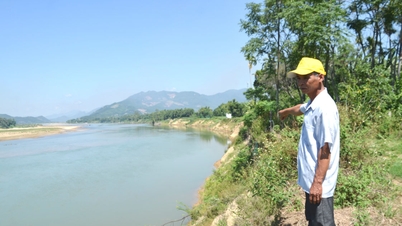
The model recreates the entire ecological space from the Thu Bon River basin, Hoi An city to the Cu Lao Cham island cluster using a "from source to sea" approach; helping viewers understand the connection between human activities and the marine environment.
More important than the numbers, the project has contributed to fostering habits of reducing single-use plastics in schools; raising awareness among the younger generation about ocean conservation; and creating a foundation for marine education to become a regular function of the Cu Lao Cham - Hoi An World Biosphere Reserve. This is considered a significant step forward in the effort to build a harmonious relationship between humans and the ocean, from the classroom to the community.
The Department of Education and Training acknowledges that the pilot materials on ocean conservation education have received much positive feedback, leading to further research and expansion into reference materials for school education throughout the city. Integrating marine conservation content into school curricula will be implemented appropriately, aligning with the goals and requirements of the 2018 General Education Program, ensuring it does not create additional pressure on students and teachers.



The leaders of Nguyen Binh Khiem Secondary School (Hoi An Tay ward) believe that integrating the content of "Conserving Our Oceans" into the curriculum and extracurricular activities is the right direction and should be continued and promoted to contribute to building a responsible young generation for a blue ocean and a sustainably developed Vietnam.
Ms. Miki Nozawa, Head of Education at the UNESCO Office in Hanoi, noted that the students' strong creative spirit was particularly encouraging for those implementing the project. Initiatives such as designing waste collection devices or proposing practical environmental solutions demonstrated that the students are not only learners but also problem solvers, contributing to spreading positive change in the community.
“The achievements we are celebrating today remind us that protecting the oceans is not just the responsibility of scientists, policymakers, or conservationists, but a shared responsibility of all of us. Education is one of the most powerful tools for inspiring and driving positive change,” said Miki Nozawa.
Source: https://baodanang.vn/lop-hoc-mo-ve-bao-ton-dai-duong-3341495.html



![[Photo] Strengthening character and expertise: Intense training for artillery soldiers.](https://vphoto.vietnam.vn/thumb/1200x675/vietnam/resource/IMAGE/2026/06/30/1782815602541_lu-368-1875-4571-jpg.webp)