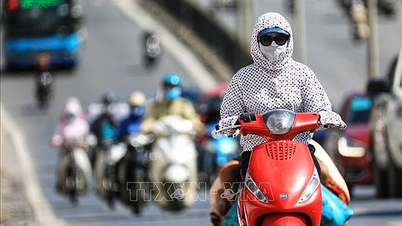
More worryingly, the impact of pollution is no longer a recent issue. It accumulates silently and leaves long-term consequences for people's health. A city may grow rapidly, may have skyscrapers and modern urban areas, but it can hardly be considered a livable city if its residents have to breathe polluted air every day.
In this context, the Hanoi City People's Council's approval of the "Low-Emission Zone within Ring Road 1" project and its pilot implementation starting July 1, 2026, is a significant decision for the present and future sustainable development of the capital city, clearly demonstrating a development orientation focused on people. This choice places the health and quality of life of the people at the top priority, affirming the consistent view that economic growth cannot be achieved at the expense of the living environment and public health.
Of course, no change is easy. Establishing low-emission zones will impact commuting habits and the use of personal vehicles, requiring adaptation from individuals and businesses. However, if we delay action simply because we are afraid of change, the price society will pay in the future will be far greater.
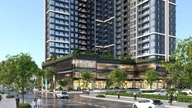


Many cities around the world have faced similar choices. And the reality is that cities that acted early in controlling emissions, developing green transportation, and improving the quality of life are becoming highly competitive, attracting significant investment, and possessing a superior quality of life.
As the capital of the country, the national political and administrative center, and one of the two largest economic powerhouses, Hanoi not only has the responsibility to develop itself but also to pioneer the experimentation of new models. Green transformation, green economy, green city, and green transportation are no longer optional concepts, but are becoming essential requirements of the times. Furthermore, this is the beginning of a restructuring of urban space. As public transportation develops, clean transportation becomes more prevalent, pedestrian areas, green spaces, and public services are expanded, and the face of Hanoi will gradually change. A city with less smog, less noise, and a more livable environment is the foundation for enhancing its attractiveness to investors, tourists, experts, and high-quality human resources.
In other words, low-emission zones not only create cleaner air but also open up new opportunities for urban economic development.
For the project to succeed, the city needs to continue improving its public transportation system, developing policies to support the transition to new modes of transport, ensuring social equity, and gaining broad public consensus. Because green transformation is a process where the State and the people work together, share responsibility, and strive towards a common goal.
Although much work remains to be done, the decision on low-emission zones, approved at the fourth session of the Hanoi People's Council, marks a new and particularly significant chapter for Hanoi. It represents the efforts of a Hanoi that refuses to accept the status quo; a Hanoi that dares to choose a more difficult but sustainable path of development; a Hanoi that prioritizes the right of its citizens and future generations to live in a clean environment. By choosing clean air over short-term convenience, and green development over growth at all costs, Hanoi has sent a message of constructive action that goes beyond the scope of a mere environmental plan, for the sustainable development of the city.

Source: https://hanoimoi.vn/lua-chon-cho-hien-tai-va-tuong-lai-1208480.html

![[Photo] The 13th National Congress of the Youth Union conducts personnel work.](https://vphoto.vietnam.vn/thumb/1200x675/vietnam/resource/IMAGE/2026/06/24/1782299943080_ndo_br_1-6868-jpg.webp)
![[Photo] Opening Ceremony of the 13th National Congress of the Ho Chi Minh Communist Youth Union](https://vphoto.vietnam.vn/thumb/1200x675/vietnam/resource/IMAGE/2026/06/24/1782286753905_ndo_br_1-8510-jpg.webp)

![[Photo] General Secretary and President To Lam attends the Central Public Security Party Committee Conference](https://vphoto.vietnam.vn/thumb/1200x675/vietnam/resource/IMAGE/2026/06/24/1782302063612_a1-bnd-9302-9166-jpg.webp)


![[LIVE] Hanoi in Motion: Developing Urban Railways - A Vision for the Capital City's 100th Anniversary](https://vphoto.vietnam.vn/thumb/402x226/vietnam/resource/IMAGE/2026/06/24/1782302652417_24-6.jpeg)





![[Video] Weather forecast for tonight and tomorrow, June 25, 2026: Hot and intensely hot weather will continue throughout the country.](https://vphoto.vietnam.vn/thumb/402x226/vietnam/resource/IMAGE/2026/06/24/1782306248499_dem-24-png.webp)