The region known for its kumquats for Tet (Vietnamese Lunar New Year).
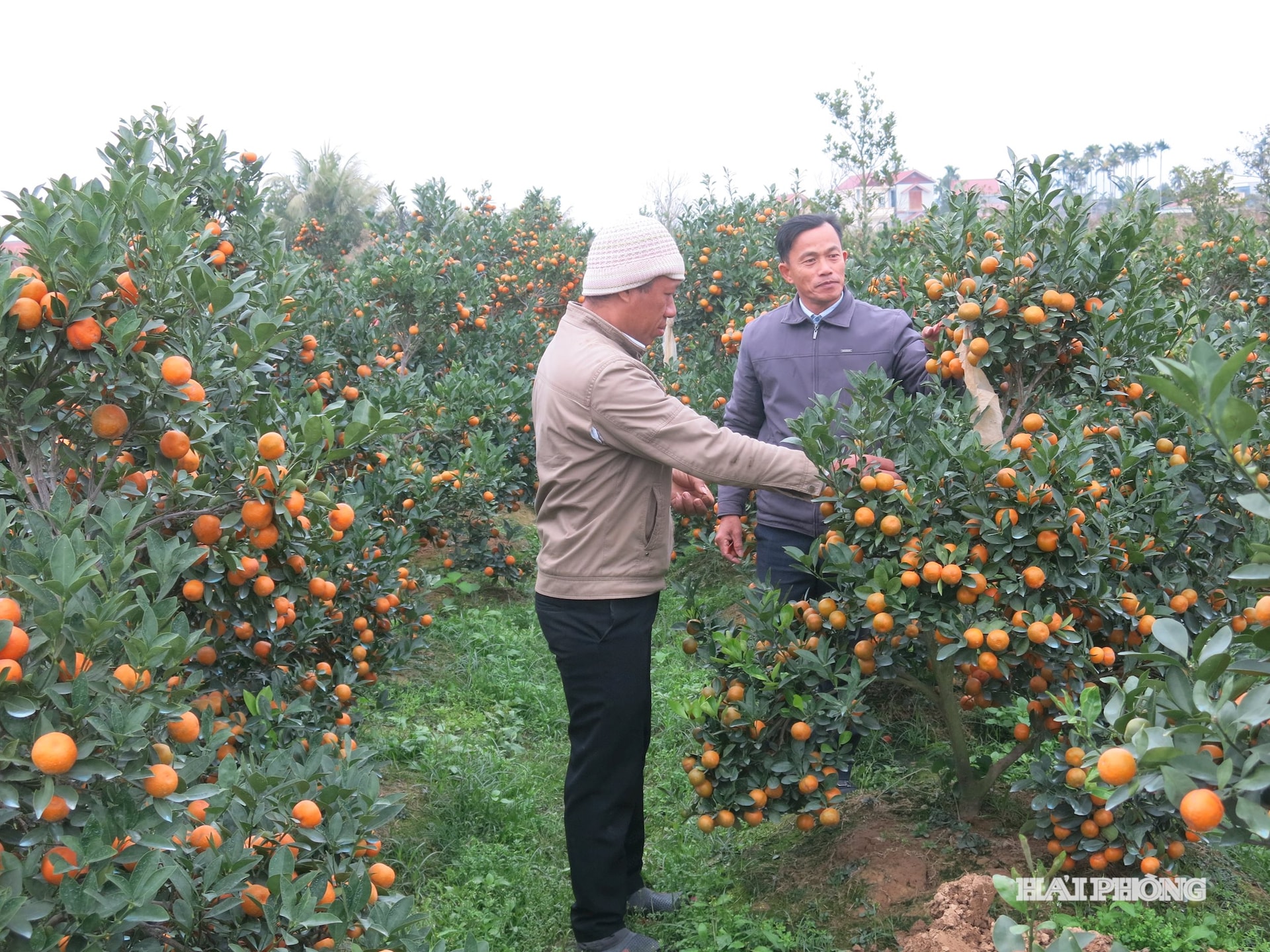
In late January 2025, many kumquat orchards in Luong Cau village were bustling with people coming to see and buy them. For many years now, every Tet holiday, along with the orchards in the communes and wards of An Duong, An Hai, An Khanh, and An Hung, which are famous for their beautiful ornamental kumquat growing areas, connoisseurs of ornamental kumquats still prefer those from Luong Cau because of their beautiful trees, large, juicy fruits, and the combination of ripe, unripe, flowering, and budding fruit on the trees.
Mr. Nguyen Van Thoi, a visitor to Tan Vien kumquat garden at the end of the year, said that compared to ornamental kumquats sold in the market, which are imported by small traders from specialized ornamental plant growing areas in other localities, the kumquats in Luong Cau always have a fresh, vibrant color and last longer. Some families keep their trees indoors for several months and they still look beautiful. "Every year, my family comes down to the gardens in Luong Cau to choose beautiful trees to decorate for Tet, hoping to bring the blessings of spring home sooner...", Mr. Thoi said.
To meet consumer demand, in the final days of the year, kumquat farmers in Luong Cau village are busy tending to their orchards so that the trees will bloom beautifully in the days leading up to Tet (Lunar New Year). Mr. Nguyen Ba Chi, head of Luong Cau village, said that the village has about 10 hectares of kumquat trees. Most of the farmers' orchards this year are very beautiful, and the selling price is higher than last year. Customers are ordering directly from the orchards for 2-2.5 million VND per medium-sized tree. Large, beautiful kumquat trees are priced from 5-7 million VND per tree.
About a month before Tet (Lunar New Year), some agencies, organizations, temples, and pagodas order kumquat trees from nurseries to decorate their homes for the holiday early. Some smaller kumquat trees are also sold wholesale by nurseries to dealers who then resell them to consumers at spring flower markets.



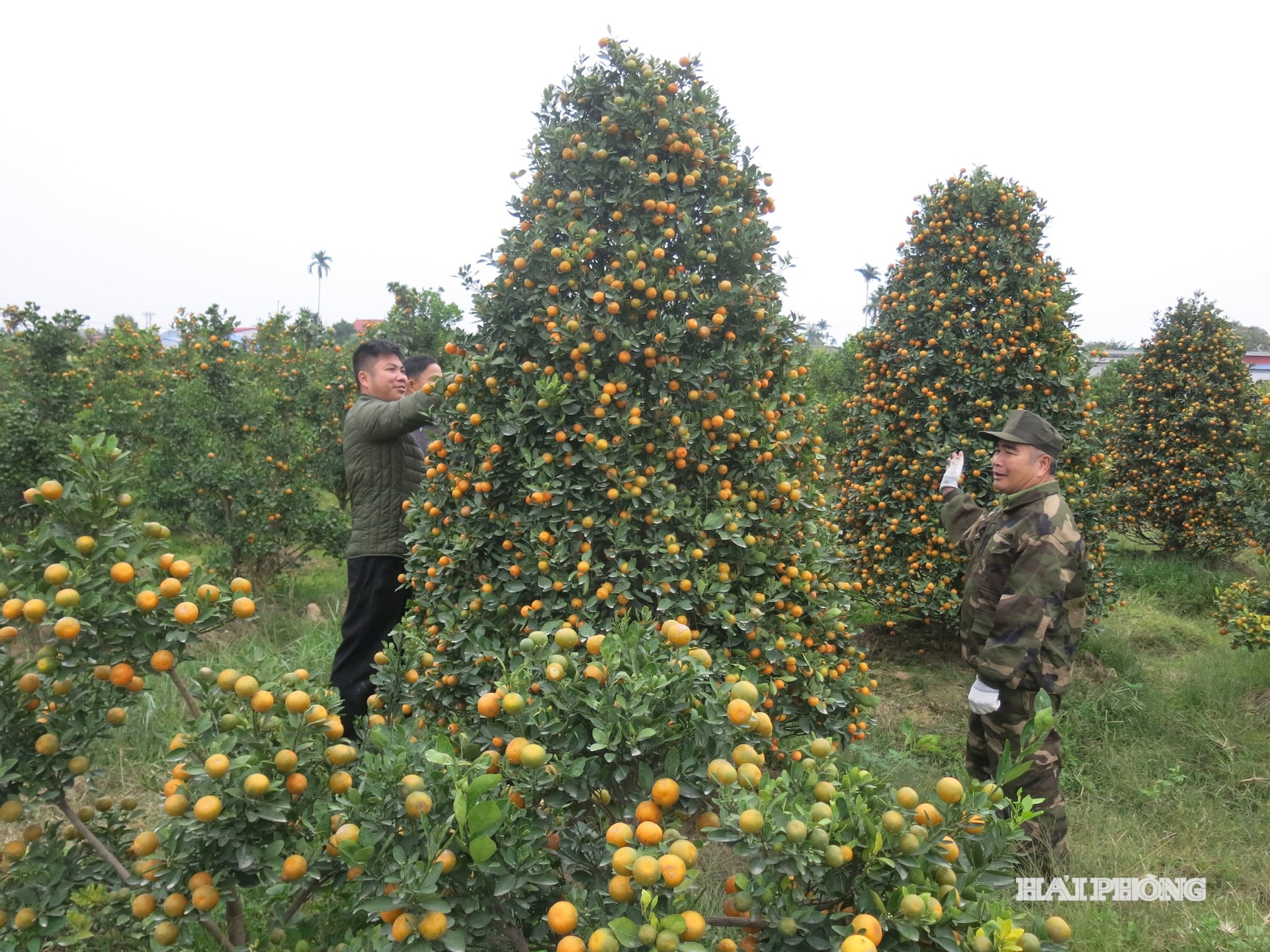
Mr. Nguyen Ngoc Kien from Luong Cau village shared that these days he is always busy in the fields until 10 PM, but he is still very happy because this is the harvest time after a year of hard work cultivating kumquat trees. This year, his family planted more than 1 hectare of ornamental kumquat trees with 300 trees, including 100 tower-shaped kumquat trees and 200 shaped kumquat trees. Growing kumquats yields higher economic value compared to other crops. Previously, his family grew rice and bananas, but the economic efficiency was not high, so they converted the entire area to growing ornamental kumquats. All 300 kumquat trees of his family have been ordered by customers directly from the garden.
An effort to bring the spirit of spring to every home.
What sets Luong Cau village apart and gives it its brand and reputation is the experienced and dedicated kumquat growers. Previously, the entire Luong Cau village area was used for rice cultivation, resulting in low incomes for the villagers, and even abandoned farmland in some cases.
However, some local people have taken the lead in planning production areas, shifting to growing flowers and ornamental plants, including introducing kumquat trees to the area. Mr. Nguyen Ngoc Nghia, one of the first farmers to grow kumquats in Luong Cau, shared that 20 years ago his family only planted them on a trial basis, then expanded to a few acres. After a few seasons, the kumquat trees brought higher economic value, so his family rented land from people who were not cultivating it to expand the area for growing kumquats. To date, Mr. Nghia's family grows nearly 1 hectare of ornamental kumquats with 1,000 trees per season, earning 350-400 million VND/hectare.
Despite their gardening experience, the people of Luong Cau village always keep up with market trends to produce beautiful ornamental kumquat trees that meet the increasingly high demands of consumers. Nguyen Ngoc Minh, a young farmer in Luong Cau village, said that initially, the villagers were only familiar with growing tower-shaped kumquat trees, but at one point, the market trend showed consumers preferred shaped kumquat trees, kumquat trees in pots, and kumquat trees in containers. Therefore, the villagers learned from experience and shifted towards growing shaped kumquat trees.
"Making kumquat trees like this requires meticulous attention to detail, hard work every day, and only at the end of the year do we have the beautiful tree shape that consumers appreciate…," Minh said.



The People's Committee of An Khánh commune has identified the Lương Câu kumquat growing area as one of the local strengths for agricultural economic development. The commune focuses on encouraging development, paying attention to and supporting farmers in planning the conversion of the area.
According to Pham Thi Hoa, Chairwoman of the An Khanh Commune People's Committee, to enhance the brand image of Luong Cau kumquats, the locality focuses on promoting and advertising the product, linking it with consumers, and supporting farmers with irrigation systems for production. Going forward, the locality will continue to assist with the necessary legal procedures for land conversion so that farmers can cultivate their land with peace of mind…
HO HUONGSource: https://baohaiphong.vn/luong-cau-vao-mua-quat-tet-534599.html