


SGGP 29/11/2023 06:52
A recent study published in the journal Frontiers in Marine Science has shed light on the natural storage of carbon and its accumulation rate in the East China Sea.
 |
| Marine sediments store a significant amount of carbon. |
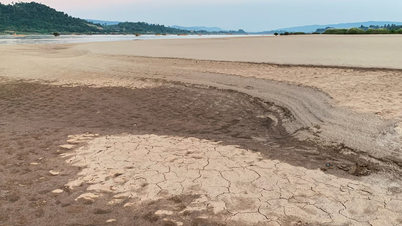
A study led by Dr. Haili Ma from China's Ocean University explores the role of marine sediments as carbon sinks and highlights the negative impact of reservoir construction on carbon storage. Marine sediments, particularly those found at continental margins, have the potential to store a significant amount of carbon (pictured). These sediments, which cover only 8% of the world's ocean surface, may store up to 80% of the planet's organic carbon.
The research team estimated the average global carbon stock in marine sediments to be 66.6 tonnes/ha. However, this amount of stored carbon is only a fraction of the rate of carbon growth in the atmosphere. Furthermore, only 40% of the carbon growth in seawater is likely to be absorbed by the oceans. It is crucial to consider the negative impacts of constructing underwater carbon reservoirs as it could inadvertently release naturally stored carbon. Therefore, the researchers urged extreme caution when planning future dam and reservoir projects.
Source





![[Photo] National Assembly Chairman Tran Thanh Man working with the National Assembly Committees](https://vphoto.vietnam.vn/thumb/1200x675/vietnam/resource/IMAGE/2026/02/24/1771915679930_bnd-7209-2157-jpg.webp)

























































































Comment (0)