Besides promoting improved product quality, the planting area code also serves as a "passport" for Hanoi's agricultural products to conquer demanding markets, expand export opportunities, and increase the value of agricultural production.
Standardizing production and increasing the value of agricultural products.
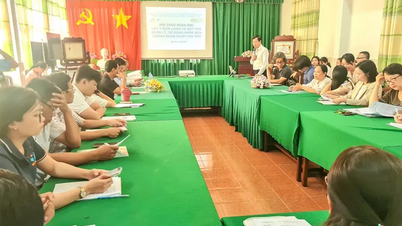
In accordance with Plan No. 169/KH-UBND of Hanoi City dated June 23, 2025, on the issuance and management of planting area codes in Hanoi City, localities, businesses, and cooperatives are accelerating the issuance of planting area codes to control production quality, trace origins, and meet the standards of import markets. This is not only a technical requirement in accordance with international practices but also an important solution to enhance the competitiveness of agricultural products in the capital city.
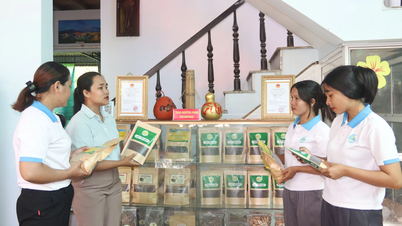
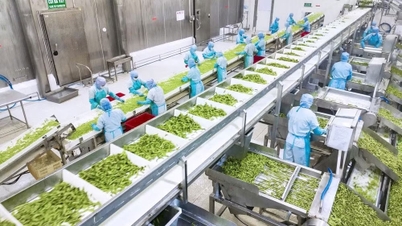
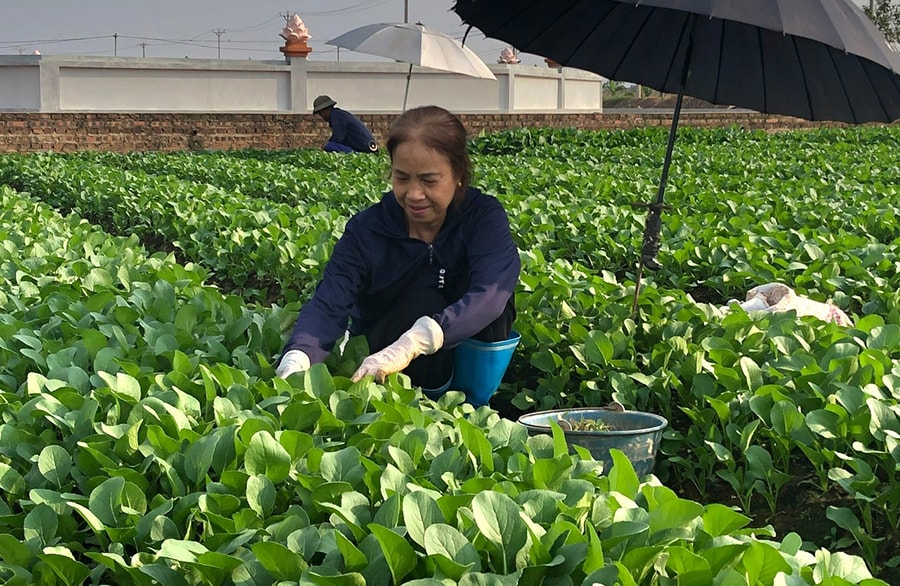
According to Truong Van Thuong, Director of Thang Loi Clean Vegetable and Fruit Production and Supply Cooperative (Me Linh commune), being granted a planting area code along with applying VietGAP-standard production processes has helped the cooperative's products easily access export markets. Each year, the cooperative exports 600-800 tons of agricultural products to the Chinese market, contributing to increasing product value and boosting income for local people.
The planting area code facilitates consumption activities and contributes to changing farmers' perceptions of safe agricultural production.

Similarly, the Van Duc Agricultural Production and Service Cooperative (Bat Trang commune) is developing a 220-hectare safe vegetable growing area with an annual output of over 30,000 tons. Nguyen Van Minh, Director of the Van Duc Agricultural Production and Service Cooperative, affirmed that the entire production process is monitored according to VietGAP standards, fully meeting the requirements for obtaining a planting area code. As a result, the cooperative exports approximately 500-700 tons of vegetables annually to Taiwan (China) and South Korea.
According to the Hanoi Department of Agriculture and Environment, the city currently manages 153 planting area codes, of which 148 are in the field of crop cultivation, covering a total area of over 1,128 hectares, including: rice, corn, vegetables, fruit trees, medicinal plants, flowers, ornamental plants, and tea. In addition, Hanoi currently has 5 planting area codes for export purposes with a total area of over 37 hectares. Products that have been granted export codes include: longan exported to Australia, New Zealand, the United States, and China; bananas exported to China; and pothos plants exported to the United Kingdom, Japan, and European markets.
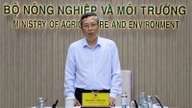
According to Nguyen Manh Phuong, Deputy Director of the Hanoi Department of Agriculture and Environment, coding agricultural zones brings many practical benefits to producers. Through the management system, specialized agencies can control cultivated areas, monitor production processes, warn of diseases, guide the appropriate use of pesticides, and forecast yields. As a result, the products produced have consistent quality, meeting the requirements of demanding markets.
Continue to expand the raw material export area.
However, the process of establishing and maintaining planting area codes still faces many difficulties. The biggest bottleneck currently is the small-scale and fragmented nature of production. Many production areas do not meet the minimum area requirements as stipulated, especially for perennial crops. Furthermore, the linkages between farmers, cooperatives, and businesses are not yet strong, making it difficult to maintain the uniformity of the raw material supply area. A segment of producers still lack a thorough understanding of technical requirements regarding production logkeeping, input material management, and traceability.
According to Bui Thi Hanh Hieu, General Director of Bao Minh Agricultural Products Processing and Trading Joint Stock Company (Dinh Cong Ward), the biggest challenge currently is changing the mindset and production practices of the people. To build and maintain the planting area code, uniformity in the cultivation process is needed among all participating households. Just one household failing to comply with regulations can affect the entire raw material area.
Based on practical implementation, Trinh Thi Nguyet, Director of Dong Phu Organic Agricultural Cooperative (Hoa Phu commune), suggested that relevant agencies continue to support training and capacity building for cooperatives and businesses. At the same time, relevant agencies need to build a digital database and apply technology in managing growing areas and traceability to improve management efficiency and meet the requirements of the export market.


According to Nguyen Manh Phuong, Deputy Director of the Hanoi Department of Agriculture and Environment, the city will continue to develop export-potential products in the coming period, such as: over 7,000 hectares of Japonica rice, 3,200 hectares of pink banana, over 5,000 hectares of safe vegetables, 50 hectares of organic vegetables, and many processed products with high added value. To expand the areas of certified raw materials, the Hanoi Department of Agriculture and Environment is stepping up efforts to raise awareness among people, businesses, and cooperatives about the role of planting area codes and packaging facilities.
Thanks to the efforts of government agencies, businesses, cooperatives, and the people, Hanoi is gradually expanding standardized production areas and building high-quality raw material zones to serve exports.
Source: https://hanoimoi.vn/ma-so-vung-trong-tam-ho-chieu-dua-nong-san-ha-noi-ra-the-gioi-1208177.html

![[Photo] Opening Ceremony of the 13th National Congress of the Ho Chi Minh Communist Youth Union](https://vphoto.vietnam.vn/thumb/1200x675/vietnam/resource/IMAGE/2026/06/24/1782286753905_ndo_br_1-8510-jpg.webp)
![[Photo] General Secretary and President To Lam attends the Central Public Security Party Committee Conference](https://vphoto.vietnam.vn/thumb/1200x675/vietnam/resource/IMAGE/2026/06/24/1782302063612_a1-bnd-9302-9166-jpg.webp)
![[Photo] The 13th National Congress of the Youth Union conducts personnel work.](https://vphoto.vietnam.vn/thumb/1200x675/vietnam/resource/IMAGE/2026/06/24/1782299943080_ndo_br_1-6868-jpg.webp)