"Guidelines"
There's a question journalists today are constantly asking: Amidst the "jungle" of information on social media, where does the voice of mainstream journalism stand? The answer lies in two words: "Identity."
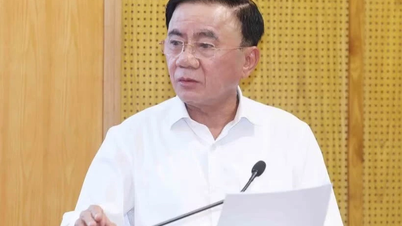
According to Comrade Trinh Van Quyet, Member of the Political Bureau, Secretary of the Central Committee of the Party, and Head of the Central Propaganda and Mass Mobilization Department, revolutionary journalism is not simply a channel of information, but an integral part of the Party's ideology and culture, demonstrating its commitment to the supreme interests of the nation.
Journalist Tran Duc, Deputy Editor-in-Chief of the Border Guard newspaper, shares the same view, stating that in real life, "national interest" is not something too far-fetched. It's when a timely article reflects the concerns of people in flood-stricken areas, when fishermen speak out in defense of maritime sovereignty , or when insightful analyses of tax policies affecting the pockets of workers are presented. When writers put themselves in the position of the people, each line of news is no longer just meaningless words, but becomes a "soul" connecting social consensus.
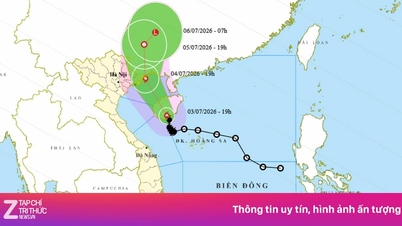
We are living in an era of rapidly developing digital technology and artificial intelligence (AI). AI can synthesize data in seconds, write weather forecasts or football match results with pinpoint accuracy. However, AI cannot replace the perspective and insight of a journalist regarding real-life situations.
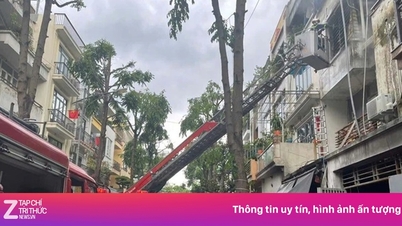
Imagine the scene of a fire or a poor street corner awaiting demolition. AI can describe the image, but only humans can feel the heat of the fire, the trembling in the voices of witnesses, and the tears of those involved… AI cannot venture into danger for an ideal, nor can it empathize with the suffering of its fellow citizens.


Journalist Thu Hoa (VOV2, Voice of Vietnam Radio) expressed: Technology is a means, but thinking and ethics are the ends. Many experts have noted that artificial intelligence brings a new look to journalism, but creating "style" and "humanity" remains the prerogative of humans. In the digital age, the challenge for journalists is not to race against machines, but to race to maintain integrity, authenticity, and depth in each work.

A reliable "filter" amidst a sea of information.
Journalist Tran Duc, Deputy Editor-in-Chief of the Border Guard Newspaper, shared a practical perspective: Modern journalism must assume the role of a reliable "filter".
When a false rumor spreads on social media, causing public panic, where will people turn to verify it? This is where the role of newsrooms, reporters, and editors becomes crucial. Journalists are not just storytellers; they must be information guides and predictors. The "write whatever comes to mind" mindset is outdated. Instead, each article must be an intellectual product, offering constructive solutions and a multifaceted perspective.
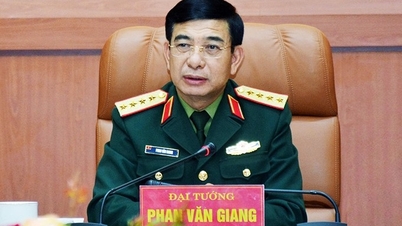
General Nguyen Trong Nghia, Member of the Politburo, Secretary of the Central Committee of the Communist Party of Vietnam, and Head of the General Political Department of the Vietnam People's Army, emphasized: The press needs courage and responsibility in social critique. Criticism is not about extreme condemnation, but about objective reflection to improve policies. This is when journalists point out shortcomings in urban management, loopholes in the law that lead to corruption, waste, and negative practices. To do this, journalists must have "clean hands" to avoid temptation and a "warm heart" to defend what is right.
The struggle against evil and corruption is never easy; it always demands dedication, sometimes even silent sacrifice. But it is precisely these incisive articles that best demonstrate the resilience of revolutionary journalism, a force that has always stood alongside the nation in sifting through the bad and upholding the values of "Truth, Goodness, and Beauty."


Looking back at the 101-year journey of Vietnamese revolutionary journalism, the press has always been present in the most difficult and important places. From journalists and soldiers who fell in battle, their hands still clutching cameras, to today's reporters diligently working on the border, on islands, or in high-tech laboratories. "Vietnamese revolutionary journalism has always been persistent, loyal, and dedicated to serving the cause of the Party and the people. It has been a journey not only of roses, but also full of thorns and ups and downs," Comrade Nguyen Trong Nghia emphasized.
The press is facing a new era. The aspiration for a strong and prosperous Vietnam by 2045 is no longer just a goal on paper, but a command from the heart of every citizen. The press must be a spiritual driving force, a torch that ignites faith and awakens the strength of over 100 million compatriots.
Vietnamese revolutionary journalism, armed with a glorious tradition and modern technology, is confidently entering a new era. No matter how rapidly technology and AI develop, journalistic works that reflect real life, are practical, and prioritize the people will always hold a special place in the hearts of readers.
Source: https://baotintuc.vn/thoi-su/mat-sang-long-trong-soi-chieu-nhip-dap-thoi-dai-20260617085816827.htm