

The haunted house
Revolving around the nearly five-decade story of the Conroy family, the book is told from Danny's perspective, from his childhood as a 12-year-old boy to his adulthood, marriage, and independent life. Things begin to change as family members leave one by one: his mother "disappears" to India, his sister Maeve leaves home for college, his father marries his stepmother Andrea, and then passes away. Throughout this journey, the Dutch house stands as a crucial witness, representing the rise and fall of the family and the hidden pain within.

The author Ann Patchett and her novel *The House of the Dutch*
THE NEW YORK TIMES AND HAI DANG BOOKS
Known for her novels that explore emotions and poetic language, in this book, the Dutch house is particularly depicted by the author as a symbol with many meanings. It is the "fruit" of Mr. Conroy's efforts to rise from nothing thanks to his luck in real estate, but also the rejection of the sensitive mother, who thinks she lives comfortably in a mansion filled with Dutch paintings, while forgetting the many suffering people out there.
It symbolizes a happy family, but it is also the source of heartbreak and pain. It depicts two sisters suddenly losing their parents and all memories of them when their stepmother, Andrea, cruelly drives them out of the home that raised them. The house stands there like a ghost, cursing anyone who dares to disturb or disrupt what already exists. The house "stirrs" precisely because of what it carries: the hopes of a prosperous life, and the unspoken hatred that the marginalized individuals harbor within them.
This novel shares many similarities with *A Peaceful America* , Philip Roth's 1998 Pulitzer Prize-winning work. In both, the wealth and rise of the previous generation is placed within a circle of skepticism about a world still rife with poverty. While Roth's character, the Swede, became wealthy through the leather trade, Conroy's character is wealthy through real estate. If the Swede's daughter is exiled and converted to Jainism as punishment for her family's wealth gained through supporting the Vietnam War, Conroy's character also goes to India to care for the poor… Both novels depict America as traumatized by the post-war period, causing vulnerable individuals to hollow themselves out and others.
Among the options
Most of the characters in this work harbor selfishness, ultimately hurting those left behind. The mother leaves because she believes she's living too comfortably, abandoning her children in the belief that they will be raised in wealth. The father marries a woman he doesn't love simply to fill a void, with the almost sole requirement that she must love the estate his first wife despised. Then there's the older sister who forces her younger sibling to study medicine to inherit the meager fortune because their stepmother took everything that rightfully belonged to them… All the characters have chosen the wrong paths, and they will ultimately pay the price for them.
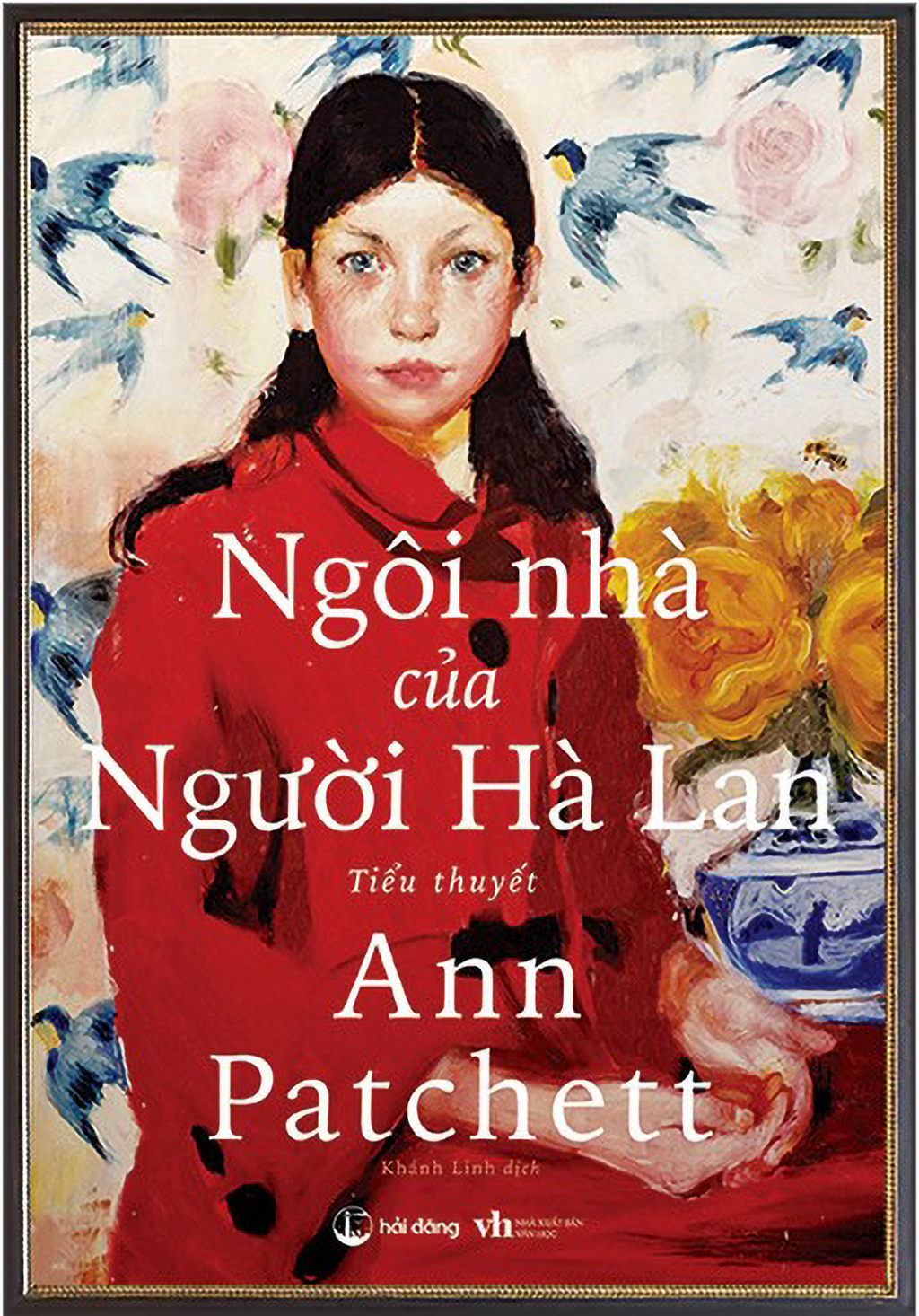
Humans are inherently blinded by their own misfortunes, so these mistakes gradually transform into feelings of hatred, leading to revenge and selfishness. Selfishness isn't just in the motives behind their actions; upon returning, they continue to open up new abysses, where forgiveness or hatred traps them in a dilemma at a crossroads. The Dutch home is like a gathering place for ghosts of hatred, relentlessly haunting and spreading terror, making forgiveness even harder to achieve as one becomes immersed in those memories and wounds.
One of the novel's successes lies in Ann Patchett's creation of a narrative voice that intersects at many points. The character Danny possesses a strong masculine quality inherited from his father, from his almost identical appearance to his interest in real estate; but he also harbors feminine traits, having lived from a young age in a house filled with women: his mother, sister, cook, housekeeper, and even the portraits hanging throughout the house… This comprehensive, somewhat complex character development and the way the plot follows this direction make *The Dutch House* multifaceted and full of meaning.
The author follows the characters' journey of maturation, thereby constructing a grand, epic work. She also meticulously constructs a time-shifting plot, situated between the present and the past, showing that although the setting remains the same, the thought processes have now shifted, guiding the characters towards maturity and self-liberation. As she writes: "We perceive everything in the past from our present perspective, so we don't see the past as we were in the past. We see it with our present eyes, and that completely changes the past."
This contributes to a forgiving perspective on what has happened, and also shows that as time passes, it becomes the glue that binds things together, helping the scars to heal. Once the mistakes are let go, people look back and can see how deeply they were immersed in a veil of hatred and illusion. A novel written with a captivating rhythm, refined language, and a plot that keeps you turning the pages.
Ann Patchett, born in 1963, is an American author. Throughout her writing career, she has been nominated for and received numerous prestigious awards, most notably the PEN/Faulkner Award in 2002 and the Orange Prize (the predecessor of the Women's Prize for Fiction) for her novel *Bel Canto *. In 2019, *The House of the Dutch* was published and was a finalist for the 2020 Pulitzer Prize in the fiction category.
Source link



![[Photo] Prime Minister Pham Minh Chinh receives the Chinese Ambassador to Vietnam](https://vphoto.vietnam.vn/thumb/1200x675/vietnam/resource/IMAGE/2026/04/05/1775397481797_ndo_br_dsc-5512-jpg.webp)



























































































Comment (0)