

Spending tens of millions of dong to buy a generator.
Hastily taking dozens of freshly expressed breast milk packets out of the freezer for her child, Ms. V., residing in the An Binh apartment complex (Bac Tu Liem District, Hanoi ), looked dejected as she recounted how her apartment building announced a power outage on June 6th, from approximately 5 PM to 2 AM the following morning. "The milk, meat, chicken, vegetables… everything in the freezer has to be taken out and prepared for safekeeping. My two children will also have to go to their grandmother's house tonight. If this situation continues, I don't think I can bear it," Ms. V. shared.
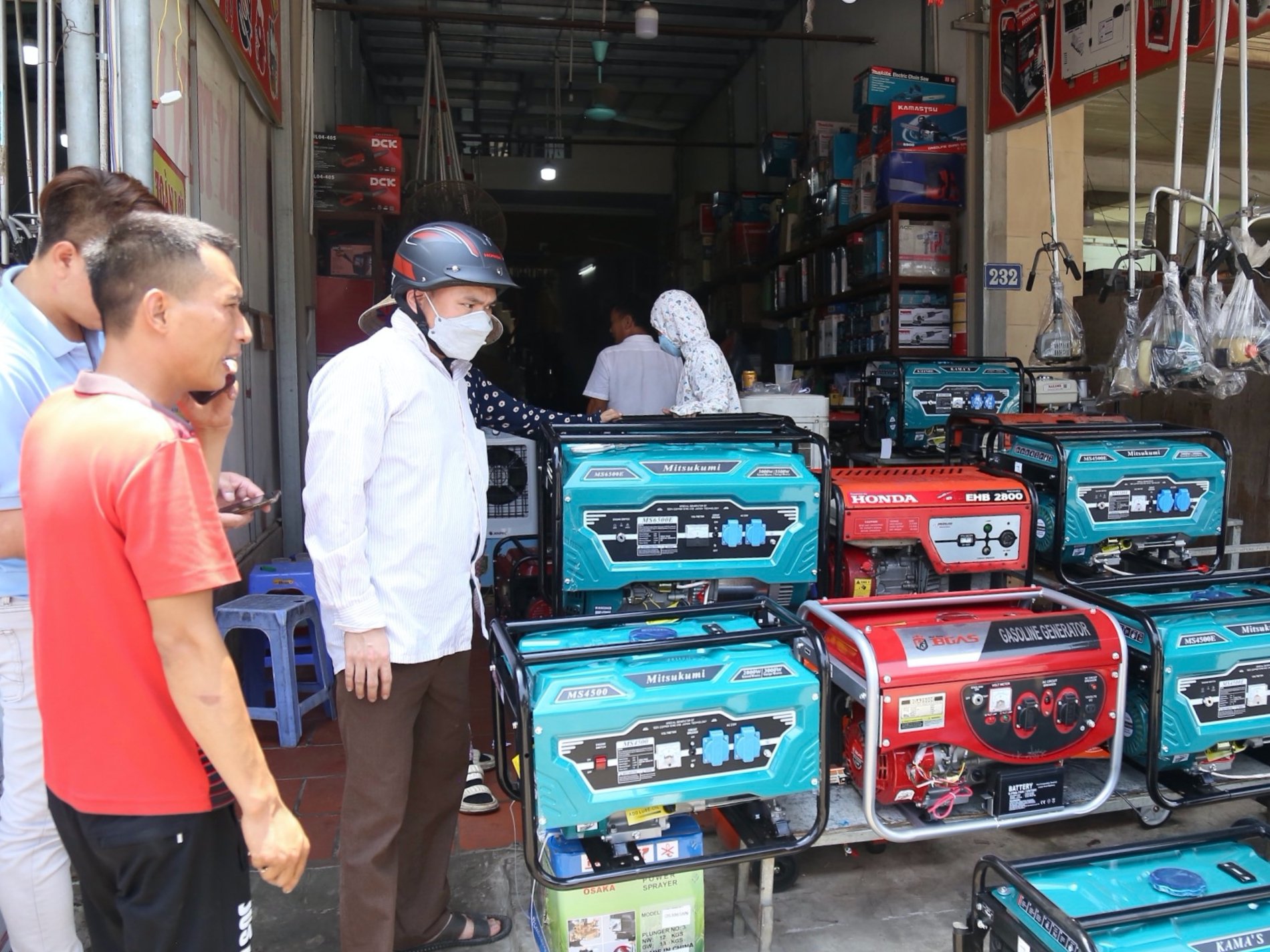
With prolonged power outages in the north, many residents are reluctantly spending tens of millions of dong to buy generators for their daily needs.
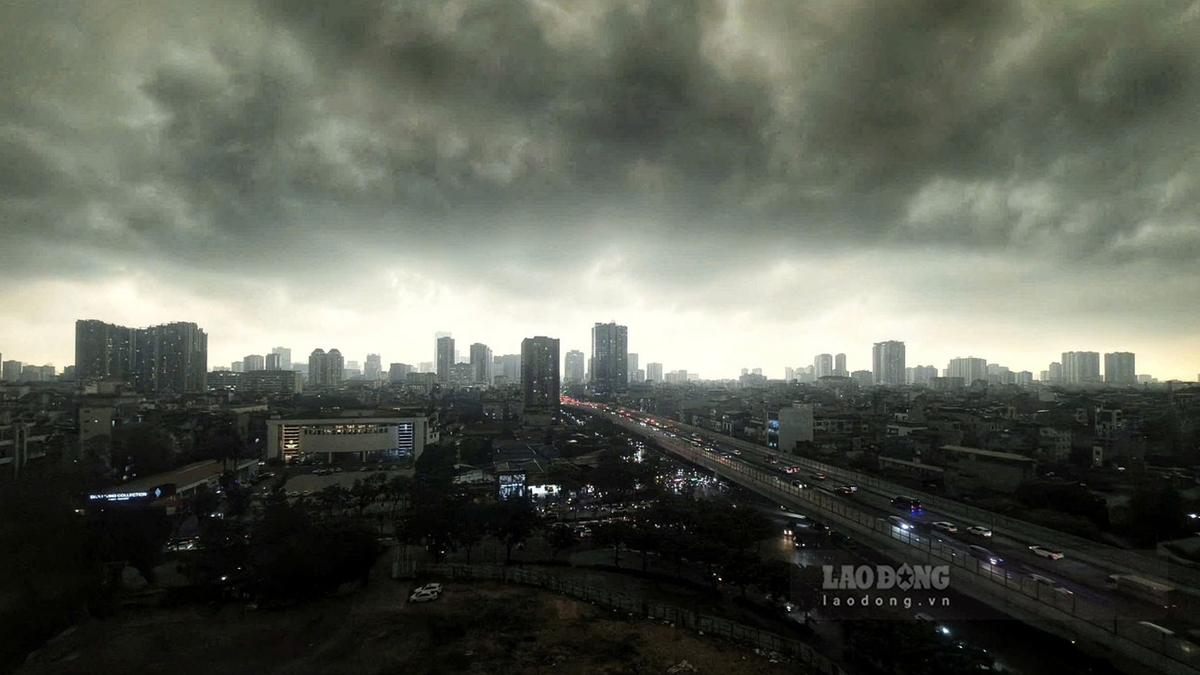
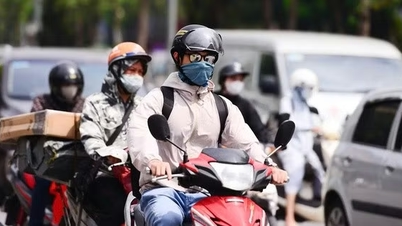
Cases like Ms. V.'s are typical of the difficulties people face during intense heat when power is cut off. Observations in Hanoi and several northern provinces show that this situation disrupts daily life and causes economic losses and reduced income for many households.
In Long Bien District (Hanoi), people flocked to AEON Mall Long Bien to escape the heat. Seating areas in the lobbies and on all floors were constantly packed. Many families even used strollers as makeshift nap spots for their young children. Mr. Le Van Trung (Chuong My District, Hanoi), whose granddaughter was home for summer vacation but frequently experienced power outages, reluctantly spent 12 million VND to buy a generator. "Even adults can't stand the heat and power outages, let alone young children. Out of love for my grandchildren, I bought a generator to power electric fans," Mr. Trung said.
Meanwhile, in Quang Minh commune (Ba Vi district, Hanoi), frequent sudden power outages cause losses for many livestock farmers. "In the early morning of June 2nd, the area around my house lost power, causing about 2,000 chickens to die from heat and suffocation, resulting in losses of nearly 100 million VND," said Ms. Linh, a local livestock farmer.
Bac Giang province is also a hotspot. These days, people are rushing to buy generators and rechargeable fans. Depending on the capacity, generators cost from several million to over ten million dong, but many electronics stores have run out of stock. On some days, one business sold around 300 generators but still couldn't meet the demand. According to the Bac Giang Provincial People's Committee, from June 6th onwards, the electricity sector will prioritize supplying power to businesses during the day to maintain production, and will supply power for households at night. However, this power supply solution is causing concern among people, especially business owners. Ms. Vu Thi Giang, a small business owner in Bac Giang City, said that if there is a power outage all day, she would have to run her generator for about 12 hours continuously for 20 days, which is very costly, not to mention the days without electricity when goods cannot be transported. "My family runs a business selling printing paper, and paper is used extensively for photocopying and printing. With the electricity being cut off for so long, it's very difficult for us to operate. Or, for businesses selling frozen goods, where will they get the money to run a generator?" Ms. Giang said worriedly.
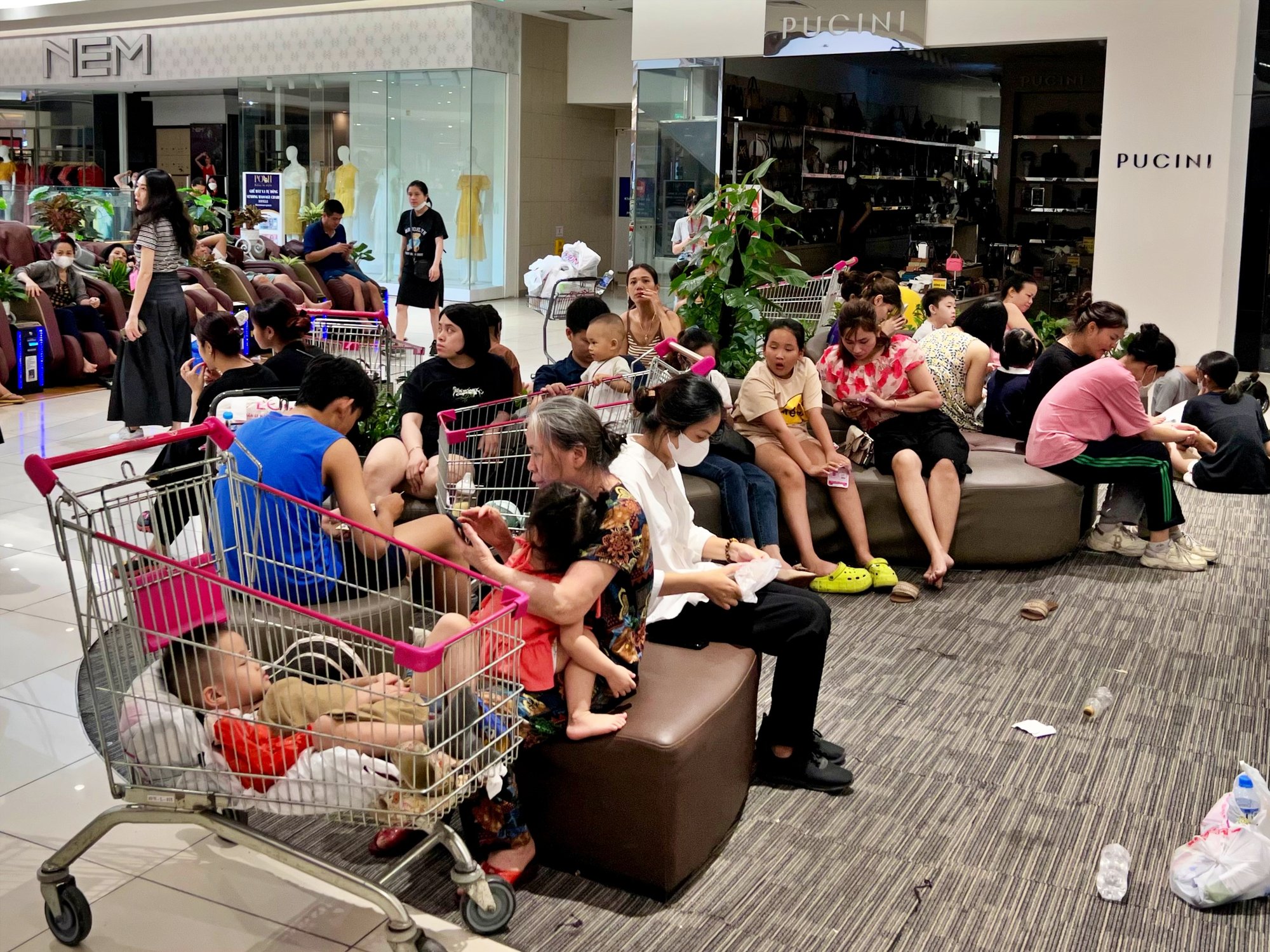
Many families went to the shopping mall to escape the heat when their homes were without electricity.
Save money thoroughly.
The North not only faces the "risk of electricity shortage" but is already experiencing an actual "electricity shortage," a fact acknowledged by Deputy Minister of Industry and Trade Do Thang Hai at the recent regular government press conference.
Speaking to Thanh Nien newspaper , an EVN leader confirmed that the electricity supply to the northern provinces is in a very difficult situation due to the prolonged heatwave, the extremely high demand for electricity, and the fact that many hydropower reservoirs are running low and unable to operate effectively. Thermal power plants are also experiencing reduced capacity.
By June 3rd, most hydropower reservoirs in the North had reached their dead water levels, including large reservoirs such as Lai Chau, Son La, Tuyen Quang, Ban Chat, Hua Na, and Thac Ba. In particular, the Lai Chau and Son La hydropower plants, which supply a significant amount of electricity to the North, are operating at minimum capacity below dead water levels, posing significant operational risks. EVN is striving to maintain the operation of the Hoa Binh hydropower plant to control the system. The total unutilized capacity of hydropower plants in the North is approximately 5,000 MW. Many coal-fired thermal power plants in the system are also experiencing reduced capacity or malfunctions due to continuous high-capacity operation. According to EVN, as of June 5th, 10 thermal power plants had experienced a reduced capacity of approximately 926 MW, and 11 others had encountered problems due to overload operation, resulting in a total lost and unutilized capacity of up to 3,250 MW.
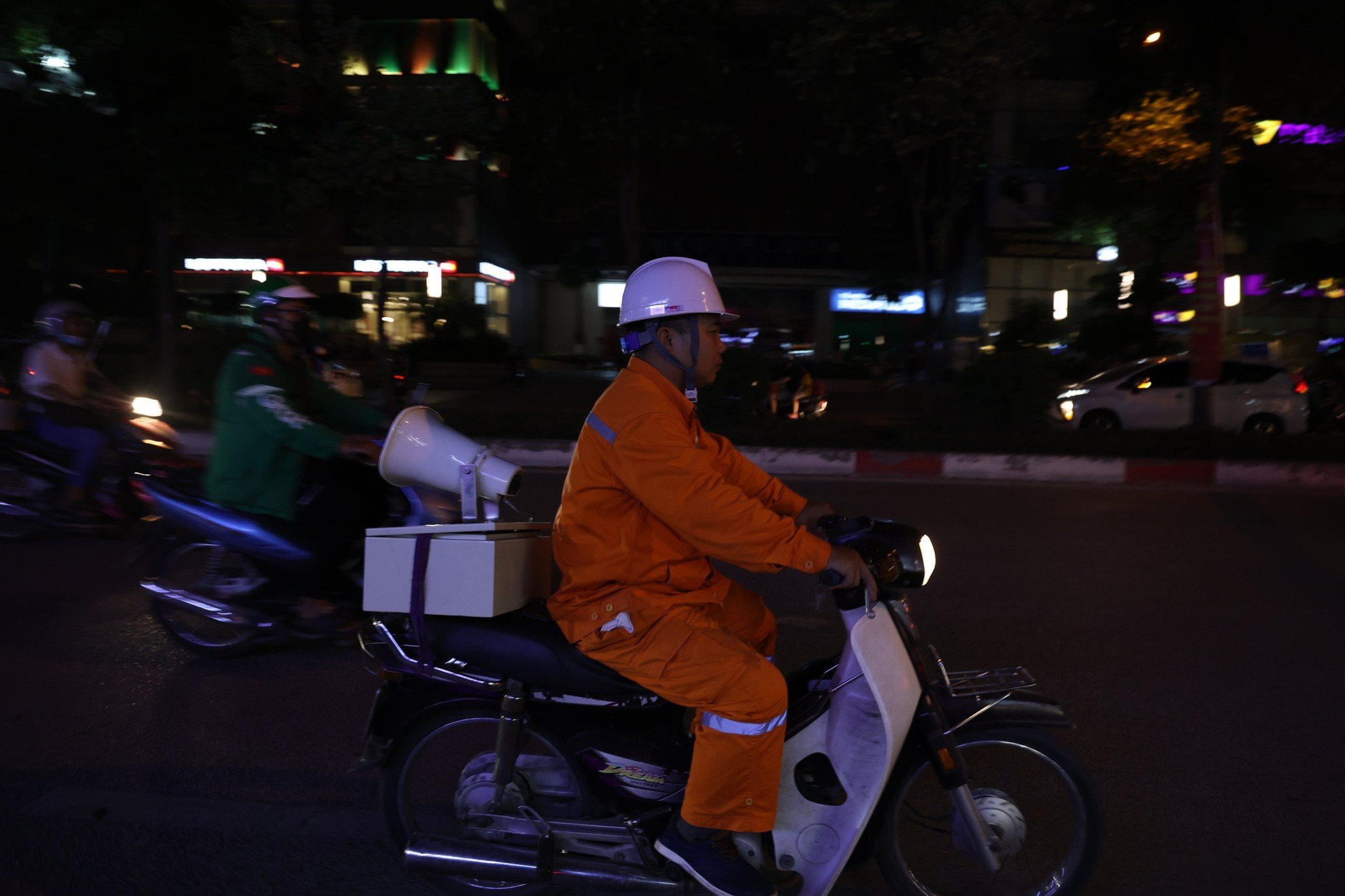
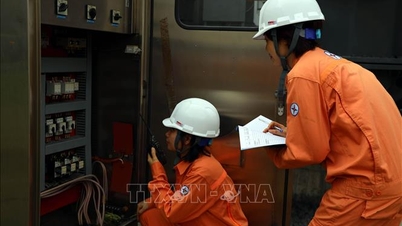
Electricity workers in Hoang Mai District (Hanoi) used loudspeakers at night to urge residents to save electricity.
According to EVN leaders, the corporation has been implementing various solutions to supply electricity to the North; however, the electricity shortage cannot be resolved overnight and is predicted to last until the end of June. Specifically, EVN has been operating the 500 kV transmission line at maximum capacity to transmit electricity from the South to the North and cannot increase it further. For thermal power plants, the coal supply is sufficient to meet operating needs. When thermal power plants experience problems, EVN requests that coal be transferred to other plants with increased capacity to maximize power generation. "Supplementing the electricity supply to the North is currently very difficult; there is no other way than for consumers to save electricity thoroughly and use it as efficiently as possible to overcome the current difficulties," the EVN leader said.
The Prime Minister has ordered an investigation into EVN's electricity supply situation.
The Prime Minister has just issued a directive instructing the implementation of solutions to ensure electricity supply. The Prime Minister requested the Ministry of Industry and Trade to thoroughly review and assess the current electricity supply situation, and urgently guide EVN in developing proactive scenarios to promptly respond to difficulties in electricity supply and organize implementation according to regulations, completing this before June 10th. At the same time, the Prime Minister's directive on strengthening electricity saving in the period 2023-2025 and subsequent years should be finalized and submitted to the Prime Minister for signing and promulgation before June 8th.
Urgently finalize the Prime Minister's directive on ensuring electricity supply and providing coal and gas for electricity production in the coming period. Research and provide guidance on resolving definitively, within the scope of authority, wind and solar power projects that have been invested in and constructed but do not meet the deadline for applying the FIT price mechanism (the deadline has expired). Urgently provide guidance on electricity price negotiations in the spirit of "harmonious benefits, shared risks" for the aforementioned wind and solar power projects according to regulations, to be completed by June 2023...
Specifically, the Prime Minister requested the Minister of Industry and Trade to direct the establishment of a specialized inspection team in accordance with the law on electricity management and supply by EVN from January 1, 2021 to June 1, 2023.
Mai Ha - Hau Ward
Mr. Ha Dang Son, Director of the Center for Energy and Green Growth Research under the Vietnam Union of Science and Technology Associations, said that it is "unfortunate" that the North is experiencing electricity shortages due to many objective factors, including difficulties in the supply of coal and gas for electricity production; many projects are behind schedule; and prolonged hot and dry weather is causing hydropower plants to lack water for electricity generation. "When hydropower reservoirs reach their dead water levels, it means the entire power system's mobilization capacity will no longer be over 50,000 MW as before. According to the information we have received, the mobilization capacity will drop to around 40,000 MW, or even lower. In this case, when the load reaches 46,000 - 47,000 MW as it has recently, especially in the North, the load is very high but the supply capacity is very low, leading to overload and causing power outages. When consumers use a lot of electricity during peak hours, it can easily lead to widespread power outages," Mr. Son explained.
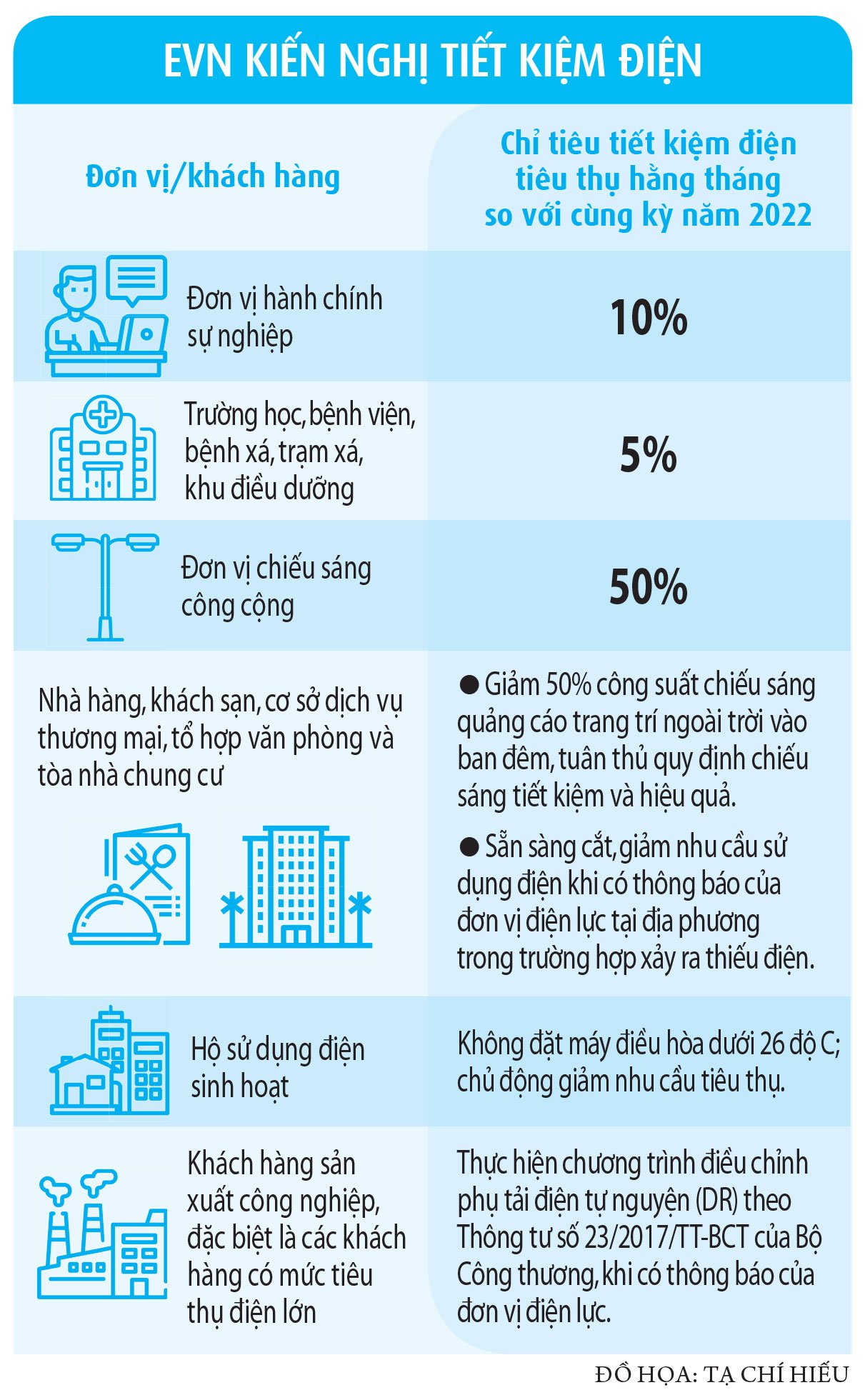
According to Mr. Ha Dang Son, if we look at the distribution structure of the transitional wind and solar power projects, with a total capacity of approximately 4,700 MW, the North Central region only accounts for 65 MW (about 4%), while the remaining approximately 96% is located in the Central Central region, the Central Highlands, and the South, and this power source cannot be mobilized to supply the North.
"The quickest solution to overcome the current and future electricity shortage in the North is to strongly promote the mechanism of investing in rooftop solar power with the goal of self-consumption, as outlined in Power Plan 8. In addition, the northern provinces face a major challenge: the power transmission system, lacking regional connectivity, remains congested, requiring strong and thorough solutions such as land clearance and compensation for transmission projects. This must be addressed and resolved from the perspective of ensuring energy security," Mr. Son said.
Source link



![[Photo] Speaker of the National Assembly meets with the Vietnamese community in Türkiye](https://vphoto.vietnam.vn/thumb/1200x675/vietnam/resource/IMAGE/2026/04/18/1776483346102_1-8136-jpg.webp)





















































































Comment (0)