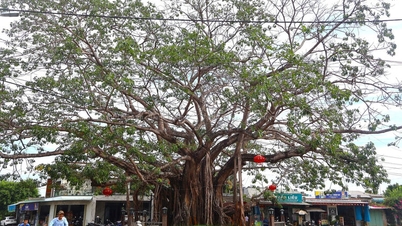
Hong Son Temple, also known as Quan Phu Tu Temple (Vo Mieu), is located in Hong Son Ward, Vinh City. The temple was built through donations initiated by Nguyen Dinh Hung, the Governor of Nghe An Province. Originally, the temple was dedicated to Quan Van Truong, a talented and loyal general during the Three Kingdoms period. After his death, he was revered as a saint by people in many countries, including Vietnam. Currently, Hong Son Temple also houses altars dedicated to many other prominent figures, such as: the Buddhas, King Hung, Tran Quoc Tuan, the Three Holy Mothers, and Quan Hoang Muoi... Having undergone numerous renovations and restorations, the temple now comprises the following structures: the Upper Hall, the Middle Hall, the Lower Hall, the bell tower, the drum tower, etc. Many important ceremonies are held annually at the temple, the largest being the Commemoration Ceremony for Mother Lieu Hanh on the 3rd of March and the Commemoration Ceremony for Hung Kings on the 10th of March (lunar calendar). Hong Son Temple was recognized as a National Historical Monument in 1984. (In the photo: The main gate of Hong Son Temple.) The paths on either side following the main gate, their moss-covered walls exuding an ancient charm, lie within a lush green garden, prominently featuring ancient banyan, fig, and other trees nearly 200 years old, regularly cared for and emitting a fragrant aroma. Although the temple is located near the road and Vinh market, it retains a tranquil and serene atmosphere, both profound and solemn, yet sacred, befitting a temple. Two ancient, centuries-old frangipani trees, covered in green moss, cast shade over the courtyard just behind the gate. On either side of the temple's outer courtyard are bell towers and drum towers with fixed stands. According to historical research, the ancient bell hanging in Hong Son Temple was originally a bell from the Temple of Literature in Nghe An province, moved here for safekeeping. The bronze bell weighs 522 kg, has a base diameter of 0.77 m, a body height of 1 m, and a circumference of 1.28 m. The bell has embossed Chinese characters and an inscription, which clearly states: "The bell was authorized to be cast and played on the 7th day of the 7th month of the Quy Dau year (1813)." The smaller bell of the temple is hung in the main hall.
At Hong Son Temple, besides the bronze bell, there is also a valuable collection of ancient artifacts such as statues, stone steles, stone chimes, bronze bells, royal decrees, and many other ritual objects... with exceptional historical, architectural, and artistic value. The temple also preserves two stone steles inscribed in Han Nom script. The beginning of the stele clearly records the temple's history: "Hoan Chau is a land of many sacred sites. To the southeast of the city, there stands a towering, sacred mound. This is the temple of Quan Phu Tu Tho Dinh Hau from the Han dynasty. The temple began construction in the 12th year of Minh Menh (1831), built by Mr. Nguyen Dinh Hung, the governor of this administrative center..." Not far from Hong Son Temple is a lush green space beside Goong Lake, where the ancient and solemn Ha Ma Temple sits beside the lake, nestled amidst the relatively densely populated residential area of Truong Thi Ward. Ha Ma Temple, located in Truong Thi Ward, Vinh City, consists of two buildings, the Upper and Lower Halls, built during the Le Trung Hung era to worship Duc Yen Lam Dai Vuong. According to legend, Yen Lam Dai Vuong, from Thuong village, Dung Quyet commune, was intelligent and skilled in martial arts. He contributed to supporting the Le dynasty and defeating the Mac dynasty, and was granted the title of Yen Lam Marquis by the court. During a battle, he was severely wounded and rode his horse to Khai Xuan village (now part of Truong Thi Ward, Vinh City), where he dismounted and passed away. The people buried him in Dam Mu Nuoi (now part of Hung Dung Ward, Vinh City), and later erected a temple at the spot where he dismounted, called Ha Ma Temple. In the present-day Ha Ma Temple, Yen Lam Hau Dai Vuong is worshipped primarily in the central hall of the rear sanctuary. His title is inscribed as: "The local tutelary deity. Yen Lam Dai Duc Duc, protector of the restoration, bestowed with the title of supreme deity by successive dynasties." Yen Lam Dai Duc's surname was Nguyen, his given name was Lam, his exact birth date is unknown. He was born in Thuong village, Dung Quyet commune (now Truong Thi ward, Vinh City). The Ha Ma Temple covers an area of 1,200 square meters and consists of two buildings: the Upper Hall and the Lower Hall, built in the shape of the Chinese character "二" (two). The temple still preserves many ancient artifacts such as imperial chests, dragon thrones, ancestral tablets, etc., and ancient customs, contributing to the preservation of traditional cultural identity in the heart of the modern city, including the Ha Ma Temple festival. The festival takes place on the 12th day of the 9th lunar month every year. This is also the death anniversary of Duc Thanh Yen Lam. According to legend, after the death of King Yen Lam, to acknowledge his contributions to the national restoration, the imperial court entrusted the people of Dung Quyet with bringing his remains back to his hometown, now the Dam Mu Nuoi National Historical Site in Hung Dung ward, Vinh city, for burial. They also erected a temple in his honor in Yen Dung Thuong village, where he passed away. Every year, the people observe the 12th day of the 9th lunar month as his death anniversary. Architectural carvings on the roof of the upper hall of the Ha Ma Temple. The temple and tomb of Princess Quế Hoa is a complex of historical and spiritual significance, built around the 16th century. The temple is dedicated to Princess Quế Hoa and the ancestors of the Lê Nhữ family, and was recognized as a National Historical and Cultural Monument in 2015. Princess Quế Hoa was a daughter of the Lê Nhữ family who abandoned her life in the royal court to live among the poor. She organized villagers to dig canals for irrigation, build roads, and develop the mat weaving craft, bringing prosperity to the people of Đăng and Phong Yên villages (now Hưng Hòa). The temple still preserves valuable historical artifacts such as royal decrees, a royal hat bestowed upon Princess Quế Hoa, ancestral tablets, a palanquin, large inscriptions, and ancient couplets.
In particular, Vinh City has many historical sites that educate the younger generation about revolutionary traditions, especially the system of relics associated with the Nghe Tinh Soviet movement of 1930-1931. These include Tria Temple (also known as Loc Da Temple, Hung Loc commune), which marks the peak of the Nghe Tinh Soviet movement. Mr. Hoang Van Nhu, the caretaker of Tria Temple, said: “On May 1, 1930, Tria Temple and Coi Market were the starting point of the 30-31 protest. Comrade Hoang Trong Tri led 1,200 people from Loc Da and surrounding areas to Ben Thuy to protest. On the night of October 26, 1930, a large rally took place at Tria Temple, which was later mentioned by Comrade Nguyen Ai Quoc in his letter to the Communist International on February 19, 1931…” The Tria Temple relic was recognized as a national historical and cultural relic by the Ministry of Culture and Information (now the Ministry of Culture, Sports and Tourism) on June 26, 1995. In the photo: Tria Temple is a significant location for educating the younger generation about revolutionary traditions. The Hoang family church (Hung Loc commune) – a national historical and cultural relic – once served as the headquarters of the Central Vietnam Regional Party Committee and the Vinh - Ben Thuy Provincial Party Committee during the years 1930-1931. During the Nghe Tinh Soviet period, many high-ranking Party leaders came here to work and were sheltered and protected by the people. The Ben Thuy Crossroads historical site is located on the left bank of the Lam River, at the foot of Quyet Mountain, 5 km southeast of Vinh City, Nghe An Province. This was the site of the May 1st demonstration – a crucial milestone marking the beginning of the Nghe Tinh Soviet Uprising, a moving image of worker-peasant solidarity, and an enduring example of indomitable spirit. To commemorate the glorious era of 1930-1931, a magnificent monument to the workers, peasants, and soldiers has been erected here, becoming one of the tourist attractions within the Quyet Mountain Lam Vien complex. Every year during national holidays, younger generations visit to reflect on this historical tradition.
According to statistics, Vinh City has 80 historical sites and scenic spots, of which 25 are classified, including 13 national-level sites and 12 provincial-level sites. In addition to tangible cultural heritage, Vinh also preserves many unique intangible heritages such as festivals, folk beliefs, and the folk songs of Nghe An province.
With its advantage as the province's tourism center and a key destination on the Central Vietnam Heritage Route, Vinh City boasts rich and diverse cultural heritage resources, making it an impressive highlight that will help it position itself as an attractive and distinctive destination.





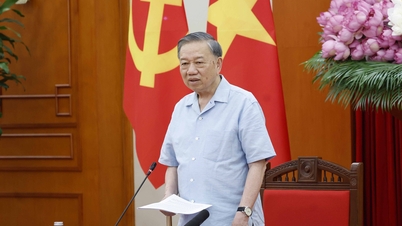
![[Photo] General Secretary and President To Lam presides over a meeting on preparations for the review of one year of operation of the three-tiered government system.](https://vphoto.vietnam.vn/thumb/1200x675/vietnam/resource/IMAGE/2026/06/02/1780391821195_a1-bnd-4595-9717-jpg.webp)



















































Comment (0)