

On May 22nd, continuing the program of the 9th session, National Assembly (NA) delegates discussed in groups the Draft Resolution of the National Assembly on tuition fee exemption and tuition fee support for preschool children, primary and secondary school students, and learners in general education programs within the national education system.
It's not just about education.
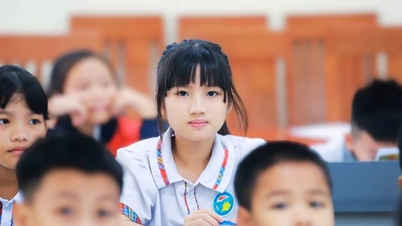
According to the government 's proposal, preschool children, primary and secondary school students, and those studying general education programs at public educational institutions will be exempt from tuition fees. Simultaneously, tuition fee support will be provided to preschool children, primary and secondary school students, and those studying general education programs at private and non-governmental educational institutions. The amount of tuition fee support will be decided by the provincial People's Council. The government proposes implementing this policy starting from the 2025-2026 academic year.
During a discussion at the Ho Chi Minh City National Assembly delegation meeting, delegate Nguyen Thien Nhan emphasized that the policy of tuition fee exemption and support is particularly anticipated by the people and expressed his joy. According to him, tuition fee exemption not only reduces the financial burden on many families but also demonstrates the humanity and concern of the Party and State for future generations in a context still facing many difficulties.
Mr. Nguyen Thien Nhan argued that waiving tuition fees would reduce the financial burden, thereby encouraging families to have two children, contributing to ensuring a sufficient workforce for Vietnam by 2045. With this policy, Vietnam is the only country in ASEAN that waives tuition fees from preschool to high school, demonstrating a strong investment in the country's future.
Sharing the same view, delegate Nguyen Thi Lan ( Hanoi ) assessed that this policy is not only significant for education but also indirectly supports the implementation of the national population strategy. In the context of Vietnam facing low birth rates in many major cities and entering a period of population aging, the exemption and support of tuition fees will help families feel secure in having and raising children. This will contribute to achieving the goal of maintaining replacement fertility levels, ensuring a rational population structure, and promoting sustainable national development.
Ms. Nguyen Thi Lan commented: "This policy demonstrates the humanity and superiority of our system; it ensures consistency in policies regarding equitable access to education. This policy also encourages the development of private education and strengthens the socialization of education."
However, Representative Nguyen Thi Lan also expressed concern that waiving tuition fees in public schools could lead to a sharp increase in the number of students transferring from private schools, potentially overloading the public school system. Therefore, she proposed adding regulations or entrusting the Government with developing a comprehensive investment plan for infrastructure and teacher staffing to ensure truly consistent training quality.
According to Ms. Nguyen Thi Lan, it is necessary to carefully assess the budgetary balance capacity of localities, especially those provinces that cannot balance their budgets independently. The government needs to calculate subsidies to ensure budgetary resources for these localities, avoiding situations where good policies are implemented but there are insufficient resources, leading to delays or uneven implementation.
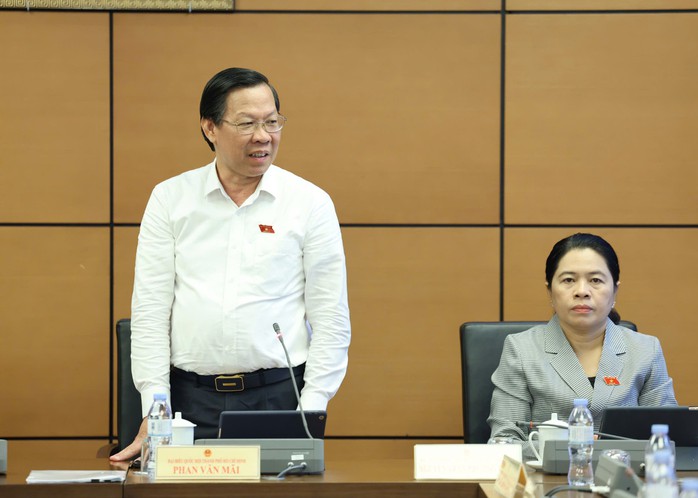
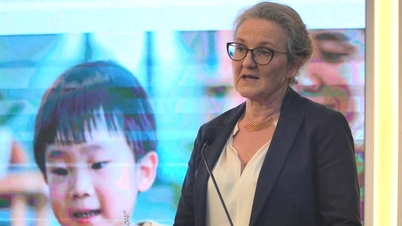
Chairman of the National Assembly's Economic and Finance Committee, Phan Van Mai, emphasized that investment in education is the most important investment. (Photo: Pham Thang)
Access to equitable and inclusive education.
Mr. Bui Hoai Son, a full-time representative of the National Assembly's Committee on Culture and Society, acknowledged that the policy of tuition fee exemption and support is a significant step forward in ensuring equitable and comprehensive access to education for all citizens. This policy is highly inclusive, expanding the scope of beneficiaries, removing financial barriers for learners, and ensuring fairness between public and private schools, and between urban and rural areas.
"Without tuition fees, high school students will have more equal access to knowledge, reducing the rate of dropping out due to economic circumstances, especially in large cities where income stratification is often profound," Mr. Bui Hoai Son stated.
Alongside the policy of tuition fee exemption, Representative Bui Hoai Son proposed that the National Assembly and the Government need a mechanism to ensure the quality of education. People expect not only tuition fee exemptions and support, but also better schools, teachers who can teach with peace of mind, and curricula that are appropriate to students' abilities. In addition, the allocation of budgets by region needs to be reviewed to avoid a blanket approach that puts excessive pressure on provincial and commune budgets.
Representative Nguyen Thi Viet Nga (Hai Duong) expressed concern about fairness between students in public and private schools, and between different educational models within the national education system. According to the proposal, students in public schools would be completely exempt from tuition fees, while students in private schools would receive tuition support, with the funds directly provided to the students. However, in reality, tuition fees at private schools are often much higher than at public schools, due to the lack of investment in facilities and salaries from the state budget.
According to Ms. Nguyen Thi Viet Nga, without specific regulations, it could lead to a situation where students in private schools receive higher tuition fee support than the tuition-free rate for students in public schools. She believes this needs special attention to avoid policy paradoxes and ensure fairness in accessing budget resources. Therefore, she proposes clearly defining the principle that the tuition fee support for students in private schools should not exceed the tuition-free rate at the corresponding public educational institution in terms of grade level and location.
Meanwhile, delegate Nguyen Thi Minh Trang (Vinh Long) noted that tuition exemption does not mean students do not have to pay other learning costs such as uniforms, soft skills training, boarding fees, etc. "If we do not properly control the fees other than tuition, the policy will lose its real effectiveness," she emphasized.
Ms. Nguyen Thi Minh Trang proposed establishing a transparent control mechanism with supervision from parents and People's Councils at all levels, to avoid situations where tuition is waived but other fees are increased. Along with that, a comprehensive support package could be considered, covering tuition and a portion of learning expenses such as textbooks and essential learning equipment for poor students and students in disadvantaged areas.
Reducing the burden on public preschools.
The draft Resolution on universal preschool education for kindergarten children aged 3 to 5 years old was also discussed by delegates in their respective groups.
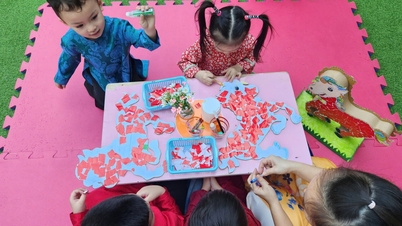
According to the government's plan, preschool education for children aged 3-5 will be universally implemented nationwide by 2030. The government will invest in developing the network of schools, facilities, and minimum teaching equipment; ensure the number of preschool teachers meets the prescribed standards; and guarantee sufficient operating funds for public preschools. The government will also supplement and amend policies concerning children, teachers, administrators, and staff at the preschool level.
Commenting on this issue, Phan Van Mai, Chairman of the National Assembly's Economic and Finance Committee, emphasized that investment in education is the most important investment. Regarding the Resolution on universal preschool education for children aged 3-5, he argued that it should focus on early access to education. The 3-5 age range is a crucial early stage in a child's life, contributing significantly to the quality of the population later on. Therefore, he suggested that the drafting agency conduct more thorough research to include regulations on early access to education; on nutrition to improve children's stature and physical condition, so that preschools are not simply places for childcare.
While agreeing with the policy of universal preschool education, delegate Le Thi Song An (Long An) also pointed out many challenges in the implementation process. She cited that the percentage of 3-year-old children attending preschool in Long An is currently only 63.51%, compared to the national average of 86.3%. The province is also lacking nearly 190 preschool teachers, while school development is uneven across different areas. The socialization of education still faces many obstacles.
Therefore, Ms. Le Thi Song An suggested that the Ministry of Education and Training establish clear and fundamental mechanisms to support and improve the quality of private education. This would contribute to reducing the burden on the public sector, saving state budget funds, and diversifying educational options.
Today (May 23), the National Assembly held group discussions on the implementation of the socio-economic development plan and the State budget in the first months of 2025; the transitional application of some specific mechanisms and policies that the National Assembly has allowed to be implemented in some localities after restructuring; and many other important issues.
A large-scale inspection loses its element of surprise.
During the discussion on the draft Law on Inspection (amended) on the same morning, delegate Pham Khanh Phong Lan (Ho Chi Minh City) commented that the draft does not facilitate surprise inspections, but mainly focuses on planned inspections.
According to Ms. Pham Khanh Phong Lan, planned inspections are often ineffective because they must be publicized from the beginning of the year, approved by superiors, and notified in advance to the inspected units so they can prepare. This eliminates the element of surprise and reduces the effectiveness of the inspection.
Citing real-world examples, Ms. Pham Khanh Phong Lan stated that during the government's crackdown on counterfeit goods and commercial fraud, many pharmacies concealed infringing products and claimed they did not sell functional foods when inspection teams arrived. She emphasized that planned, large-scale inspections are unlikely to yield effective results.
Source: https://nld.com.vn/mien-hoc-phi-dau-tu-cho-tuong-lai-dat-nuoc-196250522223157869.htm






















































Comment (0)