Open up the gateways.
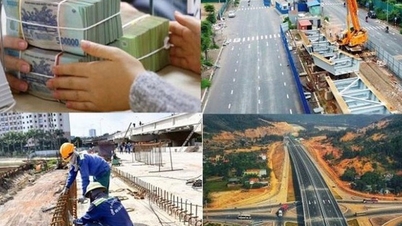
The Project Management Board for Investment and Construction of Transport Works (PMB) has just opened the N2 tunnel branch of the An Suong intersection underpass construction project to traffic, after the N1 branch, heading from the city center to Cu Chi District, 445 meters long, was started in March 2017 and completed - opened to traffic in March 2018.
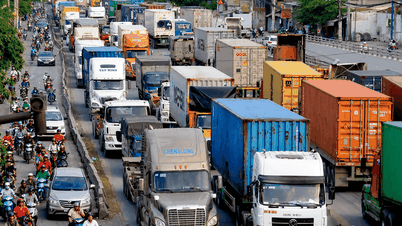
In terms of trade, the demand for transportation between Ho Chi Minh City and provinces in the key economic region is increasing, leading to congestion. This congestion is the main reason why the cost of transporting goods from Ho Chi Minh City to other provinces is higher than in other countries. This makes exported goods less competitive, significantly impacting the city's economy as well as the economic development of the entire region. You may also like  Enhancing disaster prevention and response capabilities at the grassroots level.After the two-tiered local government system came into operation, the command, control, and handling of natural disasters were carried out more closely at the grassroots level, especially in mountainous areas where the risk of flash floods, landslides, and mudslides is always present.  Proposal to add more leadership positions to be served by private jet flights.The Ministry of Construction proposed that, in addition to the positions of General Secretary, President, Prime Minister, and Chairman of the National Assembly, the position of Standing Member of the Secretariat of the Central Committee should be provided with a special flight and cabin.  Developing the collective economy actively contributes to protecting the ideological foundation of the Party.QTO - In the context of digital transformation and increasingly deep international integration, the work of protecting the Party's ideological foundation is not only implemented on the ideological and theoretical fronts but is also affirmed by the practical effectiveness of policies and guidelines in social life. The practical development of the collective economy in Quang Tri shows that each effectively operating cooperative not only contributes to economic development and improves people's lives but also strengthens the people's trust in the Party's leadership. |
The N1 and N2 underpass project at the An Suong intersection has a total investment of 514 billion VND. This three-level intersection at the northwestern gateway is considered one of Ho Chi Minh City's six key projects in addressing traffic congestion, as it connects many major traffic arteries such as National Highway 1, National Highway 22, Truong Chinh Street, and is close to the An Suong Bus Station.
“Upon completion of the entire project, the An Suong intersection will consist of three levels: an underground level for vehicles traveling from Truong Chinh Street to National Highway 22 and vice versa; an upper level with a central roundabout and traffic lights for vehicles entering the roundabout to turn left or right; and an overpass for vehicles traveling straight along National Highway 1. This will reduce traffic congestion within the intersection, stabilize traffic flow, and ensure safer traffic, in line with the project's objectives,” a representative from the Project Management Board stated.
Previously, the underpass on National Highway 1, passing in front of the Suoi Tien Cultural and Tourist Area (District 9) - the National University intersection (part of the Hanoi Highway expansion project), was officially opened to traffic after more than 3.5 years of construction. With 8 main lanes, not including 6 parallel lanes on either side, this is one of the widest national highways in the country, best meeting the needs of transportation and goods transit between the eastern provinces, Ho Chi Minh City, and the southwestern provinces.
In the southern gateway area, the Nguyen Van Linh - Nguyen Huu Tho intersection construction project (District 7), with a total investment of over 830 billion VND, is also being urgently constructed and is expected to be completed in 2023, relieving traffic congestion in southern Saigon.
Increase inter-provincial connectivity.
Associate Professor Dr. Nguyen Ba Hoang, Vice Rector of Ho Chi Minh City University of Transport, assessed that the formation and operation of key intersections in many gateway areas not only alleviates traffic congestion on major arterial routes connecting different regions but also improves urban aesthetics and contributes to reducing the burden on the inner-city traffic network. However, alongside opening up gateways, completing the planning of many expansion projects and connecting inter-regional traffic routes is an urgent task.
The Ho Chi Minh City Department of Transport acknowledges that the connection between the city's urban transport system and the transport systems of neighboring areas in the southern key economic region is still lacking and faces many difficulties.
Specifically, the road network is inadequate, limiting traffic capacity; the Ring Road 2 is not yet complete, National Highways 1, 13, 22, and 50 have not been expanded according to the plan, and Ring Roads 3 and 4, as well as the radial expressway system (Ho Chi Minh City - Moc Bai, Ho Chi Minh City - Thu Dau Mot - Chon Thanh, Bien Hoa) have not been invested in. As a result, a large volume of transit vehicles still travel through the city center, overloading the existing traffic system and hindering traffic connectivity between Ho Chi Minh City and other provinces, as well as between provinces in the southern key economic region.
Recently, at a meeting between the Departments of Transport of Ho Chi Minh City and Long An province, both sides agreed on a list of 23 important roads connecting the two localities that need priority investment in the coming time. Of these, 12 existing roads need to be expanded, 8 roads need to be quickly implemented according to the plan, and 3 roads need to be studied for inclusion in the plan.
Specifically, the Ho Chi Minh City and Long An Departments of Transport agreed to study extending Vo Van Kiet road from Ho Chi Minh City to Hai Son - Tan Do Industrial Park (Duc Hoa District, Long An); expanding National Highway 50 from Binh Chanh District (Ho Chi Minh City) connecting with Can Giuoc District (Long An) to a scale of 34 m (6 lanes), synchronized with the section through Long An province; and investing in building a parallel road to National Highway 50 from Pham Hung road (Binh Chanh District) to Long An from 2021 - 2025...
In addition, Ho Chi Minh City and Long An will also study the possibility of opening a new road in the northwest, approximately 19.8 km long, starting at National Highway 1 (Binh Tan) and ending at Ring Road 4 near Hau Nghia town (Long An), with a scale of 6 lanes. This is a very important traffic artery connecting Ho Chi Minh City to Long An province and other provinces in the Mekong Delta. Once completed, this route will alleviate traffic congestion on existing Provincial Roads 9 and 10, improve traffic flow, and create a foundation for the development of the southern key economic region.
The completion of Ring Road 2, the construction of the Ho Chi Minh City - Moc Bai ( Tay Ninh ) expressway, and the elimination of the sole access route on National Highway 22 are also on the list of urgent projects that Ho Chi Minh City is rushing to expedite this year to be completed in the 2021-2025 period.
"Sharing the burden" using rail and water transport.
You may also like
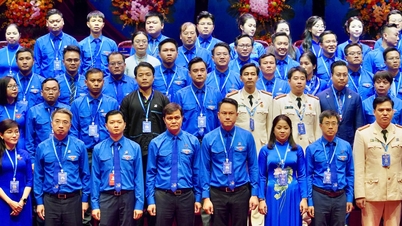
This morning, the 13th National Congress of the Youth Union held its solemn session.The new Central Executive Committee of the Youth Union will be introduced at the solemn session. Notably, according to the program, General Secretary and President To Lam will deliver an important keynote speech at the solemn session.
Addressing material supply issues in key projects.VTV.vn - Ensuring the supply of construction materials should be considered a strategic task, not only for businesses but also for the entire management system.
This morning, the International Financial Center was launched in Ho Chi Minh City.The International Financial Center in Ho Chi Minh City aims to build a capital market with depth, scale, and high liquidity, with a diverse product portfolio...
During the process of researching and adjusting the urban planning of Ho Chi Minh City until 2030 and with a vision to 2050, experts and city leaders agreed that Ho Chi Minh City should prioritize investment in railway development to increase connectivity and freight transport. At the same time, they emphasized the need to promote waterway transport, coordinating road and inland waterway transport to utilize the 1,000 km of currently neglected river routes, thus relieving pressure on road transport.
According to Associate Professor Dr. Nguyen Ba Hoang, experience from other countries shows that to increase cargo transport capacity and reduce costs, it is necessary to develop rail and waterway transport. Road transport is expensive, time-consuming, prone to congestion, and has high road maintenance costs. Not to mention, over-developing road transport is not feasible due to the increased risk of traffic accidents. Therefore, dedicated railway lines should be established to Cai Mep and Cat Lai ports, combined with inland ports to fully utilize waterway transport. “Ho Chi Minh City should review its planning, and any routes that need expansion or extension should be implemented early. Additional road routes need careful consideration and planning to ensure harmony between different modes of transport. Special emphasis should be placed on prioritizing rail and waterway transport in the inter-regional transport system,” said Dr. Hoang.
Source: https://thanhnien.vn/mo-duong-ket-noi-lien-vung-185977548.htm

![[Photo] General Secretary and President To Lam attends the 13th National Congress of the Ho Chi Minh Communist Youth Union](https://vphoto.vietnam.vn/thumb/1200x675/vietnam/resource/IMAGE/2026/06/25/1782356968989_ndo_br_1-jpg.webp)
































![[Photo] General Secretary and President To Lam attends the Central Public Security Party Committee Conference](https://vphoto.vietnam.vn/thumb/1200x675/vietnam/resource/IMAGE/2026/06/24/1782302063612_a1-bnd-9302-9166-jpg.webp)