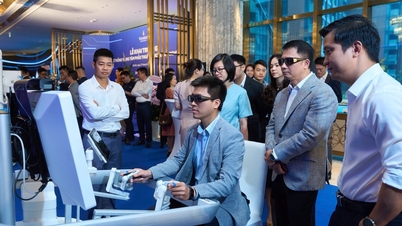
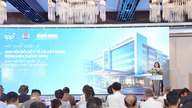
This was the general consensus of experts at the workshop "Digital Transformation in Healthcare and Building Smart Hospitals: International Experiences and Implementation in Vietnam," jointly organized by the Vietnam Association of Medical Informatics, the Health & Life Newspaper, and TPP Company (UK) in Da Nang.
According to Associate Professor Dr. Tran Quy Tuong, President of the Vietnam Medical Informatics Association, the Ministry of Health has recently issued numerous documents to complete the legal framework for digital transformation. To date, 1,238 hospitals nationwide have announced the implementation of electronic medical records (EMR). Many facilities have eliminated paper medical records, stopped printing diagnostic imaging films, and promoted cashless payments.
The implementation of EMR helps create a large data source for governance, research, and artificial intelligence (AI) applications. Through digital data, AI will support diagnosis, risk prediction, and operational optimization, gradually realizing a personalized healthcare model.

Frank Hester OBE, founder of TPP, argues that building more hospitals or training more personnel is not enough. The healthcare industry needs to be built on data and connectivity. EMR acts as the "central nervous system," connecting information seamlessly from the community to hospitals. When data is standardized, EMR becomes the "fuel" for AI to unleash its power, allowing the healthcare industry to shift from passive treatment to proactive screening and timely intervention.
The interconnected EMR software system will help manage healthcare information uniformly from the grassroots level to the central level. This will allow people in Da Nang and Central Vietnam to access high-quality services locally, helping to reduce the burden on higher-level healthcare facilities.
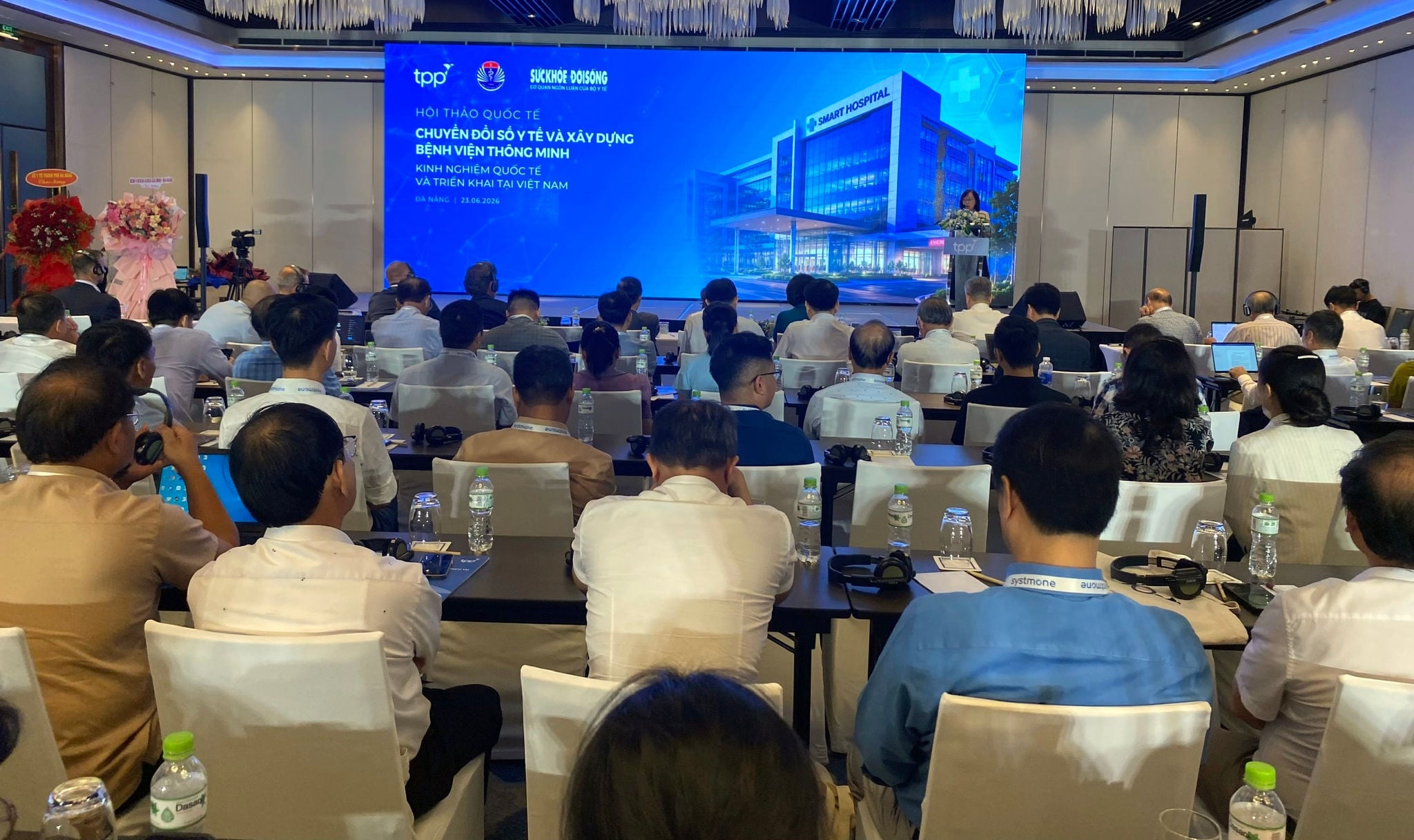
According to the Director of the Da Nang City Department of Health, Tran Thanh Thuy, 100% of hospitals in Da Nang have now published electronic medical records, creating 95% of electronic health records. The city is also piloting telemedicine and the application of AI in diagnostic imaging. However, after the merger of administrative units, the city faces numerous challenges such as: disparities in technological infrastructure between areas; lack of standardized and synchronized data; and limited investment resources and human resources in information technology.



Ms. Tran Thanh Thuy believes that the shift from a traditional management model to a data-driven digital healthcare ecosystem is an urgent requirement. International experiences and solutions applying big data will be important insights for Da Nang to gradually overcome difficulties, move towards a smart hospital model, and improve the quality of service for the people in the future.
Source: https://baodanang.vn/chuyen-doi-so-y-te-tu-benh-an-dien-tu-3341778.html
































![[Photo] Thousands of people participate in a run to show their support for the campaign "Sharing a common determination to build drug-free communes, wards, and special zones".](https://vphoto.vietnam.vn/thumb/1200x675/vietnam/resource/IMAGE/2026/06/27/1782554475933_0673e2a3df7b5e25076a-8283-jpg.webp)