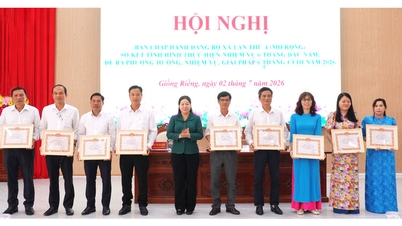
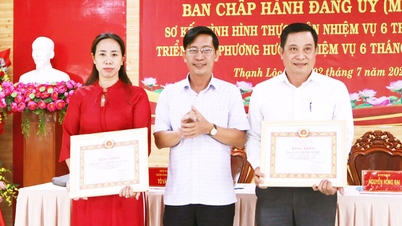
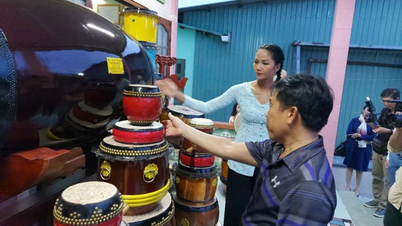
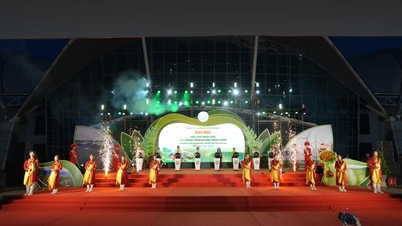
Nhon My commune honors exemplary cultural families. Photo: Hanh Chau.

 Báo An Giang•03/07/2026
Nhon My commune honors exemplary cultural families. Photo: Hanh Chau.
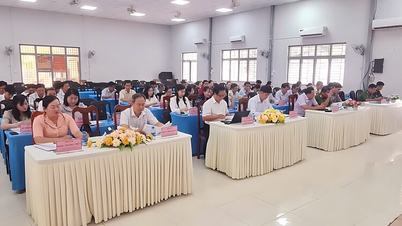
Gender equality efforts in An Giang have seen many positive changes. However, gender gaps still exist in many areas such as opportunities for leadership participation, the labor market, the division of household chores, and access to support services for victims of gender-based violence. The Provincial People's Committee has issued a plan to implement the national strategy on gender equality for the period 2026-2030, aiming for substantive equality between men and women in all areas of social life.
According to the Provincial People's Committee, in the political field, the province aims to have 75% of state management agencies and local governments with key female leaders by 2030. This is an important step to enhance the role of women in policy making and social governance. Increasing the proportion of female leaders not only ensures the principle of equality but also contributes to developing high-quality human resources and diversifying perspectives in the decision-making process.
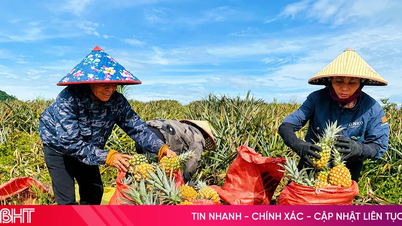
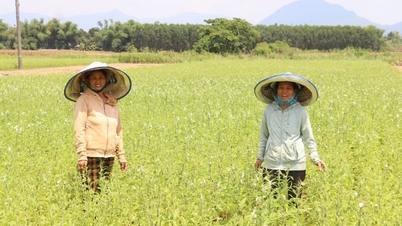
In the economic and labor sectors, targets are aimed at improving the status of women in the labor market. The province strives to increase the percentage of female salaried workers to approximately 60%, reduce the percentage of female workers in the agricultural sector to below 25%, and increase the percentage of female business and cooperative managers to at least 30%. These goals reflect the orientation towards shifting the labor structure, creating conditions for women to access stable, high-paying jobs and opportunities for entrepreneurship and business management.



One issue with profound social significance is reducing the burden of unpaid domestic labor on women. By 2030, the time women spend on housework and family care will be reduced to approximately 1.4 times that of men. This is not just about sharing household chores, but also about creating conditions for women to have more time for education, career development, and social activities. Preventing and combating gender-based violence is identified as a key priority. The province aims for the majority of violence victims to have access to essential support services; perpetrators to receive timely counseling and intervention; and social assistance facilities to fully implement prevention and support activities for victims. This represents a shift from addressing consequences to proactive prevention, building a safe living environment for women and children.
In the healthcare sector, the province focuses on controlling the gender imbalance at birth, reducing maternal mortality related to childbirth, lowering the teenage birth rate, and gradually expanding healthcare services for vulnerable groups, including lesbian, gay, bisexual, and transgender people.
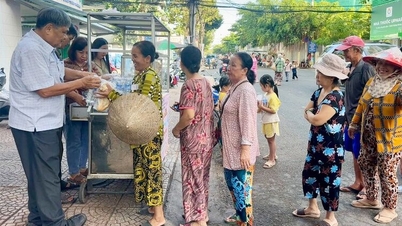
The movement to build culturally exemplary families has been widely implemented in many localities with hundreds of sustainable family development clubs, domestic violence prevention groups, and trusted community centers. Many exemplary families not only develop economically and raise their children well but also spread values of equality, happiness, and civilization. According to Nguyen Khanh Hiep, Director of the Department of Culture and Sports: “An Giang always pays attention to effectively implementing family work and domestic violence prevention in conjunction with the nationwide movement to build a cultured life. To date, the province has 692,927 households achieving the title of culturally exemplary family, accounting for 92.39%; maintaining 867 sustainable family development clubs, 922 domestic violence prevention groups, and 929 trusted community centers with 28,776 participating members.”
Localities such as Cho Moi, Nhon My, and Rach Gia continue to maintain many practical activities in response to Vietnam Family Day, the Month of Action for the Prevention and Control of Domestic Violence, and the Month of Action for Gender Equality, contributing to bringing these policies into practice. Ho Huu Hau, Vice Chairman of the People's Committee of Nhon My commune, assessed: "Many families actively engage in labor and production, making significant contributions to socio-economic development, maintaining security and order, and building new rural areas in the locality."
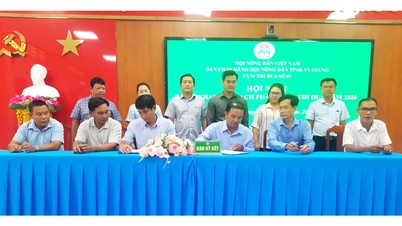
To realize these goals, the province has determined that a synchronized effort from the entire political system is needed, including strengthening the leadership role of Party committees and the responsibility of heads of departments; reviewing and improving policies; and integrating gender issues into lawmaking and socio-economic development programs.

An Giang is entering a stage of development with many demands for innovation. When women and men are given equal opportunities in education, work, management, and enjoying the fruits of development, society will more effectively utilize human resources, strengthen family happiness, and improve the quality of life.
HANH CHAU
Source: https://baoangiang.com.vn/mo-rong-co-hoi-binh-dang-gioi-a491106.html