

Expand your aspirations
For the 2026-2027 school year, Gia Lai province will continue to maintain two admission methods for 10th grade: entrance exams and selection based on academic records, as in the previous school year. This decision was made to ensure stability during the transitional period after the province's merger. It also aims to prevent disruption to the mindset and application process for students and parents.
Although the method remains unchanged, enrollment pressure has increased significantly as the number of 9th-grade students across the province has risen by more than 9,500 compared to the previous school year. It is projected that approximately 82% of students will be admitted to public 10th-grade classes (equivalent to 41,270 out of 50,329 students), while the remaining 18% will attend private schools, continuing education centers, vocational training centers, or choose to pursue vocational training.
To prepare for the enrollment period, the Gia Lai Department of Education and Training is conducting a comprehensive review of the facilities, teaching staff, and student capacity of high schools. Based on this, the allocation of enrollment quotas is being developed in a rational manner, expected to be completed in April 2026.
One of the notable new features of this year's college entrance exam is the regulation regarding application preferences. Previously, students in the former Gia Lai region could only register one preference, while those in the former Binh Dinh region could register more. Now, the entire province uniformly allows candidates to register a maximum of three preferences (excluding preferences for specialized high schools). Importantly, candidates applying to specialized high schools can still register additional preferences for other high schools to broaden their chances of admission.
Furthermore, digital transformation has been identified as one of the key requirements for this year's admissions process. The education sector prioritizes the use of population data and the implementation of an online admissions system to increase transparency and reduce administrative procedures.
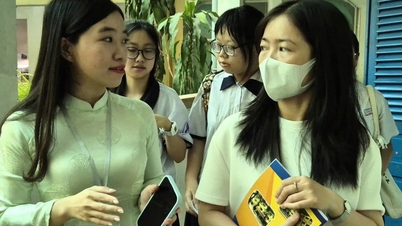
However, the reality in Gia Lai shows that many remote areas, where a large number of ethnic minorities live, still face difficulties in accessing information technology. This requires schools to strengthen support and guidance so that students and parents are not "left behind" in the application process.
The changes in administrative boundaries after the merger also present numerous challenges. The expanded enrollment area complicates the student placement process, especially in areas bordering different communes and wards. Furthermore, the thorough review and updating of students' personal information, such as identification codes and places of residence, is necessary to ensure accuracy for the admissions process and to determine priority categories.
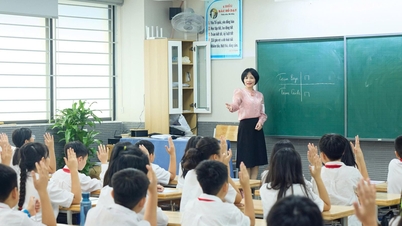
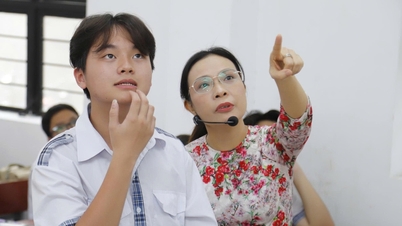
Mr. Nguyen Minh Tuan, Principal of Nguyen Hue Secondary School (Uar commune), said that this school year the school has 94 ninth-grade students, mostly children of the Jrai ethnic minority. To help them confidently enter the tenth-grade entrance exam, the school proactively organizes enhanced teaching, review and consolidate knowledge, and closely monitors the abilities of each group of students.
Beyond just exam preparation, the student placement process is being planned early. According to Mr. Tuan, in late April and early May, the school organizes counseling and guidance for 9th-grade students. It is expected that about 70% of students will register to take the entrance exam for high schools, while the remaining 30%, mainly those from disadvantaged backgrounds or with limited academic abilities, will be guided towards vocational training or studying at the Krong Pa Vocational Education and Continuing Education Center.
"The important thing is to choose the right path so that the children are not left behind, and at the same time, to ease some of the burden on their families," Mr. Tuan shared.
In the context of schools in disadvantaged areas, where facilities and equipment are still lacking, implementing online application registration also presents many obstacles. However, when the Department of Education and Training requires students to register on the system, the school will flexibly arrange, borrow equipment from the computer lab, and have teachers directly assist.

The issue of equity in disadvantaged areas
According to Mr. Pham Van Nam, Director of the Gia Lai Department of Education and Training, this year's 10th grade entrance exam is large-scale, with a large number of candidates, and takes place immediately after the 2026 High School Graduation Exam, creating considerable pressure on the education sector. From question setting and invigilation to grading, all stages require thorough and coordinated preparation. In particular, the mobilization of teachers from various merged units needs to be scientifically organized to avoid disrupting professional activities at schools.
Another challenge was the simultaneous application of two admission methods in the pre-merger areas. To ensure fairness, the Department of Education and Training developed strict admission criteria, combining comprehensive student assessment, and publicly and transparently disclosing information to create social consensus.
During the enrollment allocation process, the Education sector prioritizes schools in rural and mountainous areas to ensure students have the opportunity to study near their residences and reduce dropout rates due to a lack of school places. At the same time, the regulation of enrollment quotas between public high schools and vocational training centers/continuing education centers is also emphasized, giving students more choices that suit their abilities and future aspirations.
“The Department of Education requires junior high schools, especially those in remote and disadvantaged areas, to strengthen career guidance for students. These guidance sessions not only help students understand the admission regulations and how to choose their preferences, but also contribute to shaping a suitable educational and career path.”
"In the long term, Gia Lai's education sector continues to aim at developing the school network and investing in infrastructure, especially in disadvantaged areas, in order to narrow the gap in educational quality between regions. When quality is raised uniformly, the pressure of student enrollment will gradually be shared, creating a more equitable and sustainable education system," Mr. Nam said.
High schools in Gia Lai province will hold entrance exams on June 27-28. Schools using the selection method will conduct their admissions process from July 10-15 and complete it before July 20. For the 2026-2027 school year, the entire province will have 126 high schools participating in the 10th grade admissions process, including 48 schools holding entrance exams and 78 schools using the selection method.
In the western region, high schools primarily select students based on their academic performance and conduct during their four years of junior high school. However, Hung Vuong Specialized High School continues to hold entrance exams to select students for its specialized classes. In the eastern region of Gia Lai, most public high schools conduct entrance exams with three compulsory subjects: Literature, Mathematics, and English.
Source: https://giaoducthoidai.vn/mo-rong-co-hoi-lua-chon-cho-thi-sinh-vao-lop-10-post774423.html
![[Photo] National Assembly Chairman Tran Thanh Man successfully concludes his participation in IPU-152](https://vphoto.vietnam.vn/thumb/1200x675/vietnam/resource/IMAGE/2026/04/18/1776502638199_vna-potal-chu-tich-quoc-hoi-ket-thuc-tot-dep-chuong-trinh-tham-du-ipu-152-8709975-jpg.webp)












































































Comment (0)