

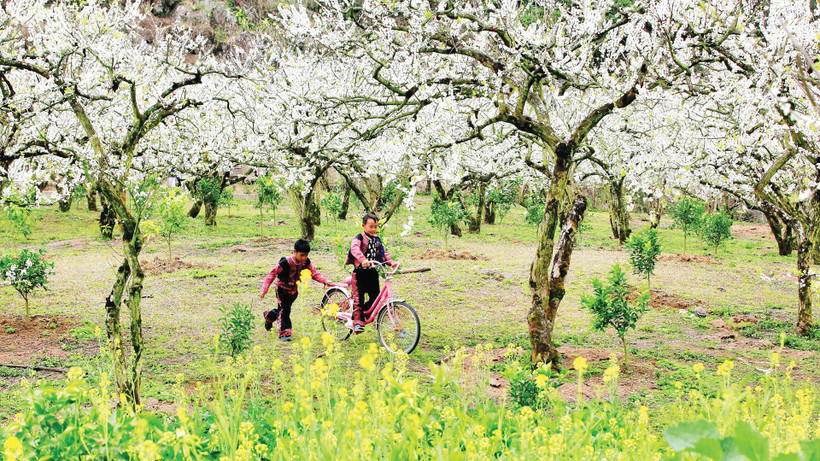
The road from Hanoi to Moc Chau plateau is full of hairpin bends that often force us to slow down. Not necessarily because of the steep mountain passes, but because of the breathtaking natural scenery: thin mist like silk ribbons draped across the mountain slopes, rolling green hills stretching endlessly into the distance, and the unique coolness of the plateau seeping through layers of clothing…
Located at an altitude of over 1,000m above sea level, Moc Chau is not just a destination, but also a place where travelers keep their promise to the seasons and flowers; a place to rediscover the purest emotions of the soul as they immerse themselves in the nature of Northwest Vietnam.
When the plateau awakens
In recent years, the number of people flocking to Moc Chau has been steadily increasing. According to local statistics, in 2025 alone, the Moc Chau National Tourist Area welcomed over 3 million visitors. This not only reflects the destination's appeal but also shows that the plateau is gradually becoming a popular choice for those seeking to escape the hustle and bustle of city life and reconnect with pristine nature and local cultural values.
Located at an altitude of over 1,000m above sea level, Moc Chau is not just a destination, but also a place where travelers keep their promise to the seasons and flowers; a place to rediscover the purest emotions of the soul as they immerse themselves in the nature of Northwest Vietnam.
Not only famous and attractive to tourists for its dairy products and its orchards of roses and oranges laden with fruit, evoking the feeling of being transported to European countryside, Moc Chau in the early months of the year reveals layers of characteristic colors of apricot blossoms, plum blossoms, and mustard flowers covering the valleys, stretching across the hillsides, and weaving into every village and hamlet, a breathtakingly beautiful sight.
On a new day, with dew still clinging to the branches and the pristine plum blossoms bathed in the morning sun, we woke up early to feel the breath of spring in the mountains and forests as they transformed to welcome the new year. Following the guidance of the locals, who said, "When the plum blossoms bloom, it signals the arrival of spring," we eagerly traveled to Moc Chau to witness the vibrant beauty of the blossoming forests, marking the beginning of festivals, gatherings, and New Year's greetings among the local people.
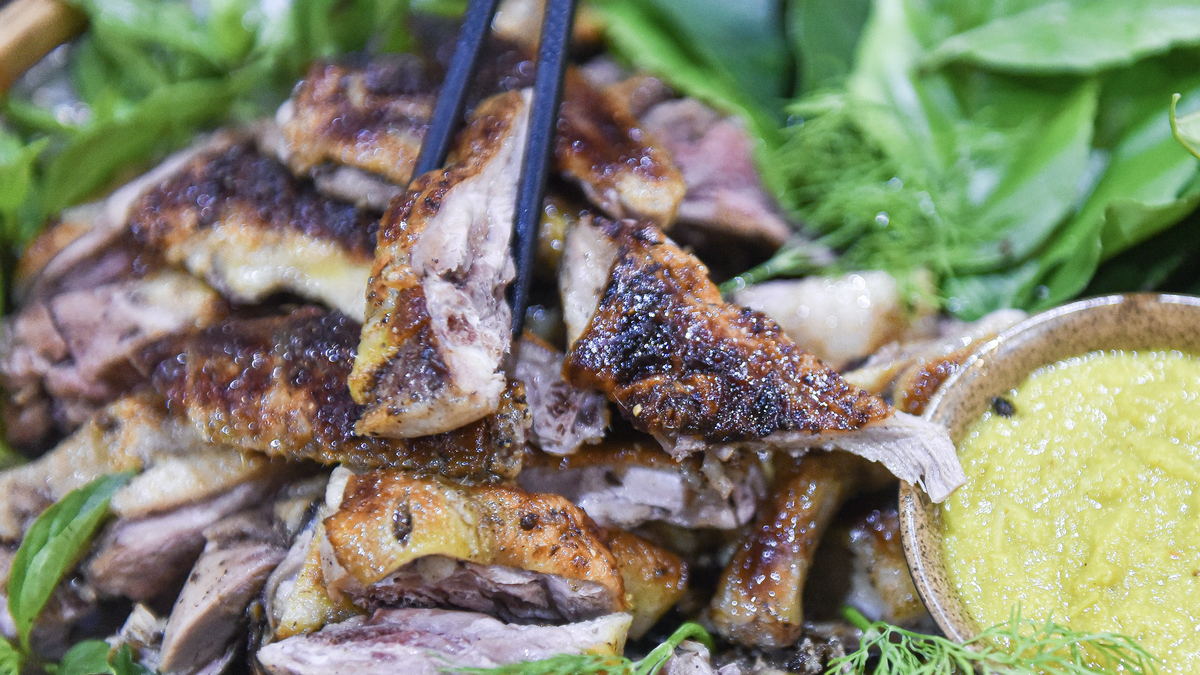
Meeting Dr. Bui Duy Phuong, a doctor who always chooses Moc Chau as his retreat whenever he's overwhelmed by life's stresses, he shared: "This is a land of peace, a sanctuary when I'm tired and defeated. Sometimes I just go up to the lush green tea hills, lie there, and watch the clouds drift by." Dr. Phuong recounted that even in autumn, the weather in Moc Chau is as cold as winter in Hanoi, but very sunny. The sun is just enough to feel warm and slightly shivery when the wind blows. Dr. Phuong has been here countless times, in all four seasons. In the early part of the year, Moc Chau is bathed in the green of sunshine, the color of tea, and the color of the grasslands. The flower season is vibrant. "Moc Chau is beautiful even in the foggy season, everything is dimly visible. Sitting by the warm fire, listening to the locals tell stories about tea and their customs, then eating free-range chicken with roasted corn and sweet potatoes, it's wonderful," Dr. Phuong added.
The festive seasons are bustling with activity.
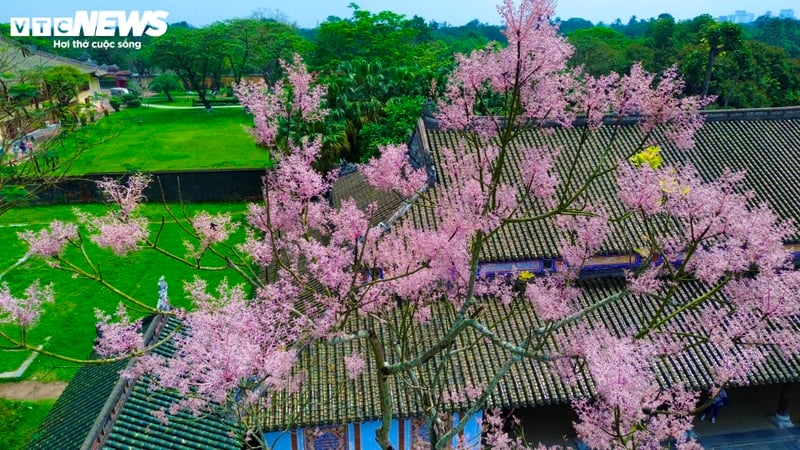
In Moc Chau these days, flowers are everywhere. “If apricot blossoms, plum blossoms, and peach blossoms create the beauty of early spring, then the bauhinia flower is considered the soul of Moc Chau when spring arrives more deeply,” Comrade Hoang Ngan Hoan, Director of the Department of Culture, Sports and Tourism of Son La province, proudly told us. The bauhinia flower is as gentle as a shy “muse” of the Northwest. The Thai people tell the story of the maiden Ban crossing mountains and forests to find her lover, and then transforming into this pure white flower waiting for each spring to arrive. This legend makes the bauhinia flower not only beautiful, but also carries the cultural memories, beliefs, and love of an entire region. The entire plateau becomes soft in shades of white tinged with pale purple, dotted with a touch of light pink, making the landscape of Moc Chau so clear that visitors just want to leisurely stroll through the flower forest, forgetting the concept of time.
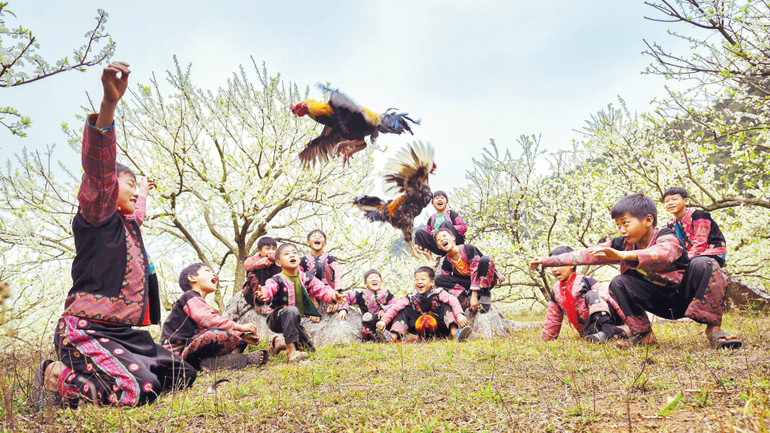
When the bauhinia flowers bloom, the Thai people hold a grand Xên bản and Xên mường festival. The procession of bauhinia flowers, the village and district offerings to pray for a good harvest and blessings are important rituals that closely connect the spiritual life of the people with nature. To this day, the Bauhinia Flower Festival is still held annually in the Moc Chau National Tourist Area.
Each flowering season is followed by a new festival. In March, when the weather softens, Ang village becomes vibrant with the Het Cha festival of the White Thai people – a thanksgiving ceremony to heaven, earth, and ancestors, praying for a bountiful harvest. Under the thousand-year-old banyan tree, the traditional dances and folk performances vividly recreate the working life, giving visitors the feeling of stepping into an authentic cultural space. Or consider the Rain Prayer Festival in Na Bo village, a national intangible cultural heritage, where the Thai people express their hopes for favorable weather, lush fields, and a prosperous life.
Comrade Nguyen Duc Nguyen, Permanent Deputy Secretary of the Ward Party Committee, said: Moc Chau is loved by many not only for its beautiful natural scenery, but also for the unique ethnic culture of the Thai and H'Mong people, along with its distinctive cuisine. This land attracts tourists all year round, as each season has a different beauty, especially the flowering season in late winter and early spring, and the plum ripening season in summer.
The Independence Day celebration on September 2nd is the biggest and most distinctive festival in Moc Chau, especially for the Hmong ethnic group, and is just as important as the Lunar New Year. From the end of August, people from villages, from all over the Northwest region, and even from neighboring Laos, flock to the center of the plateau. The mountain town lights up with the colors of brocade dresses, the sound of the Hmong flute calling out to friends, and lively gatherings that last all night. Young men and women hẹn hò (date); the elderly reunite with old friends; the market, folk games, and cultural and sporting festivals take place one after another, creating a vibrant community atmosphere rich in cultural identity.
The season of flowers and promises
Taking us on a tour of the flower forests, Mr. Nguyen Van Ha, who has been connected to this land for over 20 years, excitedly recounted: “Moc Chau is vibrant all year round, but it is most beautiful in late winter and early spring, when the plateau bursts with the colors and fragrances of countless flowers – meaning now is the most attractive time.” Mr. Ha said that currently, Moc Chau in particular and Son La in general have many diverse tourism products such as ecotourism, agricultural experiences, and community tourism. A plus point of this plateau is that although tourism is developed systematically, diversely, and professionally, the natural landscape and culture are still preserved. Thanks to this, Moc Chau is increasingly attracting not only domestic tourists but also many foreign tourists.
When we visited the famous Bach Long Glass Bridge, Ms. Thuy Nhung, a local resident, told us that if you come to Moc Chau in April, you can immerse yourself in the orchid festival, which brings together hundreds of rare orchid varieties, from native wild orchids to imported ones.
Towards the end of autumn and beginning of winter, wild sunflowers once again paint the hillsides yellow, powerful and untamed. Then, white mustard flowers cover the valleys, buckwheat changes color day by day, and cassia flowers illuminate the summer with their brilliant yellow… “Moc Chau, therefore, has no off-season, only different flower seasons waiting for people to return,” Comrade Hoang Ngan Hoan proudly shared.
Not only captivating for its scenery, Moc Chau is also gradually asserting its position on the regional and global tourism map. With its beautiful nature, fresh climate, and enchanting flower seasons, Moc Chau has been honored four times by the World Travel Awards as Asia's Leading Nature Destination and three times as the World's Leading Nature Destination, including two consecutive years in the category of World's Leading Nature Destination.
According to information from Son La province leaders, in 2026, Moc Chau will launch a tourism program themed "Moc Chau - A Promise of the Flower Season," opening a series of activities from January to March with many unique events. All of this aims not only to promote tourism but also to tell the story of a land that cherishes nature and local culture. Leveraging its potential and advantages, the locality will focus on developing high-quality tourism products; improving infrastructure; enhancing the effectiveness of state management; and gradually making tourism a key economic sector.
Leaving this pristine and beautiful land, visitors will carry with them memories of a gentle, romantic feeling that is difficult to describe. And we will certainly keep our whispered promise to Moc Chau plateau, that we will return, in another flowering season, to continue immersing ourselves in the beauty of these unforgettable flowers.
Source: https://nhandan.vn/moc-chau-mua-hoa-hen-uoc-post936244.html























































Comment (0)