Every late summer, Turkish bakers temporarily leave their kitchens and travel to the sunny plains of the southeast to source "green gold" for the nation's most delicious pastry, baklava.
Baklava is a renowned, "royal" pastry due to its elaborate preparation, attractive appearance, and especially its irresistible flavor. Since the Ottoman Empire (1299-1453), it has been a favorite among Turks, never absent from important festivals and celebrations.
"For us, baklava is not just a sweet pastry, but a food that accompanies important milestones in a person's life," points out Hatice Pekmez, Associate Professor at Gaziantep University.
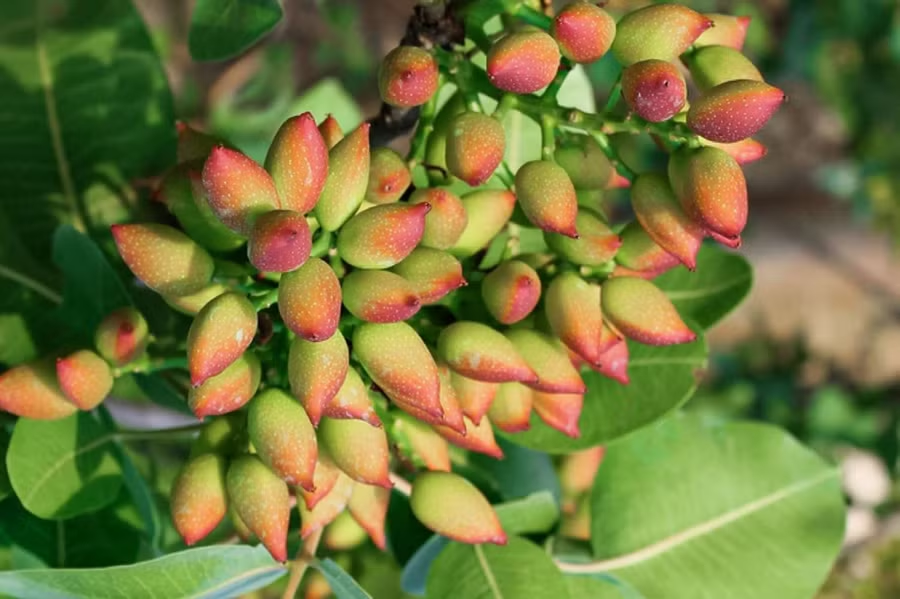
Every year, at the end of summer, bakers throughout Türkiye, especially in the municipality of Gaziantep, eagerly head to the southeastern plains to buy pistachios, the main ingredient in baklava.
The pistachio tree belongs to the cashew family, originates from Persia, and is now distributed throughout the Middle East. Pistachio nuts are rich in protein, fiber, and minerals beneficial to health. The kernels of pistachios are green, and in Gaziantep they are even greener than in other areas, which is why the Turks call them "green gold."


Türkiye has countless sweets, but the best is baklava. According to historical records, in the 19th century, Güllü Çelebi, a baker, went on a pilgrimage to Mecca in Saudi Arabia and was captivated by the walnut bread there. He immediately learned how to make it and, upon returning home, replaced the walnuts with readily available pistachios.
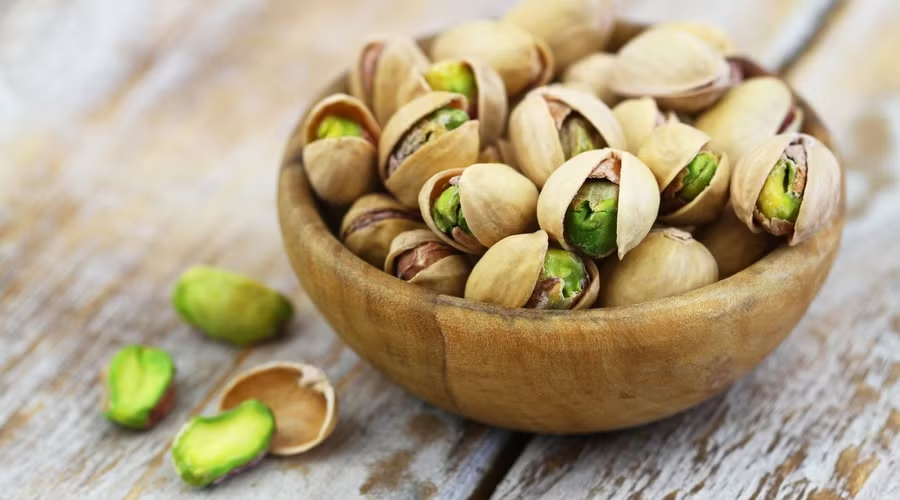
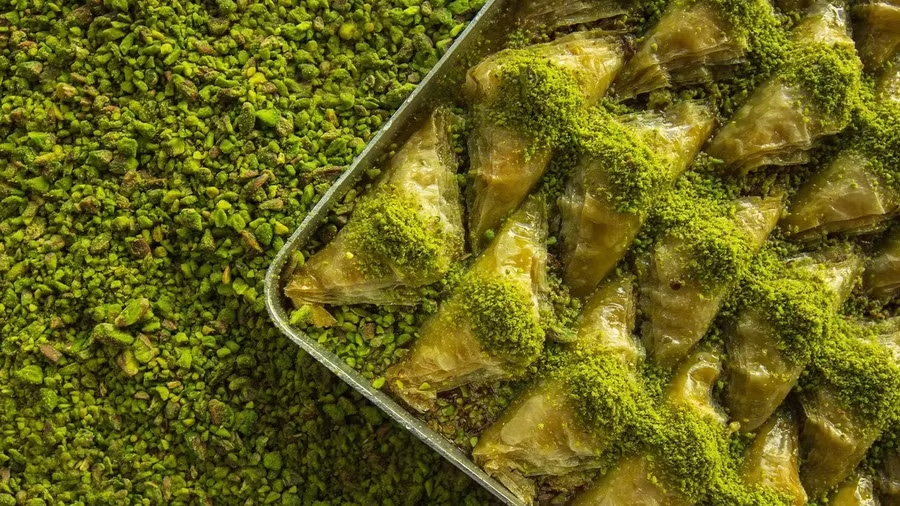
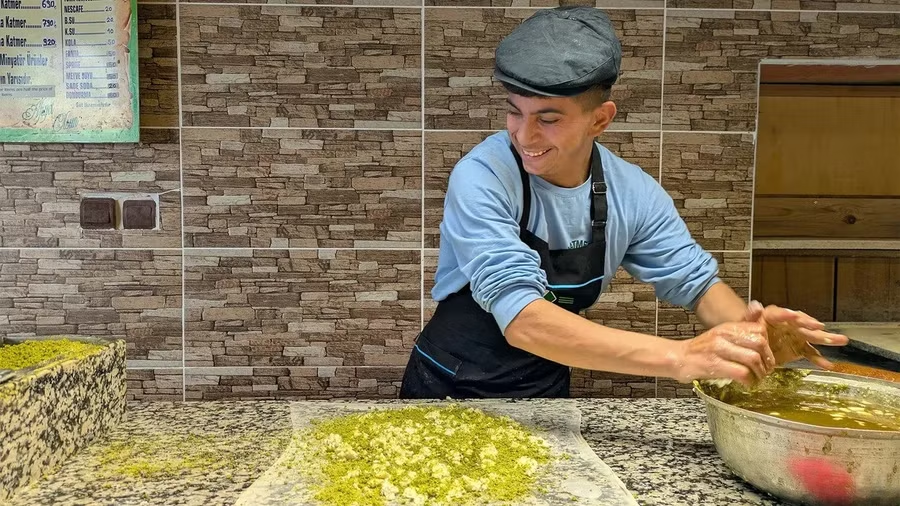
Baklava consists of two main ingredients: wheat flour and pistachios, along with many other supplementary ingredients. The baker rolls the kneaded wheat flour into a paper-thin sheet, spreads it with syrup, sprinkles it with pistachios, and then stacks it in multiple layers before baking, creating a soft, fluffy, and fragrant pastry.


It takes many years for bakers to master the art of making baklava. “If you ask me what Türkiye has, I would say water, air, and baklava,” proudly states Burhan Çağdaş, a baker with over 50 years of experience.
Source: https://giaoducthoidai.vn/mon-banh-cuc-ngon-tu-vang-xanh-post781448.html









![[Video] Typhoon No. 1 is about to form, forecast to make landfall in the Gulf of Tonkin on July 4th.](https://vphoto.vietnam.vn/thumb/402x226/vietnam/resource/IMAGE/2026/07/02/1782979459453_dung00-08-51-13still004-png.webp)