

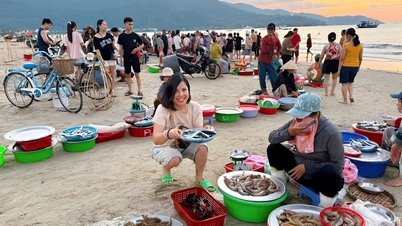
According to Thanh Nien newspaper , at a special session on September 19th, the Ho Chi Minh City People's Council passed a resolution on temporary usage fees for sidewalks and roads. From January 2024, organizations and individuals using roads for three purposes and sidewalks for five purposes will have to pay fees, including: organizing cultural activities; household waste transfer points; parking areas; business and trading points; locations for constructing public transport facilities with user fees and installing temporary structures; and transfer points for construction materials and waste.
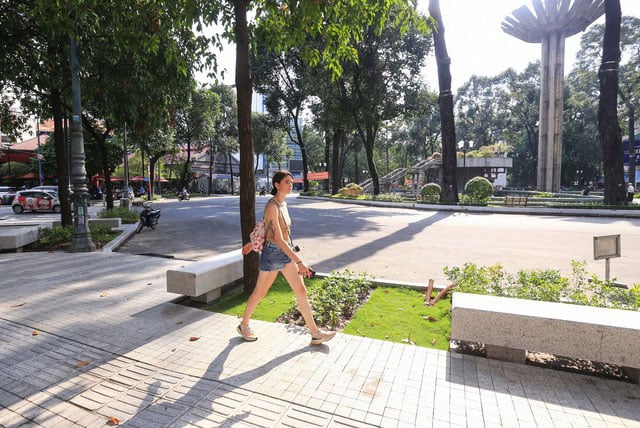
The District 3 People's Committee has proposed allocating 2 meters of the International Square road for a paid motorbike parking area.
The Department of Transport said that the Ho Chi Minh City People's Committee will issue an implementation plan. The Department of Transport and the People's Committees at the district level will review and issue a list of roads that meet the conditions for temporary use of sidewalks and roadways, with specific functions and activities. Mr. Ngo Hai Duong, Head of the Road Infrastructure Management and Exploitation Department (Ho Chi Minh City Department of Transport), said that not all roads are eligible for business or leasing. On the other hand, the collection of fees for sidewalks and roadways must ensure that the consensus of the people is prioritized, avoiding conflicts of interest between the lessor and the user.
We need a solution that is both reasonable and compassionate.
Many readers support Ho Chi Minh City's proposal to charge fees for the temporary use of sidewalks and roads, provided this policy is implemented reasonably and transparently. Reader 8BH5 commented: "Renting sidewalks is reasonable, but only sidewalks 5-7 meters wide are allowed, and the consent of the homeowners is required. The government must resolve the interests of all parties harmoniously; if successful, this will be a humane and responsible policy."
"When implementing sidewalk fees, priority should be given to those who own storefronts and rent them first, followed by those who have been doing business and making a living there for a long time... If the regulations are fair and reasonable, then nothing is impossible," added BĐ Hi Hi.
Similarly, the National Assembly's Standing Committee also suggested prioritizing street-front properties, followed by businesses: "The cost of constructing, repairing, and maintaining sidewalks comes from taxes, so collecting public infrastructure fees from those who need to use them is reasonable. However, priority should be given to families who have been or are currently conducting temporary businesses on the city's sidewalks, provided they comply with all legal regulations."
The Board of Directors proposed the following specifics: "For narrow sidewalks, leave a 1.5m space; for wide sidewalks, leave a 3m space. Buying and selling activities are strictly prohibited on the road. Violators will be fined based on photographic evidence with only two penalty levels: a warning for the first offense and revocation of the business license for the second offense."
Waiting for an effective implementation roadmap.
The Ho Chi Minh City Department of Transport announced that it is seeking feedback from localities to draft guidelines for the temporary management and use of a portion of the road and sidewalk. Decree 6517 noted the implementation method: "I agree with the sidewalk fee collection plan. The policy is correct, but it needs further study. Not every place can rent out sidewalks; otherwise, the disadvantages will outweigh the advantages, leading to many problems later."
BĐ Le Nguyen expressed his agreement and suggested expanding the model: "A sidewalk fee could be applied nationwide. The revenue would go into the budget to develop infrastructure. Doing so would both prevent budget losses and avoid conflicts between homeowners and sidewalk users."
Meanwhile, Mr. Tran Hung reminded about the implementation roadmap: "The purpose of collecting fees for sidewalk businesses is to organize and manage sidewalks in an orderly, disciplined, and aesthetically pleasing manner. Therefore, this must be done in the right place, at the right time, and with the right nature. Where fees are not collected, we must resolutely deal with the encroachment and occupation of sidewalks to create unobstructed space for pedestrians."
"This is a difficult problem because many groups are affected by the policy. We need to learn from the experiences of similar countries. We should select a few localities for pilot programs first, with a specific roadmap to harmonize interests," suggested Ms. Minh Ly.
* I support it, but we need to find a way to ensure that the money collected from sidewalk usage fees is deposited into the budget and used effectively for infrastructure development.
xuanhoa tran
* Roads and sidewalks are already too crowded, traffic is chaotic in many places, and the streets are unsightly. It is advisable to establish designated areas for trading, which would allow for better management and prevent street disorder.
Kenny Nt
Source link
























































































Comment (0)