

 |
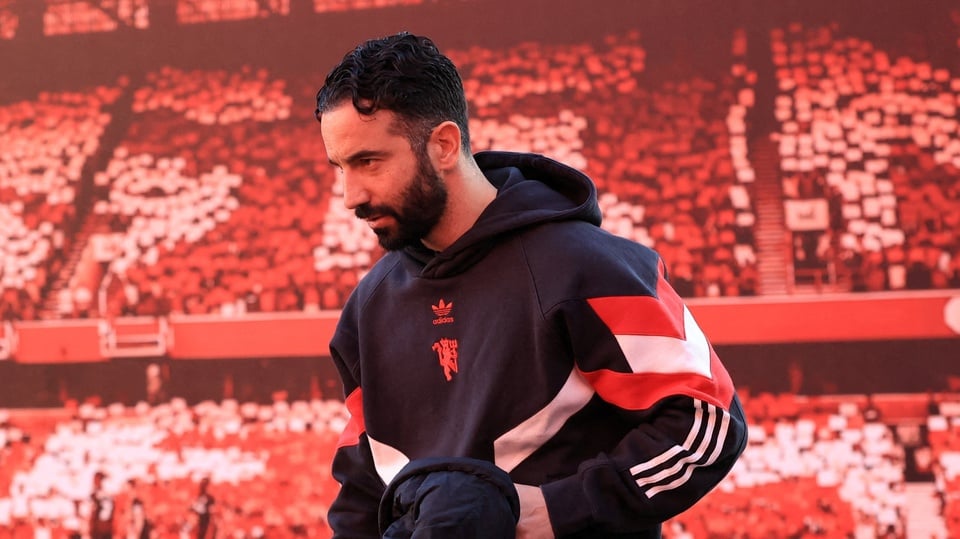
Ruben Amorim has been sacked by Manchester United. |
Manchester United appointed Ruben Amorim as their first "head manager" in nearly 150 years of history. But in reality, they never clearly decided what they wanted from that title.
A true "head coach" must operate within a stable structure where power, responsibility, and spheres of influence are clearly defined. MU lacks that. And Amorim, from day one, stepped into a position where no one agreed on how to utilize him.
"I'm the manager, the head coach, and I have to choose the players." That statement at the launch press conference wasn't a linguistic error. It was the first sign that this project was flawed from the outset.
MU wants structure, but acts instinctively.
INEOS arrived at Old Trafford with the promise that "the adults were in the room." Jason Wilcox, Omar Berrada, Dan Ashworth – names expected to bring order. But order doesn't come from titles, but from consistent decision-making.
Dan Ashworth came and went quickly. The Sporting Director role was left vacant at a time when stability was most needed. Meanwhile, Amorim was both told to "focus solely on coaching" and pushed to the front lines to bear all the pressure for results.
MU wants to separate power, but lacks the decisiveness to protect the structure it has created.
Liverpool and West Ham had doubts about Amorim's ability to adapt to the Premier League. Manchester United didn't. Or they knew, but chose to ignore it.
Amorim comes from an environment where the manager has almost absolute control, where time is considered a valuable asset. The Premier League doesn't operate on that logic, especially Manchester United, where every training session and every statement is scrutinized.
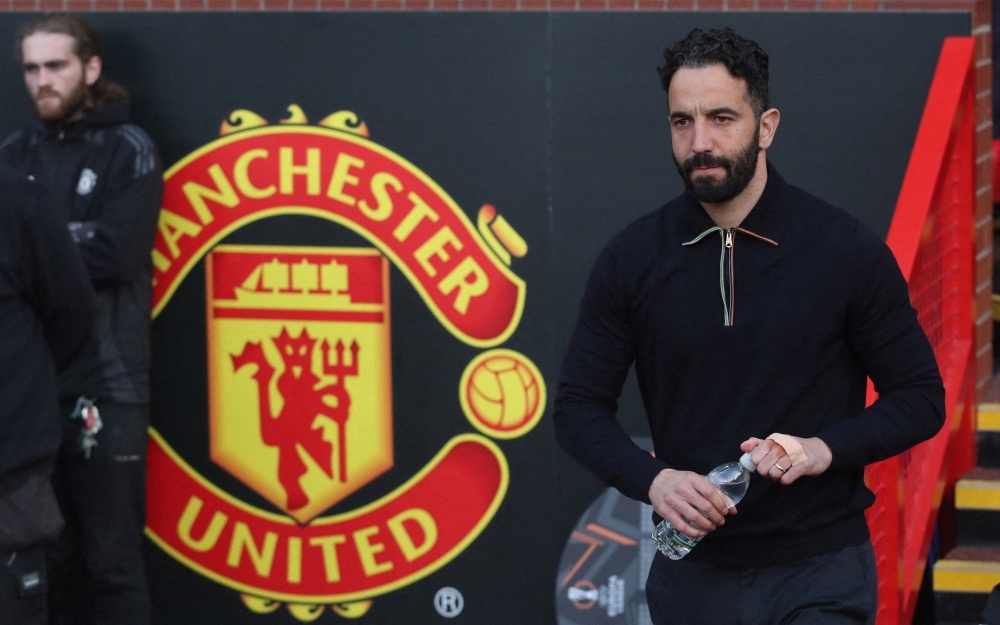 |
Amorim comes from an environment where the coach has almost absolute control, where time is considered a valuable asset. |
Amorim's talkativeness, bluntness, and emotional outbursts weren't a problem in Portugal. At Old Trafford, however, it was poison. He called his team one of the worst in the club's history. He openly admitted he wasn't good enough. He overreacted to Kobbie Mainoo, only to pit himself against the academy, one of the few remaining symbols of Manchester United.
A manager lacking "media filtering" cannot survive at MU. The board must know that. But they still chose Amorim.
Steadfastness turns into stubbornness.
The 3-4-3 formation was Amorim's signature. But in the Premier League, it quickly became a weakness that was repeatedly exploited. Players lacked clarity of role. The defensive system was constantly unbalanced. Transitions were chaotic.
Instead of adjusting early, Amorim chose to endure. He called it "necessary suffering." The problem is that suffering doesn't bring progress.
When Amorim finally experimented with a four-man defense in December 2025, his explanation was even more damaging than the late change itself. “I couldn’t make the change because the players would think I was making it because of you guys,” Amorim said.
That was the moment Amorim confessed that maintaining a system that had been figured out was merely to protect his image of power. A coach who prioritizes individual status over collective effectiveness is an irreparable flaw in any major project.
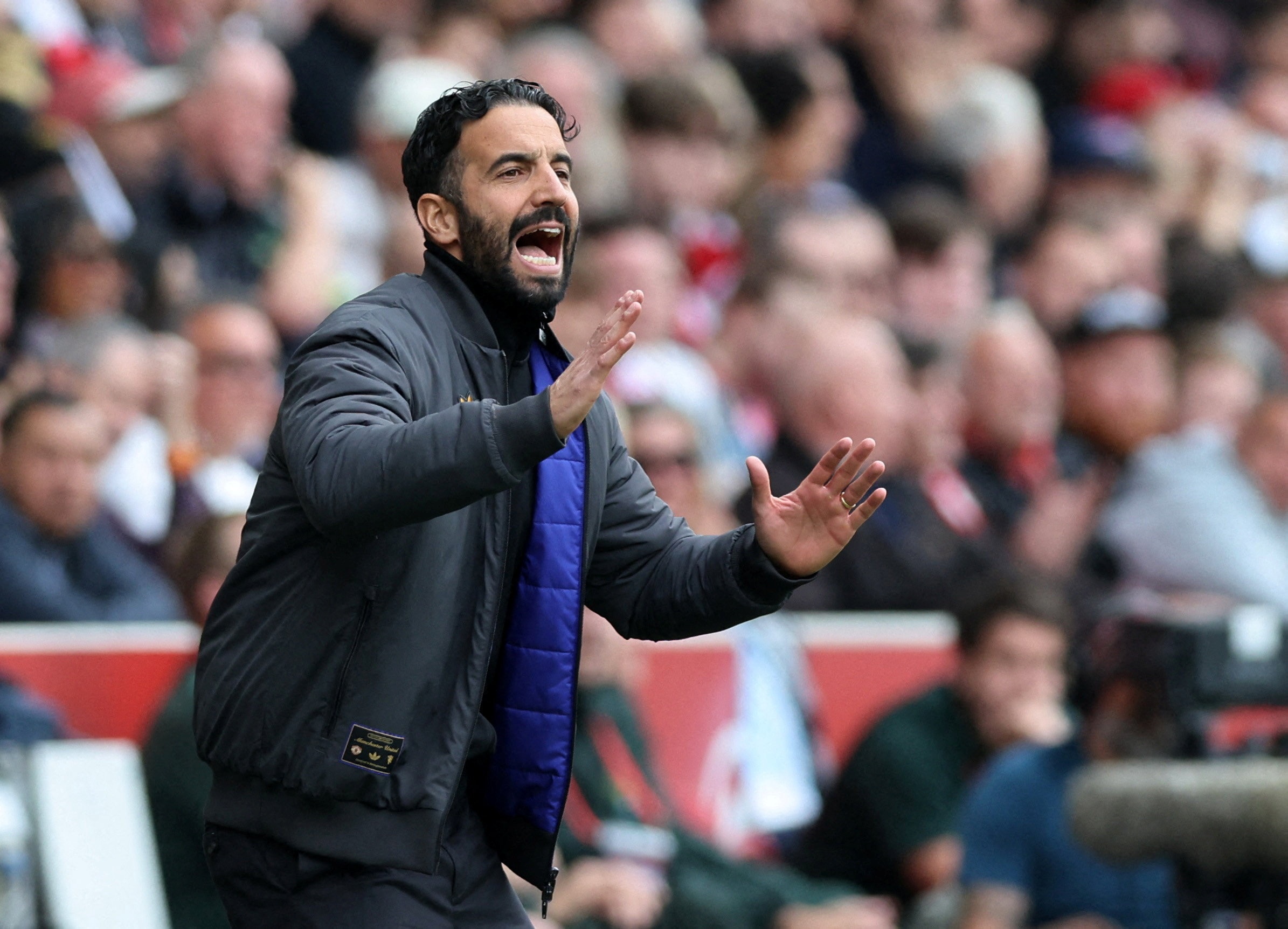 |
Amorim's talkativeness, bluntness, and emotional outbursts weren't a problem in Portugal. At Old Trafford, however, it was poison. |
MU finished 15th last season. The squad was unbalanced. Amorim was given more time. The summer of 2025 brought notable signings: Cunha, Mbeumo, Sesko. Carrington was upgraded. No European competition, a less demanding schedule.
All the conditions for a redo are met.
But MU still hasn't improved fundamentally: poor defense, slow reaction, lack of a clear identity. Amorim won 19 out of 50 games. Not bad enough to be called a disaster, but too low to justify a long-term project.
The question to ask is: Did MU continue with Amorim because they believed he was right, or because they lacked the courage to admit they made the wrong choice?
Sacking Amorim didn't solve the core problem. He was only the first "head manager," but he carried the familiar ailments of the post-Sir Alex era: ambiguous power, loose structure, and diluted responsibility.
Sir Jim Ratcliffe once said when he left Ten Hag: "Is inconsistent form due to the manager or the organization?" Manchester United never definitively answered that question. And because they didn't answer it, they continued to repeat the same mistakes.
Amorim arrived with a big idea. But Manchester United is not the place to experiment with projects that haven't been properly designed. At Old Trafford, theory alone isn't enough to survive. Only clarity, consistency, and accountability matter.
Amorim is gone. The question is: What has MU learned, or are they just preparing to build yet another flawed project?
Source: https://znews.vn/mu-da-sai-voi-amorim-tu-dau-post1617064.html

![[Photo] Prime Minister Pham Minh Chinh receives the Director of RMIT University Melbourne (Australia)](https://vphoto.vietnam.vn/thumb/1200x675/vietnam/resource/IMAGE/2026/04/02/1775142120087_thiet-ke-chua-co-ten-2026-04-02t214220784-png.webp)






































































Comment (0)