This seafood species brings in a significant income, becoming a source of livelihood for hundreds of coastal households in Ha Tinh province every year.
Sea bounty
As the northeast monsoon winds gradually recede and the sea calms down after long, turbulent days, fishermen in the coastal areas of Ha Tinh province enter a special season of livelihood - the jellyfish season.
At dawn, before the sun had even risen, the coastal area of Dong Van village (Dong Tien commune, Ha Tinh province) was already waking up. In the thin mist, figures could be seen faintly on the sand, and carts lay still, waiting.
As dawn broke, tiny black dots gradually appeared in the distance. These were small boats, about 24 horsepower, returning from a short fishing trip. From the sandy shore, shouts rang out: "They're back! They're back!" In just a moment, the atmosphere seemed to warm up, awakening the entire coastal area.
A motorboat cut through the waves as it approached the shore, its hold overflowing with the clear, soft, and heavy "bounty of the sea." Seawater spilled from the boat, flowing across the sand, carrying the distinctive salty scent of the mollusks.
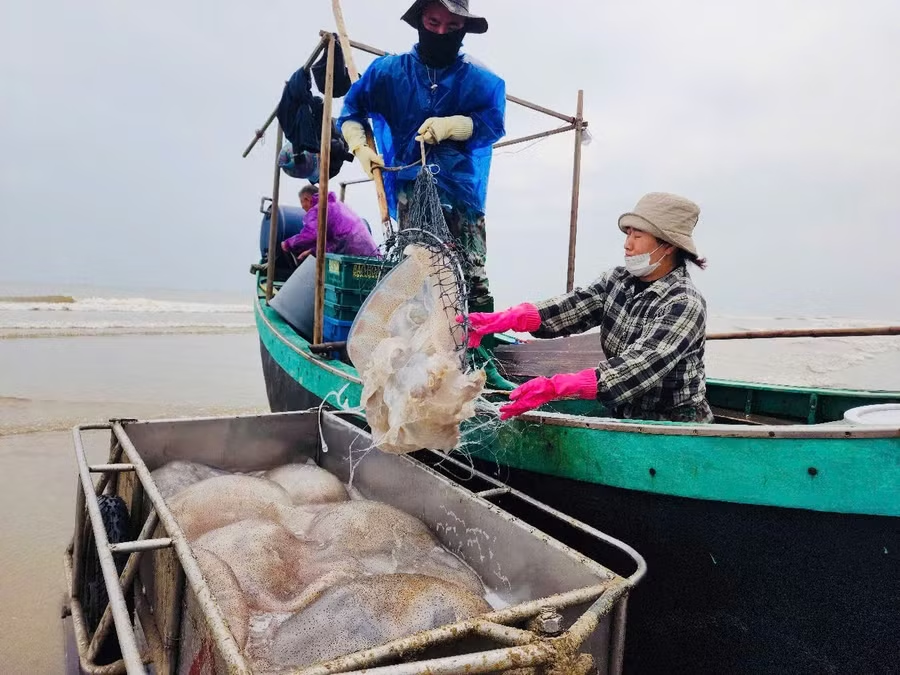
Struggling to pull a jellyfish weighing over 30kg into his basket, Mr. Phan Van Ly (63 years old) said his boat left the dock at 4 a.m. This trip, he collected two cartloads of jellyfish, equivalent to about 500kg, including many weighing from 30 to 40kg. "This species is soft, slippery, difficult to handle, and if you're not used to pulling them, they'll slip and cause itching," Mr. Ly said, his hands still nimbly removing the jellyfish.
Shortly after, fisherman Tran Van Loc's boat (48 years old) also docked. Without even taking a break, he and his crew quickly transferred the jellyfish onto the shore. These jellyfish, weighing 30-40 kg, are slippery and difficult to handle, requiring both strength and experience from the fishermen.
“This year’s jellyfish season is much more abundant. These past few days, we’ve been catching 5 to 8 tons every day. On some days, when the weather is favorable, my family makes 3-4 trips, totaling about 10 tons of jellyfish. Thanks to that, each worker can earn more than 5 million VND per day,” Mr. Loc said quickly, his voice filled with excitement after a successful fishing trip.
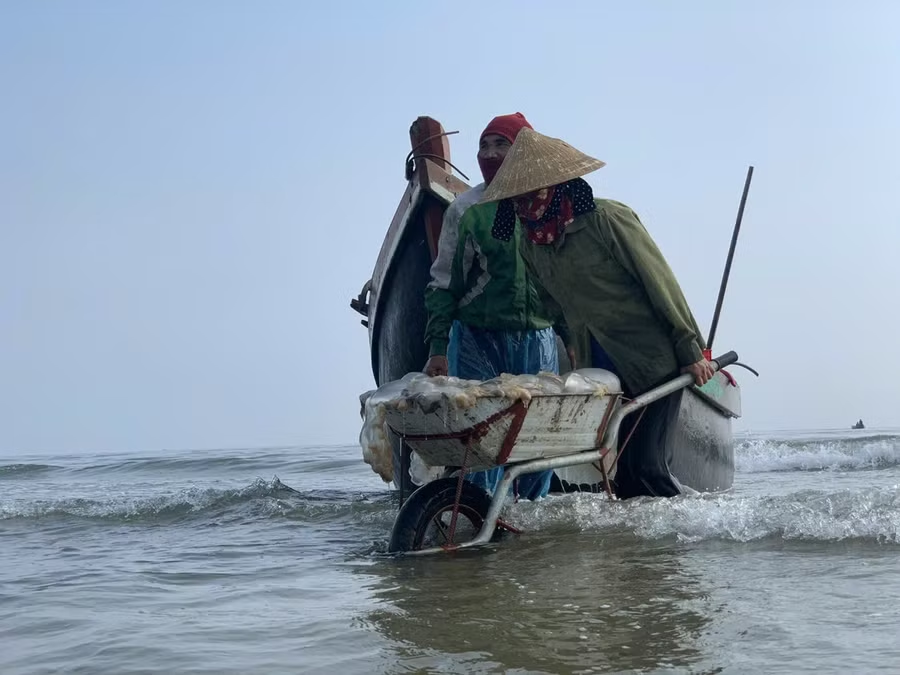
On the beach, the trailers were waiting. Each load of jellyfish was piled high like giant blocks of jelly. The screeching of the wheels on the sand, the rushing sound of the water, the hurried calls of people... all blended together, creating a vibrant symphony of coastal labor.
In coastal areas where fishing conditions are limited, jellyfish harvesting and short-distance fishing trips have become a suitable option for many fishing households. They don't need large vessels or to venture far out to sea; with just a 24-horsepower boat, a few workers, and long nets, they can harvest in areas 1 to 3 nautical miles from shore, each trip lasting a few hours before returning. When they encounter a good school of jellyfish, the boat can fill its hold, yielding 3-4 tons per trip.
But that doesn't mean it's "easy." What fishermen often refer to as "hitting the right spot" is actually the result of years of accumulated experience. Observing the water color, predicting wind direction, reading the current – seemingly intangible factors – actually determine the success or failure of the entire trip.
"To catch jellyfish, you have to know how to read the water. You can tell if there are jellyfish or not by the color change. It looks easy, but many newcomers don't even have enough money for fuel," fisherman Nguyen Dinh Vinh shared his experience. On this trip, his boat caught about 700 kg of jellyfish. He said that the jellyfish harvesting season usually only lasts a few months, from January to the end of March in the lunar calendar.
This year, the jellyfish season arrived earlier, and the early harvest is quite abundant. Each fishing trip lasts only a few hours, but if they encounter a large school of jellyfish, each boat can harvest a significant amount, bringing in a considerable income for the people in the coastal area.
Amidst rising fuel prices, short fishing trips lasting only a few hours, without venturing far out to sea and consuming minimal fuel, have helped fishermen in Ha Tinh maintain their livelihoods by providing a stable income. The flexible nature of these trips, allowing fishermen to go out to sea and return within a single day, enables them to adapt to weather conditions, thereby reducing costs and risks compared to other fishing methods.



The journey of "sea bounty"
From the sandy beaches, trucks loaded with jellyfish are continuously transported to collection points. The harvesting activity at sea quickly shifts to the collection and processing stages on shore. At processing facilities in Dong Tien commune, the jellyfish are pre-processed that same morning to ensure quality.
As soon as the boats docked, the purchasing team was present with trailers, styrofoam containers, buckets, and plastic trays to receive the jellyfish. The jellyfish were initially sorted by size right on the beach before being transported to the processing facility. The purchase price ranged from 25,000 to 30,000 VND per jellyfish, depending on the size and thickness of the jellyfish body. The buying and selling took place directly between the fishermen and the buyers, without going through many intermediaries.
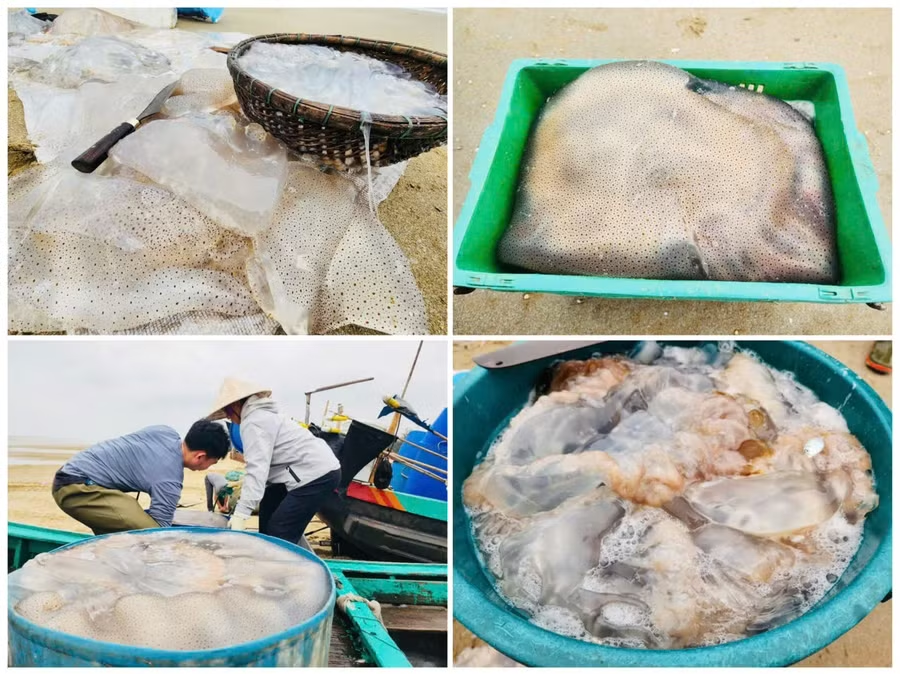
After being brought to the facility, the jellyfish are processed on the same day. Larger jellyfish are cut into sections, then washed with seawater to maintain their natural crispness. This process requires continuous operation to prevent the jellyfish from deteriorating. The entire body of the jellyfish is used for food processing. Of these, the tentacles are the most valuable, costing around 50,000 VND/kg; the body costs between 10,000 and 15,000 VND/kg, depending on quality.
After initial processing, the jellyfish are soaked with traditional leaves such as lau leaves and dung leaves. This is a crucial step to remove toxins, reduce the fishy smell, and create a crispy texture. The soaking time and mixing ratio are adjusted by the establishments based on practical experience to ensure the quality of the finished product.
This year, due to favorable weather conditions, the early-season jellyfish yield is relatively high, and the purchase price is stable. This is the peak period for harvesting, purchasing, and processing activities, which take place continuously throughout the day, mainly in the morning.
In the factories, workers are assigned to specific tasks. One group handles cutting, another washes and sorts, and the remaining group takes care of soaking and packaging. Depending on daily production volume, facilities may hire additional seasonal workers to meet processing deadlines.
Mr. Nguyen Dinh Dung, the owner of a local processing facility, said: “In the early days of the season, our unit purchased nearly 300 tons of jellyfish from fishermen. According to the plan, if weather conditions are favorable and the supply remains stable, the total amount purchased for the entire season could reach about 1,200 tons. To meet this volume, the facility has increased the number of workers and reorganized the work process to shorten processing time.”
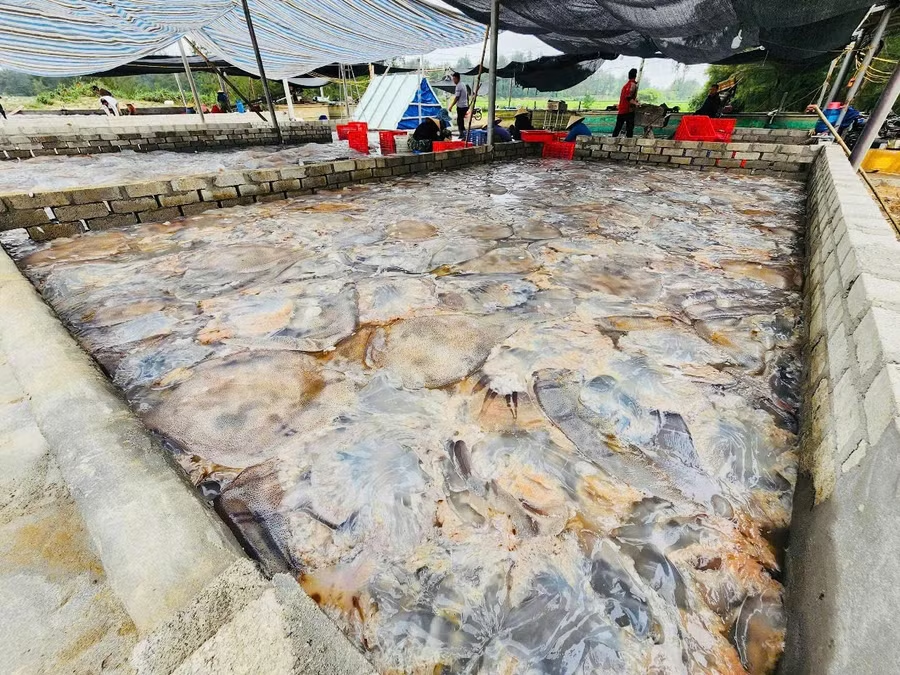
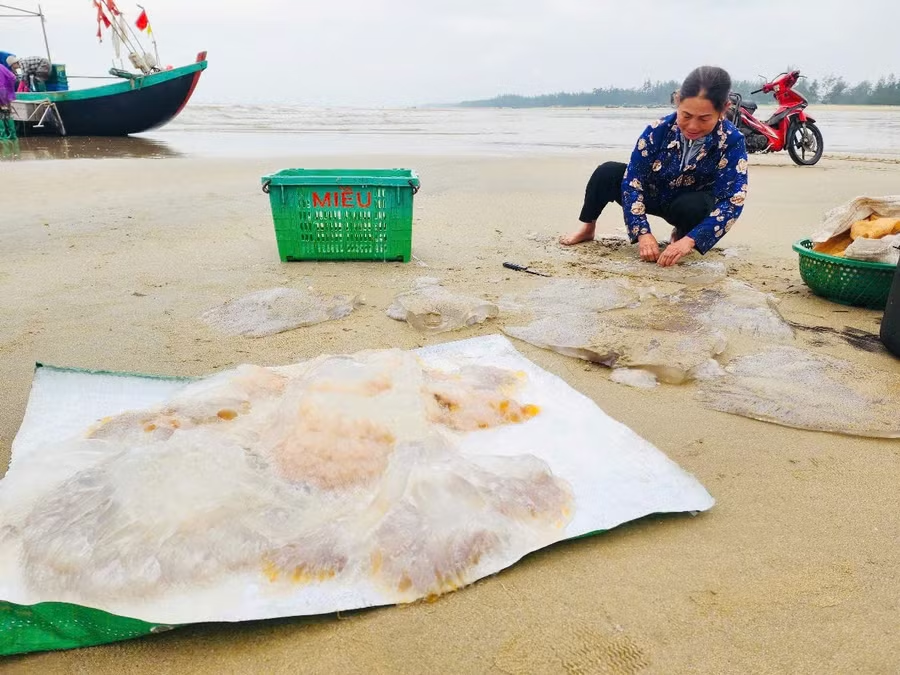
According to purchasing centers, jellyfish appeared earlier this year than in previous years. The early season yield is relatively large, with many boats able to harvest tons of jellyfish per day. As a result, the supply is brought ashore continuously throughout the morning, putting pressure on the processing stage to be carried out quickly and synchronously.

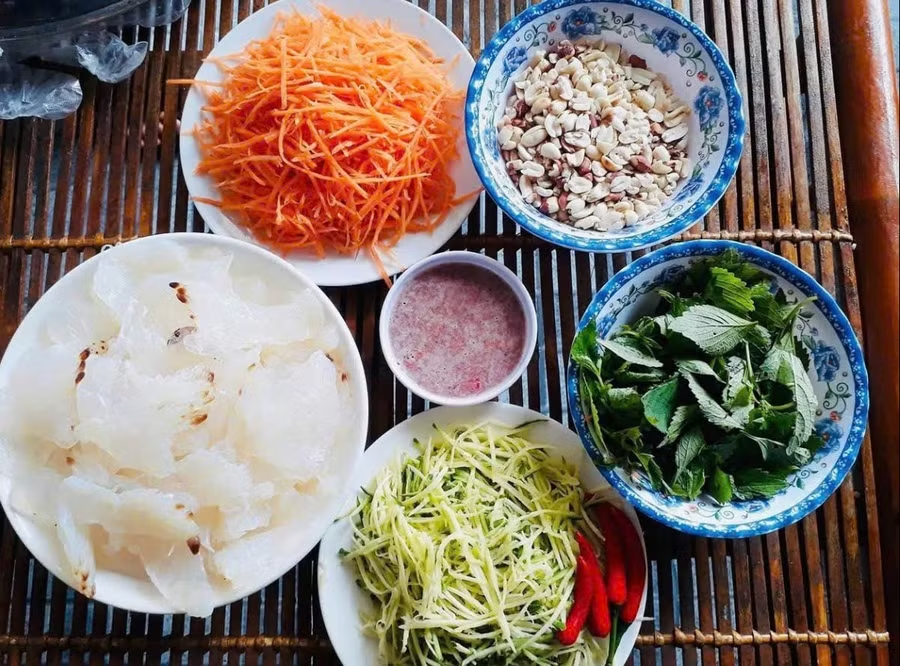
Ms. Thuan, owner of Liem Thuan seafood processing facility, said that jellyfish, after initial processing, are consumed in many localities. They are a familiar ingredient in dishes such as jellyfish salad, jellyfish relish, and jellyfish dipped in shrimp paste. Demand usually increases during the hot season due to their crispy, refreshing texture and ease of preparation. Currently, the amount of jellyfish purchased at the facility remains high to serve markets both within and outside the province.
“Jellyfish processing in the area is mainly based on manual methods, combining traditional experience. Steps such as cutting, washing, and soaking the leaves are all done manually, with little involvement of machinery. However, the process still ensures large quantities are processed in a short time thanks to the coordination among the workers,” said Ms. Thuan, while nimbly cutting jellyfish.
Besides selling directly to purchasing facilities, some households process jellyfish right on the beach. Tools such as basins of seawater, cutting knives, and processing leaves are prepared in advance. After processing, the product is taken to local markets for sale. This method increases its value compared to selling whole fresh jellyfish.
Around midday, when the sun becomes intense, the jellyfish from the fishing trips have been processed, and activity at the beaches and processing facilities temporarily subsides. However, on days with favorable weather, this cycle will repeat for several consecutive days until the end of the season.
Although it comes and goes quickly, the jellyfish harvesting season still brings in a significant source of income, contributing to stable livelihoods for hundreds of coastal households at the beginning of each year.
Jellyfish are mollusks, transparent and composed of about 95-98% water, commonly found in tropical seas. They are a food rich in protein, collagen, minerals (iron, calcium, iodine), and low in calories. Jellyfish are used in salads, relishes, and jellyfish noodle dishes, which are believed to have cooling properties and soothe sore throats, but careful preparation is necessary to avoid toxins and allergic reactions.
Source: https://giaoducthoidai.vn/muu-sinh-mua-thach-bien-post777609.html

![[Photo] General Secretary and President To Lam attends the Central Public Security Party Committee Conference](https://vphoto.vietnam.vn/thumb/1200x675/vietnam/resource/IMAGE/2026/06/24/1782302063612_a1-bnd-9302-9166-jpg.webp)
![[Photo] The 13th National Congress of the Youth Union conducts personnel work.](https://vphoto.vietnam.vn/thumb/1200x675/vietnam/resource/IMAGE/2026/06/24/1782299943080_ndo_br_1-6868-jpg.webp)
![[Photo] Opening Ceremony of the 13th National Congress of the Ho Chi Minh Communist Youth Union](https://vphoto.vietnam.vn/thumb/1200x675/vietnam/resource/IMAGE/2026/06/24/1782286753905_ndo_br_1-8510-jpg.webp)