

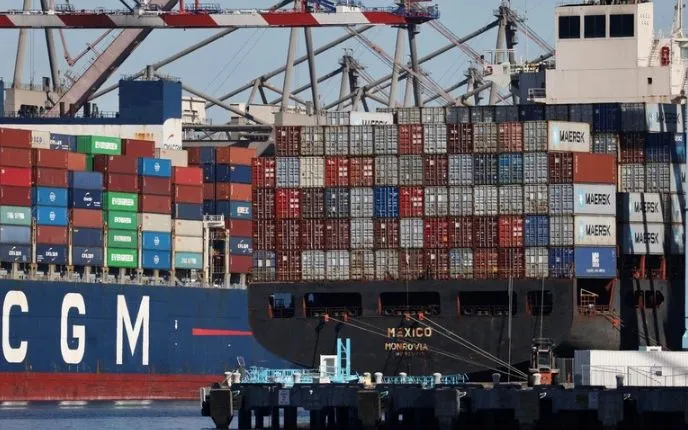
A view of the Long Beach cargo port, California (USA). (Photo: THX)
Accordingly, the "reciprocal" tariff rate for India will be reduced to 18% and "effective immediately," in exchange for New Delhi also lowering tariffs and non-tariff barriers against the US to 0%.
In a post on the social media platform Truth Social following a phone call with Indian Prime Minister Narendra Modi, President Trump stated that New Delhi had also agreed to buy American products “at a much higher level.” Furthermore, the Indian leader pledged to “stop buying oil from Russia and buy more from the United States and, possibly, from Venezuela.”
In August 2025, President Trump imposed an additional 25% tariff on India effective August 27th, on top of the 25% "reciprocal" tariff on goods from the South Asian nation exported to the US – which had taken effect earlier that month.
From New Delhi, Prime Minister Modi expressed his welcome and gratitude to the US President. The Indian leader hoped that the decision to reduce import tariffs on "Made in India" products would open up tremendous opportunities for mutually beneficial cooperation between the two countries.
US Ambassador to India Sergio Gor affirmed that the 18% tariff would be the final tariff Washington applies to goods imported from India, significantly lower than the punitive tariffs imposed in the past. This move is seen as an important step to ease trade tensions between the two major economies . In return, India committed to gradually removing tariffs and non-tariff barriers on US goods, while expanding imports of key US products, including energy, technology, agriculture, and other strategic goods, with an estimated value of around $500 billion.
Commenting on the agreement, Ambassador Sergio Gor said it marked the beginning of a “new era” in US-India relations, emphasizing the role of high-level dialogue and the personal relationship between the two leaders in creating a breakthrough. President Trump also affirmed that he and Prime Minister Modi are “people who always get the job done,” and expressed optimism about the prospects for bilateral cooperation in the future.
Analysts believe that if fully implemented, the agreement would not only directly benefit Indian exporters and American businesses, but could also reshape global energy flows, impacting oil markets and the geopolitical landscape related to the Russia-Ukraine conflict.
Source: https://vtv.vn/my-an-do-dat-thoa-thuan-thue-quan-100260203081732419.htm
















































































Comment (0)