 |
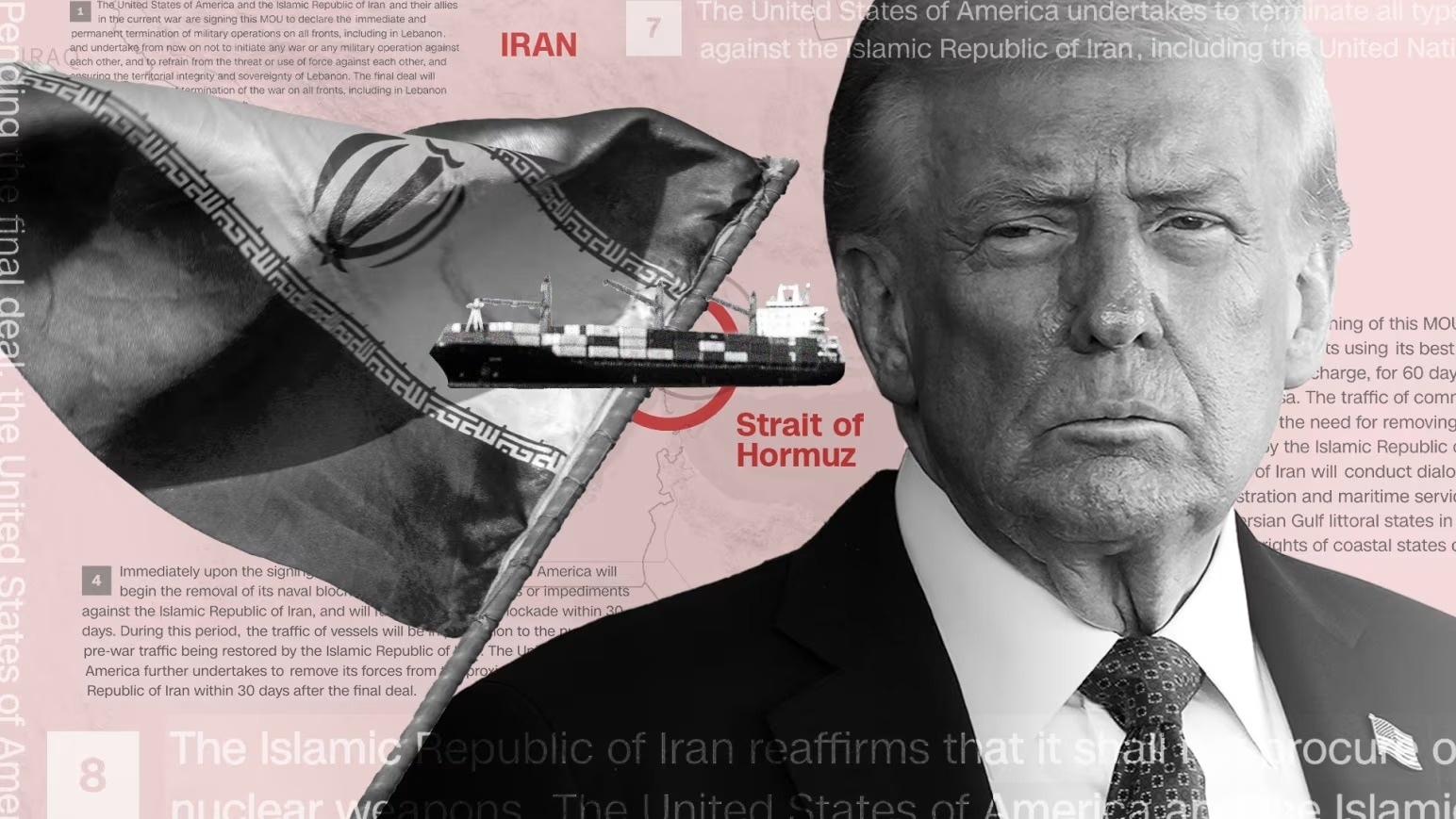
After weeks of tension that pushed the Middle East to the brink of regional war, the U.S. and Iran finally released a memorandum of understanding (MOU) paving the way for a more comprehensive agreement in the future. President Donald Trump hailed it as a breakthrough that could end the conflict and prevent Iran from acquiring nuclear weapons.
However, upon closer examination of the recently released document, analysts believe the agreement has created a roadmap with significant economic benefits for Tehran right from the outset, while Iran's commitments remain relatively limited and largely principled.
What did Iran receive?
According to CNN , if you look at the terms that take effect immediately after signing, Iran is clearly the biggest beneficiary.
The first and most important benefit is that the US agreed to exempt crude oil exports, petrochemical products, and related services such as banking, insurance, and transportation from sanctions.
In fact, this would almost return Iran to the position it held under the 2015 JCPOA nuclear agreement. Tehran could re-enter the international energy market on a much larger scale than it does now, given that oil prices remain high following the Middle East crisis.
Many energy experts estimate that this provision alone could bring Iran between $60 and $70 billion in additional revenue annually. This is a particularly significant figure for an economy already under pressure from years of sanctions, which have severely reduced its foreign exchange earnings.
 |
Iran could receive a significant portion of financial benefits immediately following the lifting of sanctions and the release of assets. Photo: Reuters. |
In addition, Tehran also benefits from commitments to release assets and funds that are frozen abroad.
It is noteworthy that the current text does not explicitly limit the purpose for which these funds are used. Unlike previous agreements, in which funds were typically only permitted for humanitarian purposes or the purchase of essential goods, the new memorandum allows the Central Bank of Iran to have a significant say in determining the beneficiaries.
This means the Iranian government will have significantly more financial leeway than before.
Another strategic benefit is the U.S. commitment to working toward the complete lifting of sanctions in the final agreement.
Under Article 7, Washington committed to developing a roadmap to end all current sanctions against Iran, including those from the United Nations, the International Atomic Energy Agency (IAEA), and unilateral U.S. sanctions.
If fully implemented, this would be the most far-reaching shift in U.S. policy toward Iran since the 1979 Islamic Revolution.
In addition, Tehran would benefit from a proposed future economic reconstruction and development fund worth at least $300 billion .
Although the fund was not immediately activated, its inclusion in the document shows that Iran has succeeded in making the need for economic recovery a part of the formal negotiation process.
Equally important, the U.S. also committed to not interfering in Iran's internal affairs and not using or threatening to use force against it. These are assurances that Tehran has long sought in negotiations with Washington.
What did the US get in return?
In exchange for the aforementioned concessions, what Washington received in the short term was primarily stability. The most obvious benefit was Iran's agreement to remove obstacles in the Strait of Hormuz and restore maritime traffic to pre-war levels as stipulated in Articles 4 and 5.


The Strait of Hormuz is the world's most important energy shipping route, through which approximately 20% of the world's traded oil passes each day. In recent weeks, the risk of Iran blockading the strait has rattled global energy markets, raising concerns about a new oil shock.
With the current agreement, the U.S. and its allies can temporarily avert that risk. From an economic perspective, this is a significant achievement. A prolonged crisis at Hormuz could send oil prices soaring, increase global inflation, and put pressure on the U.S. economy.
However, analysts believe the agreement doesn't end there. In fact, it's almost the end of Iran's obligations and the beginning of a series of obligations for the United States.
 |
The agreement also stated that the Strait of Hormuz would be reopened after a period of disruption due to conflict. Photo: Reuters. |
Washington also achieved a key political goal: reducing the risk of direct military confrontation with Iran after months of escalating tensions.
For President Trump, this is an opportunity to prove that his military pressure campaign has forced Tehran back to the negotiating table.
Additionally, the memorandum notes Iran's reaffirmation that it will not develop or possess nuclear weapons. The White House views this as a foundation for moving toward a new nuclear agreement within the next 60 days.
However, it is precisely at this point that many experts believe the benefits the US will receive remain quite unclear.
The core issues remain unresolved.
The most controversial aspect of the memorandum is that Tehran hasn't actually made many new commitments.
The provisions relating to nuclear weapons largely reiterate statements Iran made in the JCPOA agreement more than a decade ago. In other words, Iran made no promises beyond its pre-existing commitments.
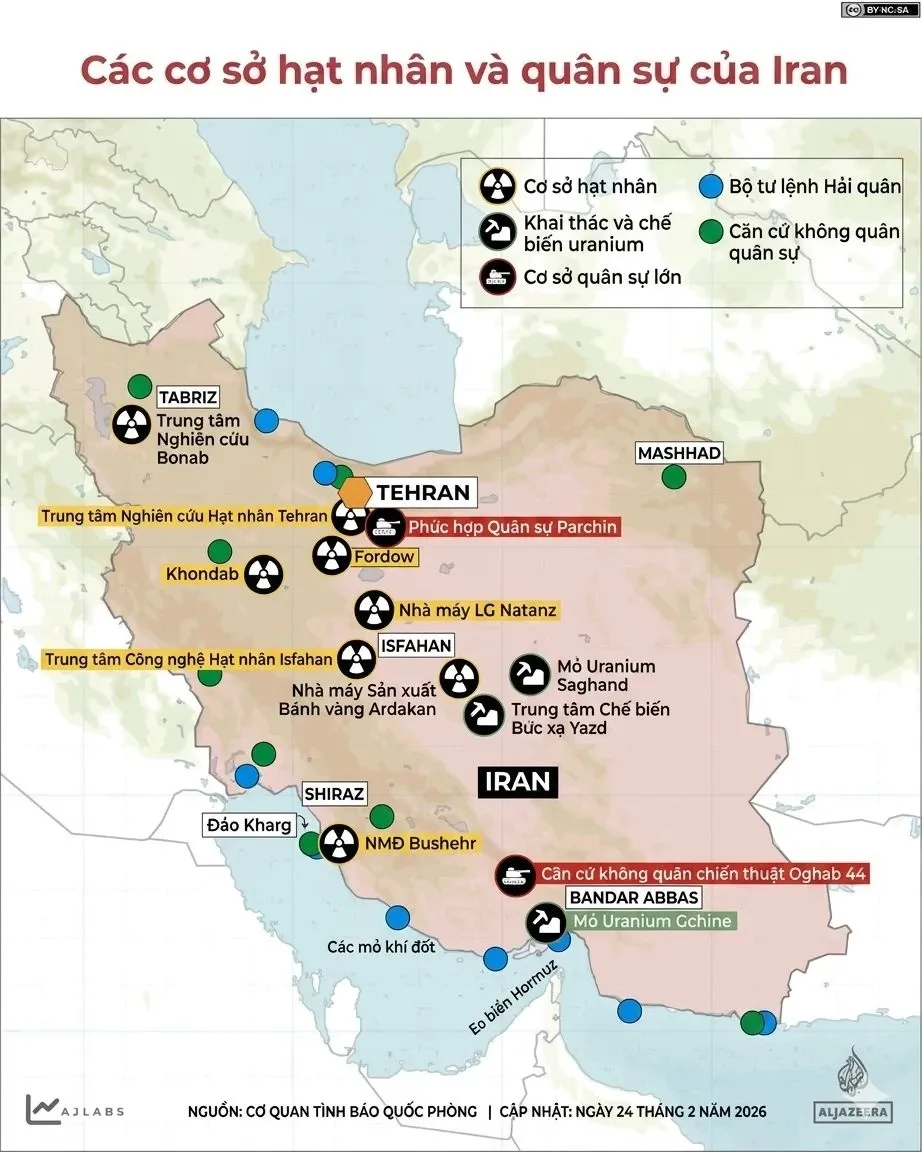
More importantly, core issues such as the fate of enriched uranium stockpiles, international inspection mechanisms, and the roadmap for dismantling the nuclear program remain open for future negotiations.
 |
The document also does not require Tehran to change its regional policies, which have been a source of concern for the U.S. and its allies for many years.
There are no provisions obligating Iran to cease supporting pro-Tehran armed forces in the region, such as Hezbollah in Lebanon. There are no commitments related to its ballistic missile program, drones, or activities that the West alleges are destabilizing in the Middle East.
Human rights issues, which have long been a central focus of U.S. sanctions policy against Iran, are also completely absent from the document.
Negotiation challenges
The biggest concern among critics is that Washington may be giving up much of its leverage too soon. In international negotiations, sanctions are often seen as the most effective tool for exerting pressure on Iran.
However, if oil revenues are restored, frozen assets are released, and the prospect of a complete lifting of sanctions is documented, Tehran will enter the next phase of negotiations in a much stronger position.
In that case, the incentive for Iran to accept more painful concessions on nuclear matters or regional security could significantly diminish.
Another issue is the $300 billion reconstruction fund. According to many experts, the inclusion of this fund in the draft means Tehran may consider it a prerequisite for any final agreement.



If that's the case, the U.S. will face enormous financial and political demands in the next phase of negotiations. In other words, the most difficult negotiations are likely still ahead.
The agreement quickly drew criticism from Democrats. Senate Minority Leader Chuck Schumer argued that it could be one of the biggest concessions Washington had ever made to Tehran.
Senator Elizabeth Warren also questioned the price the American people paid for the conflict, arguing that the White House had never convincingly explained why the United States entered the war.
Meanwhile, Senator Adam Schiff argued that the current document is "better for Iran than for the U.S." because it does not compel Tehran to make specific commitments.
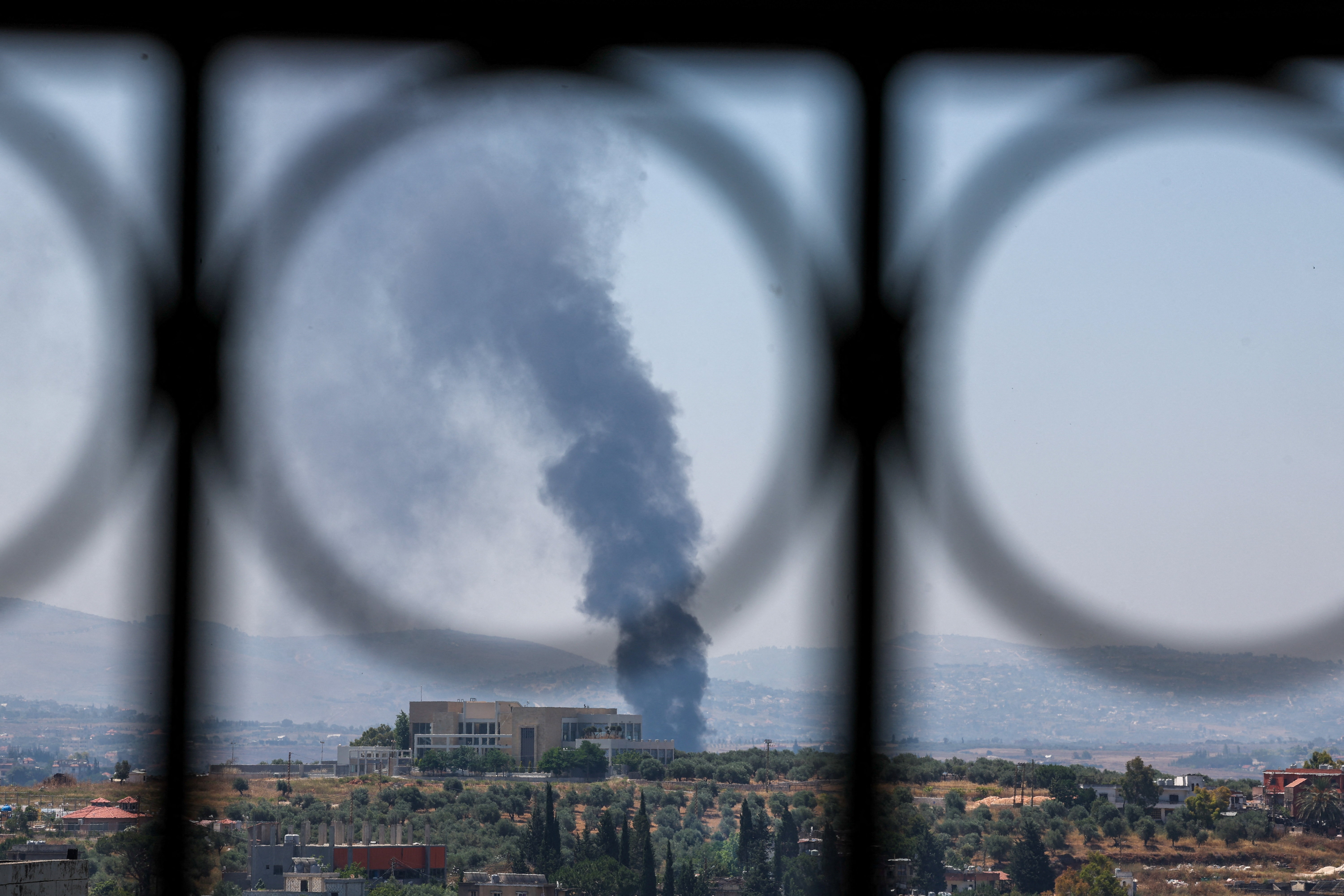 |
Thick smoke rises from southern Lebanon following Israeli airstrikes on June 17. Photo: Reuters. |
The memorandum placed hope on reducing US-Iran tensions to stabilize the Middle East, but the reality of the region is far more complex. Even if the two countries cease direct confrontation, hotspots like Lebanon, Syria, Iraq, and Yemen remain influenced by multiple different forces.
The text lacks provisions guaranteeing that armed groups allied with Iran will change their behavior, leaving the prospect of lasting peace highly questionable.
Ultimately, the current memorandum resembles a de-escalation agreement more than a comprehensive solution. Iran gained significant economic and political benefits upfront. The U.S. exchanged it for stability in the Strait of Hormuz and the opportunity to continue negotiations on the nuclear issue.
Source: https://znews.vn/my-chi-dam-cho-hoa-binh-with-iran-post1660909.html



































![[Photo] Thousands of people participate in a run to show their support for the campaign "Sharing a common determination to build drug-free communes, wards, and special zones".](https://vphoto.vietnam.vn/thumb/1200x675/vietnam/resource/IMAGE/2026/06/27/1782554475933_0673e2a3df7b5e25076a-8283-jpg.webp)