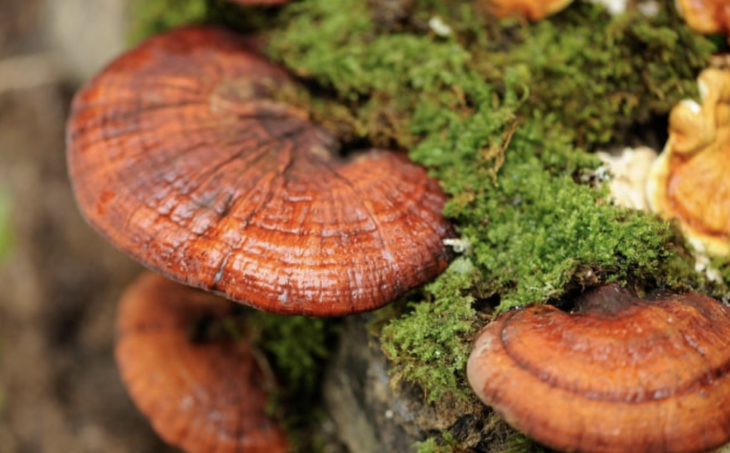
Reishi mushroom is a medicinal herb in traditional medicine - Illustration image

 Báo Tuổi Trẻ•23/12/2025
Reishi mushroom is a medicinal herb in traditional medicine - Illustration image
According to information from the Clinical Nutrition Center, K Hospital, Reishi mushroom, scientifically known as Ganoderma lucidum (G. lucidum), is a type of pore mushroom belonging to the genus Ganoderma, family Ganodermataceae.
Reishi mushrooms are also known by other names such as Immortal Herb, Longevity Mushroom, and Eternal Velvet. Types of reishi mushrooms include: Green Reishi; Red Reishi or Red Reishi; Black Reishi; White Reishi; Yellow Reishi; and Purple Reishi.
Red reishi mushroom contains the most active compounds, with over 400 different components and medicinal properties. The main components are: Triterpenoids (ganoderic acid, ganoderic alcohol, and their derivatives); Polysaccharides: Beta-D-Glucan, betaglucan; Adenosine (related to heart rhythm); Vitamins B and C; and minerals (selenium, iron, calcium, zinc, magnesium, copper, and potassium).

The two main groups of bioactive compounds isolated from G. lucidum are triterpenoids and polysaccharides.
According to some of the latest preclinical and laboratory studies, reishi mushrooms contain several compounds with anticancer activity. Many studies on reishi mushrooms have been conducted, however, the results are not yet consistent.
A randomized, double-blind, placebo-controlled clinical trial was conducted on 68 patients with end-stage lung cancer to evaluate the efficacy and safety of polysaccharides extracted from Ganoderma lucidum mushrooms over 12 weeks.
As a result, the active ingredient was more effective in alleviating cancer-related symptoms such as fever, cough, weakness, and sweating compared to the control group.
In addition, it also slightly increased the activity of natural cancer-killing cells and some other immune cells. However, the intervention group recorded 3 cases of drug toxicity with symptoms of nausea and insomnia.
A study evaluated potential interactions between the cancer drug doxorubicin and triterpenes extracted from reishi mushrooms. The results showed that triterpenes synergistically interact with doxorubicin in the process of killing cervical cancer cells.
Other studies have shown that reishi mushrooms do not increase the survival time of cancer patients. Thus, the effects of reishi mushrooms on cancer are still very limited.
"Furthermore, most studies only extract a single active ingredient from reishi mushrooms, instead of using the mushrooms themselves, and the extraction of chemical compounds from reishi mushrooms is very complex and requires advanced technology."



Therefore, there is insufficient evidence to recommend the direct use of reishi mushrooms in supporting cancer treatment without guidance from a healthcare professional. More research is needed in the future to comprehensively assess the effects of reishi mushrooms on cancer," the expert from K Hospital stated.
LINH HAN
Source: https://tuoitre.vn/nam-linh-chi-co-chong-duoc-ung-thu-20251222124916533.htm













![[Photo] Strengthening character and expertise: Intense training for artillery soldiers.](https://vphoto.vietnam.vn/thumb/1200x675/vietnam/resource/IMAGE/2026/06/30/1782815602541_lu-368-1875-4571-jpg.webp)