

Oral thrush is a fairly common infection in both children and adults, especially common in infants, the elderly, and those with weakened immune systems.
- Is oral thrush contagious?
- Who is susceptible to oral thrush?
- Signs and symptoms of oral thrush.
- How can I prevent oral thrush?
- When should I see a doctor?
Although not dangerous if detected and treated promptly, oral thrush can still cause pain, discomfort, and affect eating, communication, and quality of life. In some cases, the condition can spread and even cause complications if not properly treated.
Oral thrush (also known as candidiasis) is a fungal infection of the oral mucosa. The most common causative agent is Candida fungus, particularly Candida albicans. This type of fungus naturally exists in the human body in a balanced state. However, when the oral environment changes or the immune system is weakened, the fungus can overgrow and cause disease.
Normally, the oral cavity maintains a balance between beneficial bacteria, harmful bacteria, and fungi. When this balance is disrupted—for example, due to prolonged antibiotic use, corticosteroid use, chemotherapy, radiation therapy, or underlying conditions such as diabetes or HIV/AIDS—the risk of oral thrush increases significantly.
Is oral thrush contagious?
Oral thrush can be transmitted through direct or indirect contact. Sharing eating utensils, toothbrushes, kissing, or using the same personal items can increase the risk of infection.
In infants, bottles and nipples that are not properly sterilized, or caregivers with oral thrush, can also become sources of infection.
However, not everyone who comes into contact with Candida fungus will develop the disease. The determining factor remains the individual's resistance and immune system status.
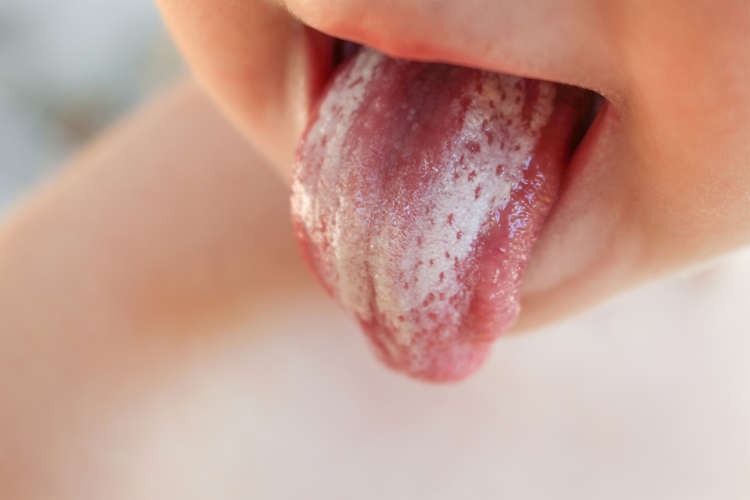
Oral thrush is a fairly common infection in both children and adults.
Who is susceptible to oral thrush?
Oral thrush can occur at any age, but some groups are at higher risk, including:
- Infants and young children, especially premature or low-birth-weight babies.
- The elderly.
- People who use broad-spectrum antibiotics for a long period of time.
- People who are undergoing treatment with immunosuppressant drugs or corticosteroids.
- Diabetic patients have poor blood sugar control.
- People who wear dentures but don't clean them properly.
- People with immunodeficiency disorders.
In young children, oral thrush can be transmitted through nipples, bottles, or from mother to child during breastfeeding if the mother has a fungal infection in the breast area.
Signs and symptoms of oral thrush.
Oral thrush presents with fairly distinctive symptoms, although in the early stages it can be mistaken for other oral mucosal conditions. Typical symptoms include the appearance of milky white patches on the tongue, inner cheeks, palate, or gums. When wiped away, these patches may peel off, revealing red, easily bleeding mucosa.
In addition, patients may experience the following symptoms:
- A mild burning or stinging sensation in the mouth.
- Dry mouth, reduced sense of taste, or a bitter taste.
- Difficulty eating and swallowing, especially when the damage spreads down to the throat.
- In young children: fussiness, refusal to breastfeed, irritability during feeding.
In severe or prolonged cases, the fungus can spread down the esophagus, causing pain and difficulty swallowing. This condition requires prompt examination and treatment to avoid complications.
How can I prevent oral thrush?
Prevention is always the most effective and least expensive solution. Some preventive measures include:
Maintain good oral hygiene.
Brush your teeth at least twice a day, use dental floss, and rinse with a suitable mouthwash to maintain a balanced oral microbiome. Replace your toothbrush every 2-3 months, or sooner if it becomes worn.
Limit the overuse of antibiotics.
Antibiotics should only be used when prescribed by a doctor. Prolonged self-medication can disrupt the balance of the gut microbiome, creating conditions for fungal growth.
Control underlying medical conditions
People with chronic diseases like diabetes need to monitor and control their blood sugar levels well. High blood sugar creates a favorable environment for fungi to thrive.
Clean eating utensils and personal items.
Do not share toothbrushes, drinking cups, spoons, or forks. For young children, thoroughly sterilize bottles and nipples before use.
Boost your immune system.
A balanced diet rich in vitamins and minerals, sufficient sleep, and regular exercise will help the immune system function effectively, thereby reducing the risk of fungal infections.
When should I see a doctor?
Patients should go to a medical facility when:
- The white patches in my mouth didn't improve after a few days.
- Severe pain, difficulty swallowing, or painful swallowing.
- Recurrent oral thrush.
- Having underlying medical conditions or undergoing immunosuppressive treatment.
Self-treating at home with unproven folk remedies can delay treatment, worsen the condition, or mask symptoms of other illnesses.
In summary, oral thrush is a common condition and can be cured if detected early. However, it should not be taken lightly, especially in people with weakened immune systems. Proactively recognizing abnormal signs, maintaining proper oral hygiene, and seeking timely medical attention are key to effectively controlling the disease.
Source: https://suckhoedoisong.vn/nam-mieng-co-lay-khong-169260301090901899.htm

![[Image] Hanoi Police officially crowned champions of V-League 2025/2026](https://vphoto.vietnam.vn/thumb/1200x675/vietnam/resource/IMAGE/2026/05/31/1780244769054_ndo_br_039d561b692be875b13a-jpg.webp)
![[Photo] The General Secretary, President and his wife begin their state visit to the Philippines.](https://vphoto.vietnam.vn/thumb/1200x675/vietnam/resource/IMAGE/2026/05/31/1780230559452_anh-man-hinh-2026-05-31-luc-19-28-11.png)
![[Photo] Admire the coral "masterpiece" amidst the million-year-old heritage of Dak Lak province.](https://vphoto.vietnam.vn/thumb/1200x675/vietnam/resource/IMAGE/2026/05/31/1780221235105_anh-man-hinh-2026-05-31-luc-16-53-27.png)
![[Photo] Solemn bathing ceremony and Buddha procession in Hue](https://vphoto.vietnam.vn/thumb/1200x675/vietnam/resource/IMAGE/2026/05/31/1780228263543_1-jpg.webp)



















![[Video] Sunset at Lap An Lagoon – Where the sun sets over the fishing nets](https://vphoto.vietnam.vn/thumb/340x192/vietnam/resource/IMAGE/2026/05/31/1780192137701_beach-landscape-sea-water-nature-grass-745871-pxhere-com.jpeg)

































![[Photo] Admire the coral "masterpiece" amidst the million-year-old heritage of Dak Lak province.](https://vphoto.vietnam.vn/thumb/402x226/vietnam/resource/IMAGE/2026/05/31/1780221235105_anh-man-hinh-2026-05-31-luc-16-53-27.png)

































Comment (0)