

(NLĐO) - NASA's LEXI robot promises to bring back unprecedented data about how Earth "breathes in and out".
According to a new statement from NASA, the Lunar Heliosphere X-ray Imaging Instrument (LEXI) will be part of the payload of the Blue Ghost lander, operated by the American aerospace company Firefly Aerospace, scheduled to leave Earth on January 15th.
LEXI has a special mission: From the Moon, it will monitor the "breathing" of Earth.
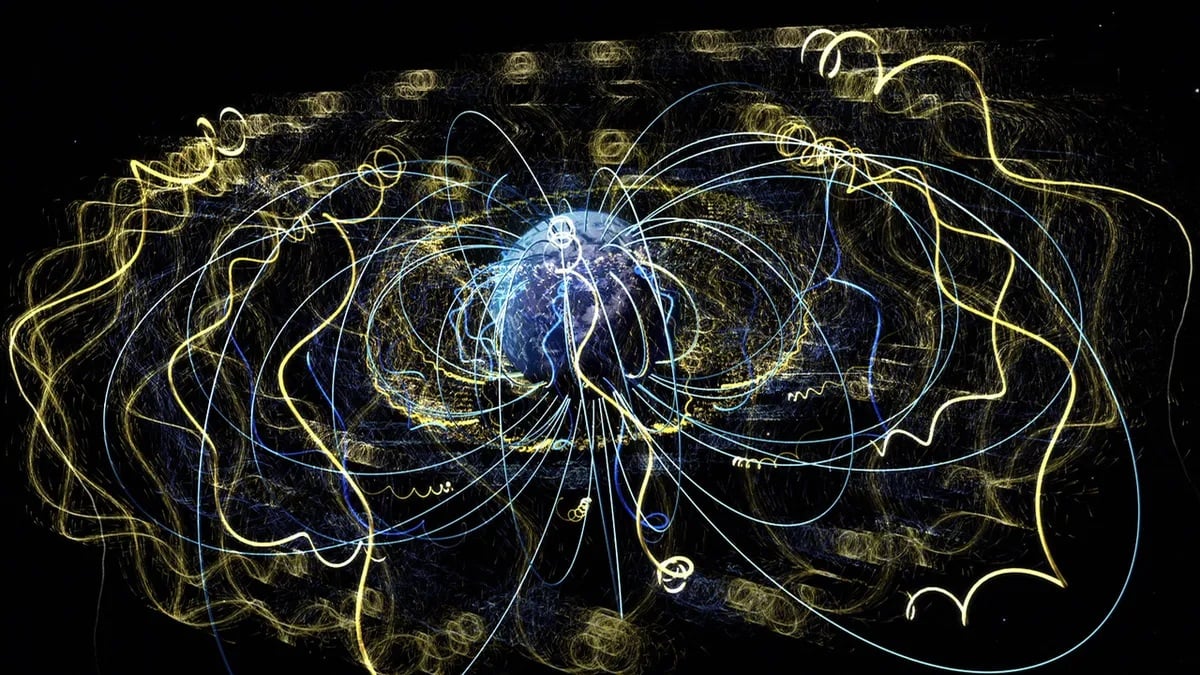
Earth's magnetosphere - Graphic image: NASA
Upon landing on the lunar surface, LEXI – operating as a stationary robot – will power on before directing its light back towards Earth for six days and capturing low-energy X-rays reflected from the planet's atmosphere.
This will allow LEXI to collect data about the Earth's magnetic field in a unique way.
"We expect to see the first instance of the sun exhaling and inhaling," said astrophysicist Hyunju Connor from NASA's Goddard Space Flight Center.
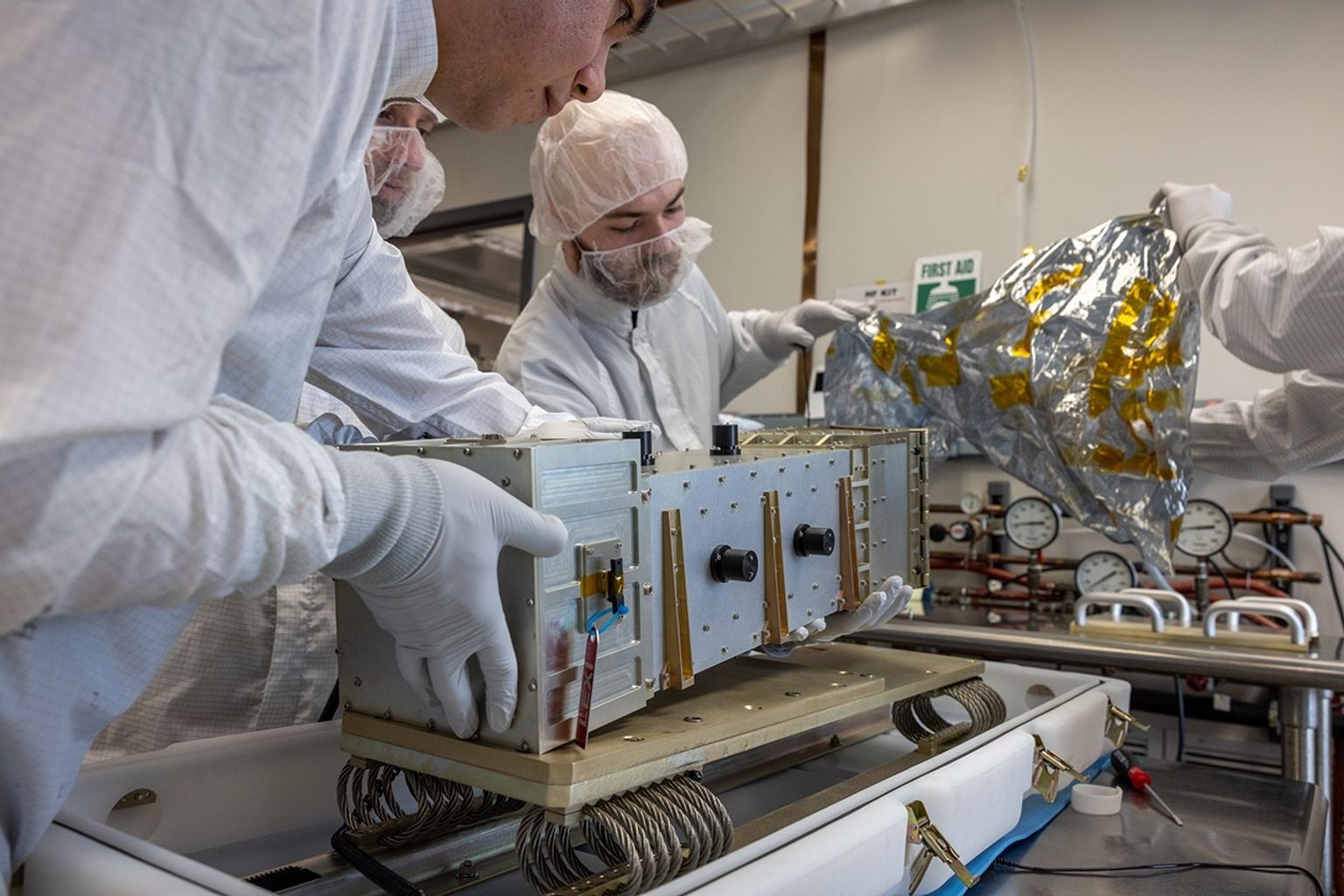
LEXI is being packaged by scientists for use on a spacecraft - Photo: NASA
This "breathing" is related to our parent star. Earth's magnetosphere has actually never had a stable shape. When the solar wind is very strong, the magnetosphere contracts, compressing toward the planet's surface. When the solar wind weakens, the magnetosphere expands.
The magnetosphere is formed by the stirring of metals within the Earth's molten core and protects us from harmful cosmic rays as well as the solar wind.
When radiation strikes the Earth's magnetosphere, it is reflected or trapped along magnetic field lines before falling to the poles in a process called magnetic reconnection.
This raises persistent questions about how cosmic particles fall to Earth, including whether they fall simultaneously or in bursts.
Dr. Connor said: "We want to understand how nature works, and by understanding this, we can help protect infrastructure in space."
This is not LEXI's first space journey.
In 2012, LEXI – then known as STORM (Sheath Transport Observer for the Redistribution of Mass) – was launched into space on a probe rocket to collect X-ray imagery.
After refurbishing some key components and optical systems, the robot is ready for its next flight.
Source: https://nld.com.vn/nasa-tiet-lo-ke-hoach-theo-doi-nhip-tho-cua-trai-dat-19625011109173908.htm

![[Photo] General Secretary and President To Lam meets with National Assembly delegates from ethnic minorities.](https://vphoto.vietnam.vn/thumb/1200x675/vietnam/resource/IMAGE/2026/04/20/1776696701056_a1-bnd-8331-3342-jpg.webp)
![[Image] National Assembly discusses the implementation of the socio-economic development plan.](https://vphoto.vietnam.vn/thumb/1200x675/vietnam/resource/IMAGE/2026/04/20/1776696707422_ndo_br_img-20260420-185419-jpg.webp)





























































































Comment (0)