

Cao Bang boasts a rich and diverse history and culture, with many ethnic groups living together, creating a vibrant tapestry of ethnic traditions. The Tay ethnic culture is particularly rich, diverse, and deeply rooted in national identity, embodying noble humanistic values.
The Tay people make up the majority of the province's population. Tay villages are usually located at the foot of mountains or along streams. Village names are often derived from the names of hills, fields, or sections of rivers. Each village has 15-20 houses. Larger villages are divided into many smaller hamlets. Tay houses are typically stilt houses. Usually, the Tay build three-room houses, with the central room being the most important for the ancestral altar. Family life and meals are all done on the stilt house. The floor is paved with thin planks or split bamboo. The central room contains a table and chairs, and teacups for entertaining guests. Tay stilt houses are roofed with yin-yang tiles, also known as trough tiles, made from fired clay. The houses have two roofs, some with four, and two side roofs. In convenient locations, people also connect the water source to their houses using a system of bamboo or reed pipes that flow into a large, hollowed-out log used for washing hands and feet before entering the house. In many places, stilt houses are not built with planks or tied together with wood, but are constructed with limestone and fired bricks, making the walls very sturdy. Families with better financial conditions even build five-bay houses with two side wings, but the interior layout is similar to a three-bay house.
The Tay people have a long and rich history and tradition, with many unique and interesting dishes and drinks creating a colorful culinary culture. Tay ethnic dishes are often associated with rice and the natural flavors readily available in their surroundings. In particular, Tay ethnic cuisine demonstrates sophistication, skill, and artistic value. When visiting Tay and Nung villages, tourists will easily be able to enjoy the sour taste of dishes such as: stir-fried buffalo meat with sour bamboo shoots, sour pork, sour marinated field fish, sour fish soup, and all kinds of sour fruits: starfruit, sấu fruit, trám fruit, tai chua fruit... all utilized in the meals of the Tay people, or the bitter taste of dishes such as bitter bamboo shoots, bitter melon, mugwort...
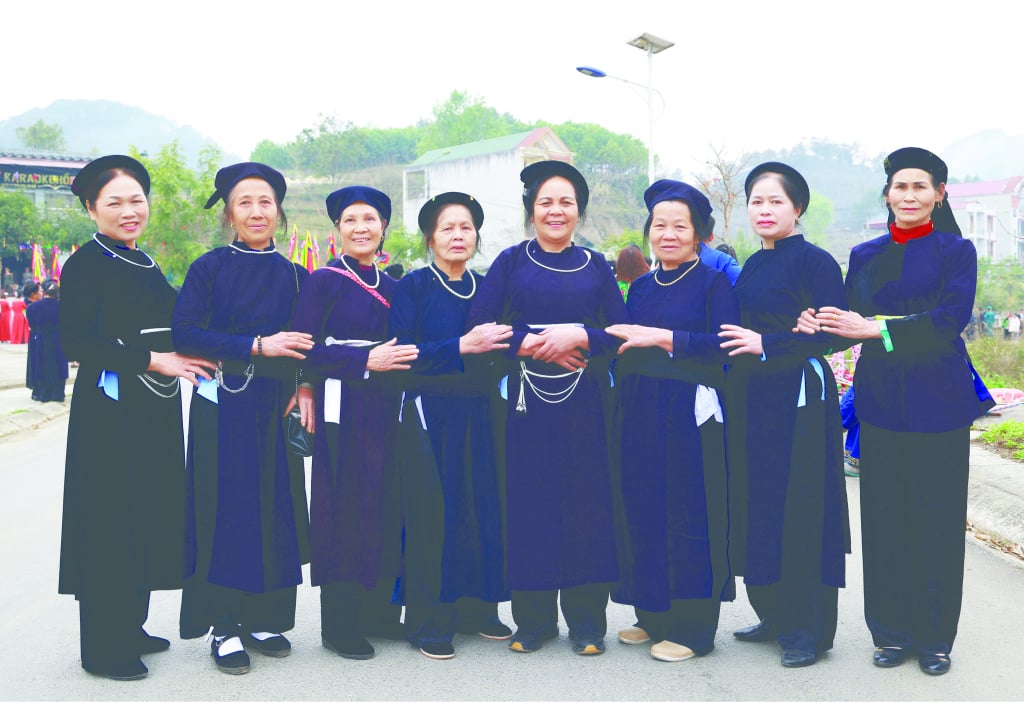
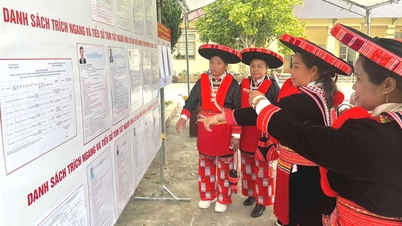
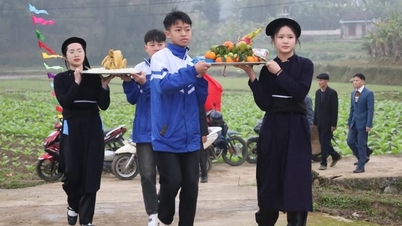
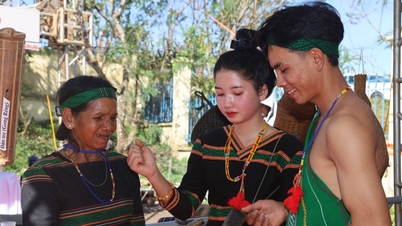
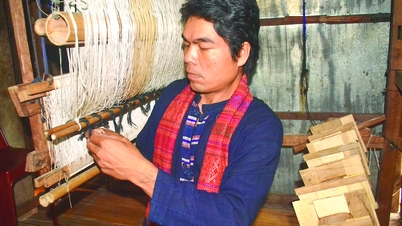
Regarding clothing, the Tay ethnic group is known for their familiar indigo-dyed shirts, made from hand-woven cotton fabric dyed with indigo, with almost no embroidery or decoration. These unique features in their clothing are a distinctive basis for distinguishing the Tay from other ethnic groups in the same area. In addition, the Tay people also have famous handicrafts such as brocade, a product with a long tradition used for baby carriers, blanket covers, bags, tablecloths, etc. The raw materials are cotton and silk threads dyed in various colors.
In terms of art, Then singing and Tinh playing are distinctive forms of folk music of the Tay people. They also hold an important place in the Tay people's religious beliefs. Then singing and Tinh playing originate from the working life of the ancient Tay people. According to folk beliefs, Then means Heaven, and Heaven is considered a song passed down from the gods. Therefore, in the life of the ancient Tay people, it was used in important events or ceremonies for peace, good harvests, and summoning spirits. The Tay people believe that Then melodies help send prayers to the heavens. Then singing is a synthesis of many artistic activities such as dancing, playing instruments, and singing. The Tinh playing instrument is a unique folk instrument of the Tay people, producing a smooth, sweet, and warm sound. The instrument is made from a gourd shell, with a soundboard made of Vong wood and a handle made of Khao Quang or mulberry wood. The blend of Then singing and Tinh lute playing reflects the emotions and feelings of both the performer and the listener, creating a sense of wistful longing.
The Tay people have many festivals throughout the year that are characteristic of their wet-rice agricultural production, such as: Lunar New Year, Tet Dap Noi, Thanh Minh Festival, Duan Ngo Festival, Khoan Vai Festival (buffalo festival), Mid-Autumn Festival (Mid-Autumn Festival), Mid-Autumn Festival, New Rice Festival (Chong Jiu Festival), Chong Shi Festival, and Winter Solstice Festival.
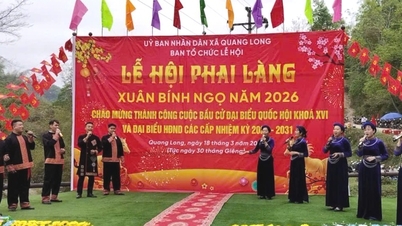
Regarding festivals, the Tay people have several: the longevity celebration, the Lồng Tồng festival (also known as the rice planting festival) to pray to the God of Agriculture – the deity who governs fields, gardens, livestock, and villages – for lush vegetation, abundant harvests, thriving livestock, prosperity for everyone, and peace in the villages. The Nàng Hai festival, also known as the Mother Moon festival, of the Tay people in Cao Bang is one of the traditional folk festivals, deeply rooted in the fertility beliefs of ancient Vietnamese people. This festival was created from the daily life and production activities of the mountain farmers. The Nàng Hai festival in Tien Thanh commune (Quang Hoa district) was approved by the Ministry of Culture, Sports and Tourism as a National Intangible Cultural Heritage in June 2017.
The Tay people in Cao Bang have extensive social relationships, sincere feelings, a spirit of solidarity, mutual support, and a desire to have more friends and relatives to learn from and share joys and sorrows in life. Therefore, they have unique customs compared to other ethnic groups, including the custom of "tong" friendship, recognizing kinship. The Tay people of Cao Bang have a saying, "Lac may tan, lac gan ri" (roughly translated: Short tree roots, long human roots), meaning that in life, human relationships are very broad and deeply connected. With this thought in mind, the Tay people have the custom of recognizing kinship, meaning they accept people from afar who share the same surname as themselves as brothers and sisters. This is because they believe that people with the same surname today may be from the same ancestor's generation but have lost contact due to circumstances, livelihoods, marriage, or working elsewhere. Now that we've met again, even though we're in different places and circumstances, I'm very happy and want to welcome them as brothers, like family members.
The ceremony of acknowledging kinship is a sacred event, solemnly held at both families' homes on different days so that the couple can be present at each side. During the ceremony, they must report to their ancestors and relatives on both sides; they review the family history and genealogy to strengthen their kinship ties... Importantly, the couple must state each other's birth dates to determine who is the elder or younger sibling.
The Tay people's custom of forming friendships based on "tong" ("tong" meaning similar) is not based on shared surnames or ethnicity, but can involve people of different ethnicities. "Tong" friendships are primarily based on similarities in many aspects, compatibility in personality, or a shared understanding in many areas between two people. These include friendships based on age (same age); similar names; shared aspirations (similar goals in studies, exams, career, etc.); shared strengths; shared circumstances, and so on.
The Tay people only form one or two "tong" friendships in their lifetime, even if they have many close friends. To form a "tong" friendship, besides having similar characteristics, a formal "tong" ceremony must be performed in each family. At the ceremony, the "tong" friends are recognized by their grandparents, parents, relatives from both families, and witnessed by friends and neighbors. After the solemn ceremony, the two officially become like siblings, sharing joys, sorrows, and hardships together. Currently, the custom of forming "tong" friendships and acknowledging kinship is still preserved because it contains profound humanistic meanings, reflecting the Tay people's tradition of national unity inherited from ancient times to the present day.
Minh Duc
Source: https://baocaobang.vn/net-van-hoa-truyen-thong-cua-dan-toc-tay-3175550.html
![[Photo] Tran Cam Tu, Standing Member of the Secretariat of the Central Committee, presides over the first meeting of the Central Steering Committee on the Development of Vietnamese Culture.](https://vphoto.vietnam.vn/thumb/1200x675/vietnam/resource/IMAGE/2026/03/19/1773895004549_ndo-br-bnd-1195-2-jpg.webp)
![[Photo] The General Secretary and the Prime Minister attend the groundbreaking ceremony for multiple-level boarding schools in border areas.](https://vphoto.vietnam.vn/thumb/1200x675/vietnam/resource/IMAGE/2026/03/19/1773888999705_vna-potal-tong-bi-thu-va-thu-tuong-du-le-khoi-cong-dong-tho-dong-loat-cac-truong-noi-tru-lien-cap-bien-gioi-8649904-3885-jpg.webp)



















































Comment (0)