

Health experts warn that 2024 poses a high risk of a measles outbreak, following a cyclical pattern of outbreaks every 4-5 years, similar to 2014 and 2019 when the number of cases increased significantly.
Risk of measles outbreak
According to a report from the Hanoi City Center for Disease Control (CDC), the city recorded 1,741 cases of measles in 2014 and 1,765 cases in 2019.
In particular, in 2014, more than 110 children died from measles. Meanwhile, from 2020 to 2023, the number of measles cases recorded was sporadic: 15 cases in 2020, 2 cases in 2021, 1 case in 2022, and no cases in 2023.
In 2024, during the first six months, the entire city only recorded 2 cases of measles; however, from the end of September to the beginning of October 2024, between 4 and 7 cases of measles were recorded each week.
 |
| Health experts warn that 2024 poses a high risk of a measles outbreak, following a cyclical pattern of outbreaks every 4-5 years, similar to 2014 and 2019 when the number of cases increased significantly. |
Given the above situation, Deputy Director of the Hanoi CDC, Khong Minh Tuan, assessed that the number of measles cases is currently showing an upward trend.
Patients have been reported sporadically throughout the city, mainly young children who are not yet old enough to be vaccinated or have not received a full course of vaccinations. It is predicted that more cases may be recorded in the coming period, especially during the last three months of the year.
According to the World Health Organization (WHO), in 1980, before the measles vaccine was widely available, nearly 2.6 million people died each year from the disease. The measles vaccine has been used for the past 50 years and has proven to be safe, effective, and inexpensive.
Between 2000 and 2012, the measles vaccine helped reduce deaths worldwide by 78%. However, in Vietnam, the impact of the Covid-19 pandemic and disruptions to the supply of vaccines in the 2023 Expanded Immunization Program have affected the vaccination rate for children nationwide. Many children have not been vaccinated on schedule or have not received all the necessary doses, posing a risk of disease outbreaks, including measles.
To protect the community from measles, the herd immunity rate must be above 95%. However, records from Ho Chi Minh City – which officially declared a measles epidemic citywide (at the end of August 2024) – show that as of the end of May 2024, the measles vaccination coverage rate for children born between 2019 and 2023 in Ho Chi Minh City had not yet reached 95%.
Recently, Ho Chi Minh City has recorded a measles outbreak, resulting in three child deaths. Therefore, starting from August 31st, Ho Chi Minh City launched a measles vaccination campaign for children aged 1 to 10 years old. To date, the vaccination campaign has reached 98% of its target.
In Hanoi, to proactively prevent the spread and outbreak of measles, starting from October 14th, the city is implementing a measles vaccination campaign for children aged 1 to 5 years old and organizing catch-up vaccinations for those whose vaccinations were temporarily postponed until November 15th, 2024.
According to Vu Cao Cuong, Deputy Director of the Hanoi Department of Health, the campaign's goal is to ensure that over 95% of children aged 1 to 5 living and studying in Hanoi who have not received all the required doses of measles-containing vaccine receive one dose of the measles-rubella (MR) vaccine.
Along with the vaccination campaign, the Hanoi Department of Health also directed relevant units to strengthen surveillance and early detection of measles cases in the community and at medical facilities. In addition, units implemented thorough measures to control outbreaks immediately upon detection of the first case, aiming to minimize the risk of spread and future measles outbreaks.
New lives for pediatric liver transplant recipients.
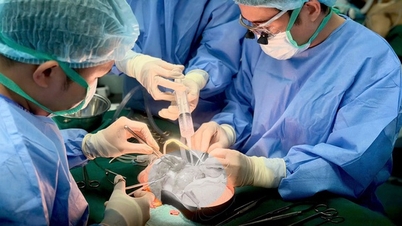
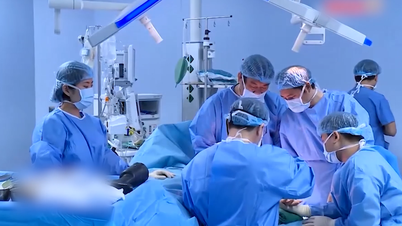
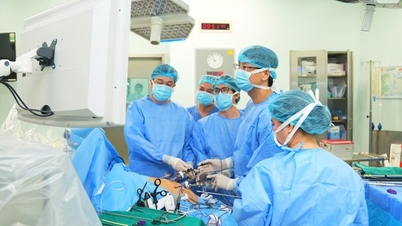
With 66 pediatric liver transplants, including 48 cases where the procedure was entirely self-administered, the National Children's Hospital currently has the highest number of pediatric liver transplants in Vietnam, offering much-needed hope for children suffering from life-threatening diseases such as congenital biliary atresia, liver failure, and liver cancer.
A New Life After Liver Transplant: At the National Children's Hospital, many complex cases such as liver transplants for blood group incompatibility, genetic diseases, and especially liver transplants for low-birth-weight children, have been successfully performed over the years. Seeing the children healthy after liver transplantation is an immeasurable joy for the parents and the doctors and nurses.
Four years ago, HA (6 years old, from Hanoi) underwent a major liver transplant surgery to have the healthy and happy life she has with her family today.
When HA was born, she was as healthy as any other child. However, when she was just over a month old, her family was shocked to learn that she had congenital biliary atresia. The subsequent progression of biliary cirrhosis caused her to experience multiple episodes of gastrointestinal bleeding, putting her life in critical danger.
Given the situation, doctors at the National Children's Hospital held a consultation and decided that HA should undergo a liver transplant, as this was the only way to save the child's life.
Fortunately, after conducting tests, HA's mother was found to be a suitable liver donor for her child. The parallel surgery to transplant the mother's liver to HA, performed by doctors in February 2020, was a difficult and successful outcome, saving HA's life.
During a follow-up visit at the end of September 2024, HA's mother shared that HA was healthy, all her liver functions were working normally, and she was attending school and playing like other normal children.
"At the time of my child's liver transplant, the line between life and death was very thin, because her health was already very poor. If it weren't for the doctors and nurses saving her, she wouldn't be here today," HA's mother emotionally shared.
Associate Professor Pham Duy Hien, Deputy Director of the National Children's Hospital, said that children with end-stage liver disease suffer from various causes. For those with liver disease at this stage, treatment methods are very ineffective, and most carry a high risk of death. Liver transplantation is the only way to save the child's life.
Due to the anatomical characteristics of pediatric patients, whose blood vessel structures are still immature and underdeveloped, liver transplantation in children requires not only the skill and expertise of the surgeons but also perseverance and determination.
From 2025, the National Children's Hospital will implement pediatric liver transplantation techniques. Professor, Doctor Nguyen Thanh Liem is the person who guided and laid the foundation, with the support of foreign experts.
In early 2021, doctors and medical staff at the National Children's Hospital received liver transplant techniques from the Central Military Hospital 108. After a period of collaboration and participation in each part of the technical process with experts both domestically and internationally, in March 2022, the hospital had mastered the entire liver transplant procedure for children.
Since the first liver transplant was performed in 2005, the hospital has successfully performed 66 liver transplants, including 48 cases where the hospital was completely independent in terms of technology. The National Children's Hospital is currently the unit with the highest number of pediatric liver transplants in Vietnam.
Among the transplant cases at the hospital, the majority are young children. The youngest patient to undergo a liver transplant at the hospital was a 9-month-old baby, who also holds the record for the youngest and lightest-weight liver transplant recipient in Vietnam to date (5.6 kg).
Associate Professor Pham Duy Hien shared that, to date, most liver transplant cases at the hospital have had good results, with a 5-year survival rate of over 90% for children. The children's health progresses well after transplantation, the function of the transplanted organ gradually stabilizes, and in some cases, children do not need to take immunosuppressant medication after liver transplantation.
Thanks to this, more and more child patients are being given a new lease on life thanks to the determination of the medical team at the National Children's Hospital and the love of families and relatives who have donated parts of their livers to save their children's lives.
Associate Professor, Dr. Tran Minh Dien, Director of the National Children's Hospital, added that hepatobiliary diseases are among the groups of diseases that doctors are facing great difficulties and concerns in order to best treat them for children.
Liver transplantation is the only way to save lives, prolong survival time, and improve the quality of life for patients.
However, performing liver transplants for children currently faces many challenges. First, there is a shortage of transplant organs, and the cost of liver transplantation is still high. Furthermore, after a liver transplant, patients still need to take expensive anti-rejection medication, which many families cannot afford.
The leaders of the National Children's Hospital hope to receive more support and cooperation from agencies and organizations so that more and more children can receive liver transplants and have their lives restored.
Advances in interventional cardiology
In recent years, the field of cardiology in Vietnam in general, and interventional cardiology in particular, has made remarkable progress, integrating deeply with the world and successfully applying many advanced techniques, comparable to developed countries in the region and globally. All cardiovascular diseases can now be diagnosed and treated quickly and effectively within the country.
This has given patients the opportunity to access modern scientific achievements right here in Vietnam without having to go abroad.
Professor Nguyen Lan Viet, Permanent Vice President of the Vietnam Cardiology Association, shared that since the first coronary artery intervention performed at the Vietnam National Heart Institute (in 1995), the country now has more than 140 interventional cardiology units with nearly 500 interventional physicians.
Most provinces and cities now have interventional cardiology facilities, and patients have benefited locally, especially those with acute myocardial infarction who have received timely, on-site intervention.
Doctors in Vietnam have been able to quickly access, apply, and develop advanced techniques in this field from around the world.
Over the past two years, the number of cardiovascular intervention cases in Vietnam has increased by nearly 20% compared to previous years, especially cases of acute myocardial infarction and coronary artery disease.
Currently, it is estimated that more than 1.3 million Vietnamese people live with coronary artery disease, and each year approximately 100,000 patients undergo interventional cardiovascular procedures, including 40,000 to 50,000 coronary stent placements.
In addition, the number of patients undergoing interventions for other cardiovascular diseases has also increased rapidly, such as arrhythmias, structural heart disease interventions, and interventions for large and peripheral blood vessels.
Notably, six centers in Vietnam have been internationally certified as independent centers for transcatheter aortic valve replacement (TAVR), with two of them becoming training centers for this technique. This also demonstrates the strong integration and development of interventional cardiology in the country.
However, we still face certain challenges and gaps between central and local healthcare systems, as well as a gap with advanced healthcare systems in the context of rapidly advancing science.
To continuously improve the quality of cardiovascular healthcare, physicians need to constantly learn and hone their skills from the valuable experiences of developed countries, update and apply the latest medical advancements, and share experiences among colleagues domestically and internationally. Scientific conferences are one of the best opportunities to do this.
Source: https://baodautu.vn/tin-moi-y-te-ngay-1210-ngan-dich-soi-lay-lan-d227270.html
![[Photo] Tran Cam Tu, Standing Member of the Secretariat of the Central Committee, presides over the first meeting of the Central Steering Committee on the Development of Vietnamese Culture.](https://vphoto.vietnam.vn/thumb/1200x675/vietnam/resource/IMAGE/2026/03/19/1773895004549_ndo-br-bnd-1195-2-jpg.webp)
























![[Photo] The General Secretary and the Prime Minister attend the groundbreaking ceremony for multiple-level boarding schools in border areas.](https://vphoto.vietnam.vn/thumb/1200x675/vietnam/resource/IMAGE/2026/03/19/1773888999705_vna-potal-tong-bi-thu-va-thu-tuong-du-le-khoi-cong-dong-tho-dong-loat-cac-truong-noi-tru-lien-cap-bien-gioi-8649904-3885-jpg.webp)





















































Comment (0)