

 |
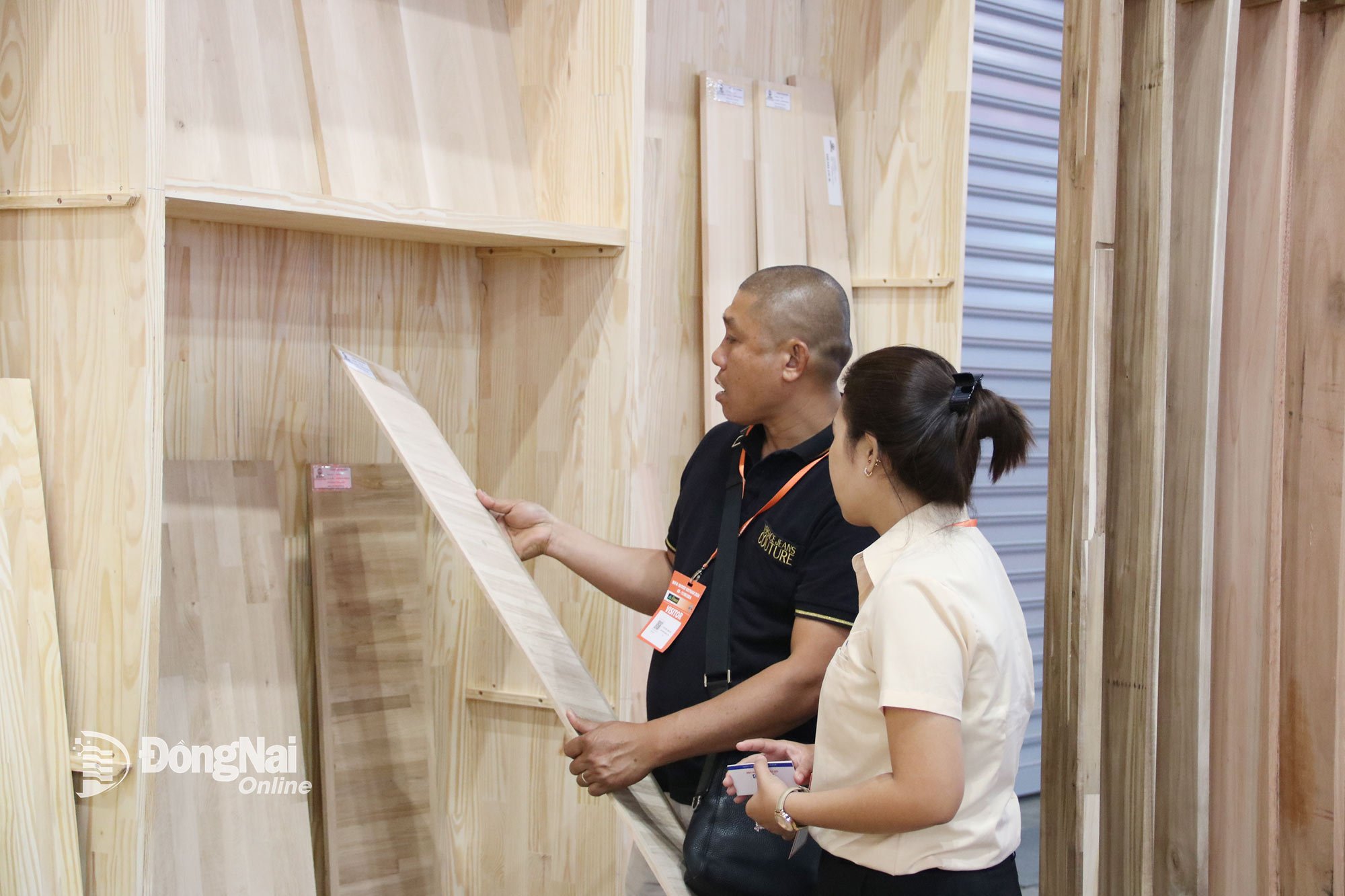
| The booth of the Dong Nai Wood and Handicraft Association at an international trade fair specializing in wood. Photo: Vuong The. |
In the long term, in addition to adapting to frequently changing tariff policies, businesses in the wood industry are planning to improve product quality. Expanding markets and building Vietnamese wood brands are solutions for the sustainable development of the wood industry.
Continue to face pressure
On September 29th, US President Donald Trump signed a document imposing a 25% tariff on wooden furniture (effective October 14th). This tariff could increase to 50% for vanity cabinets and kitchen cabinets, and 30% for upholstered furniture by early next year. This is considered a "shock" to Vietnam's wood industry.
The U.S. has invoked Section 232 of the Trade Act of 1974, arguing that imports of timber and furniture are “eroding national security,” weakening the domestic timber industry, and threatening supply chains related to infrastructure and defense. This decision by President Donald Trump will impact major timber exporting countries to the U.S., such as Canada, Mexico, and Vietnam.
For Vietnam, the US is currently the largest market for wood products. In 2024, exports to the US reached approximately $9 billion, accounting for over 50% of the total export value of the entire industry.
According to Mr. Ngo Si Hoai, Vice President and General Secretary of the Vietnam Wood and Forest Products Association, Vietnam's wood exports will certainly be affected by President Donald Trump's decision. Initially, Vietnamese wood and furniture exports will be subject to a 25% tariff. If the tariff increases to 30-50% from the beginning of 2026, many businesses will be forced to reconsider their strategies. Short-term adjustments will be difficult, as the US market accounts for a large proportion of the wood industry's exports. As exporters, businesses in the industry have no choice but to accept the proposed tariff levels.
In fact, the US president's decision to impose tariffs is not only detrimental to exporting countries, but also provokes a reaction within the US market. This tariff increase risks driving up domestic construction and production costs, while simultaneously weakening the international competitiveness of the US paper and pulp industry. Meanwhile, Vietnam has been a stable and reliable supplier of wood products for many years. Therefore, the new tariffs will not only impact manufacturers in Vietnam but will also directly affect the entire supply chain and consumers in the US.
To cope with the difficulties, businesses in the wood industry are implementing solutions such as strengthening cooperation in the supply chain, focusing on developing e-commerce, accessing new markets, and enhancing competitiveness in the global supply chain.
Find ways to adapt
According to businesses in the wood industry, to cope with the aforementioned fluctuations in tax policies, the State needs to provide more support in terms of market information and knowledge. At the same time, research and assessment of tariff risks should be considered essential to help businesses develop appropriate solutions for each supply chain and specific industry.
Mr. Nguyen Phuong, Vice Chairman of the Dong Nai Wood and Handicraft Association (Dowa), stated that: In the last months of 2025, the market may decline depending on the degree of fluctuation in tax policies, especially since wood exports to the US account for more than 50% of the export value of Vietnam's wood industry. Therefore, businesses must proactively closely monitor market developments and trade policies from importing countries to have flexible and adaptable solutions.
Another challenge for businesses in the wood industry is the need for innovation and breakthroughs in brand building in the international market. Despite significant efforts to change, the Vietnamese furniture industry has yet to make a breakthrough, still primarily focusing on processing for foreign partners. Businesses need to continue and strongly pursue the goal of building a professional design and marketing team so they can sell directly under their own brand.
Sharing the same view, Mr. Nguyen Chanh Phuong, Vice President of the Ho Chi Minh City Handicraft and Wood Processing Association (Hawa), emphasized the importance of self-reliance in production for businesses. Sustainable development requires a skilled workforce and a legal supply of raw materials. Simultaneously, the State needs to enact policies to develop the industry and support the business community in addressing issues arising from participation in the global market.
Fluctuations are inevitable, but they also present an opportunity for Vietnam's wood industry to restructure. Over the years, thanks to its flexible approach and close adherence to market demands, the Vietnamese wood industry has developed strongly. Annual export revenue has reached 16-17 billion USD and there is still room for further growth as brand building is prioritized.
King
Source: https://baodongnai.com.vn/kinh-te/202510/nganh-go-truoc-thach-thuc-moi-68d2ba6/





























































































Comment (0)