

Before withdrawing from the mine, the French colonialists destroyed almost all the workshops and equipment with the intention: "It will take at least another 20 to 25 years before the Annamese can mine coal again and resume production." Therefore, when the workers took over the mine from the French colonialists, they faced an extremely harsh reality. Machinery was broken, mine shafts were dilapidated, and technical documents were destroyed.
The miners then worked under extremely difficult conditions to quickly restore transportation systems to support production. This included the main coal transport route from Deo Nai to Cua Ong; repairing railway lines; and refurbishing old automobiles. Coal was not only the black gold of the economy but also the fuel for victory. Three years after taking over, coal production in the mining area reached nearly 3 million tons – a figure that once astonished the French.
On the day of national reunification, everyone envisioned a period of strong recovery. But in the years following the war, the country's economy was devastated, and the coal industry was no exception. Miners faced new challenges: dilapidated infrastructure, shortages of machinery and equipment. At times, coal production plummeted, and the lives of miners were difficult, lacking enough food and warm clothing.
As the winds of reform revitalized the coal industry, the planned economy and subsidies were gradually replaced by a market-based mechanism. In 1994, the Vietnam Coal Corporation was established, marking a significant turning point. Miners began to think about improving technology and increasing productivity.
With the introduction of new mining technologies and more modern management methods, the lives of miners improved day by day. Miners no longer relied solely on manual labor but began to master modern equipment, bringing the Vietnamese coal industry closer to the world . Those who once accepted meals of rice mixed with potatoes and were paid with food coupons now have full meals and sturdy houses. Coal trains roll regularly, and export shipments have begun their journey to the open sea.
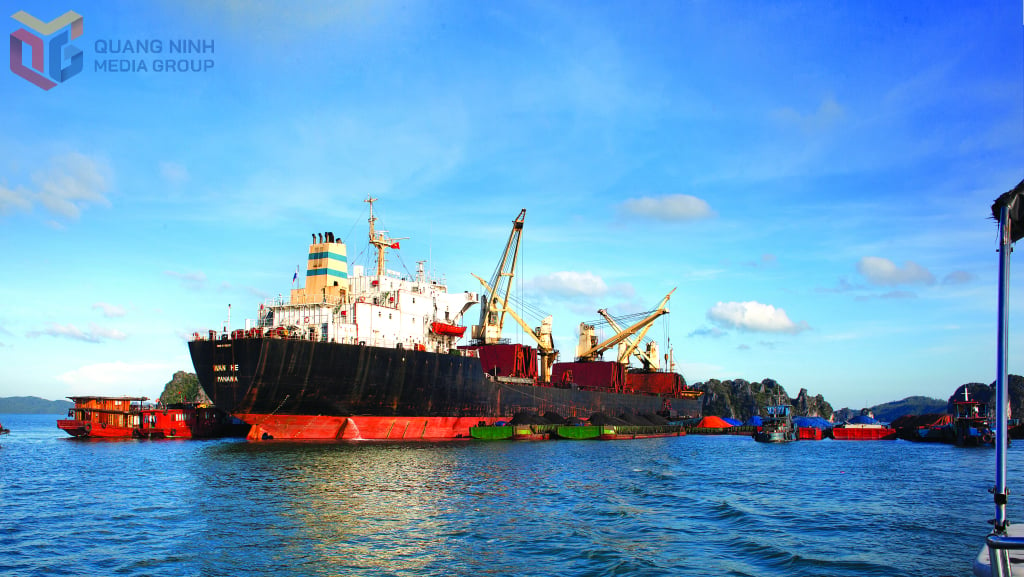
In 2005, the Vietnam Coal and Mineral Industry Group was established, further elevating the coal industry to a new level and becoming a pillar in ensuring national energy security. Large coal mines such as Cao Son, Deo Nai - Coc Sau, Vang Danh, Ha Lam, and Mao Khe were modernized and mechanized. The coal transportation system from the mines to thermal power plants and cement factories is now entirely conveyor-based, synchronized with production lines and minimizing environmental pollution.
Furthermore, the coal industry faces a difficult challenge: how to achieve sustainable development when resources are limited. Waste dumps are being reclaimed, circular economy projects are being considered, and modern, integrated mining systems are increasingly penetrating deeper into the earth. All production lines utilize minimally polluting technologies. Today's miners are not only extractors but also protectors of nature, preserving resources for future generations.
Despite experiencing many ups and downs at different stages and times, coal has always carried a special responsibility, like tons of "black gold," serving the goal of national energy security.
While in 1997, Vietnam's coal production was only 11.3 million tons, it has now consistently reached 38-40 million tons per year, peaking at 45 million tons in 2011. During the period 2016-2024, the Vietnam Coal Corporation (TKV) is expected to mine and sell an average of 39-42 million tons of raw coal annually, meeting the coal supply needs of various economic sectors.
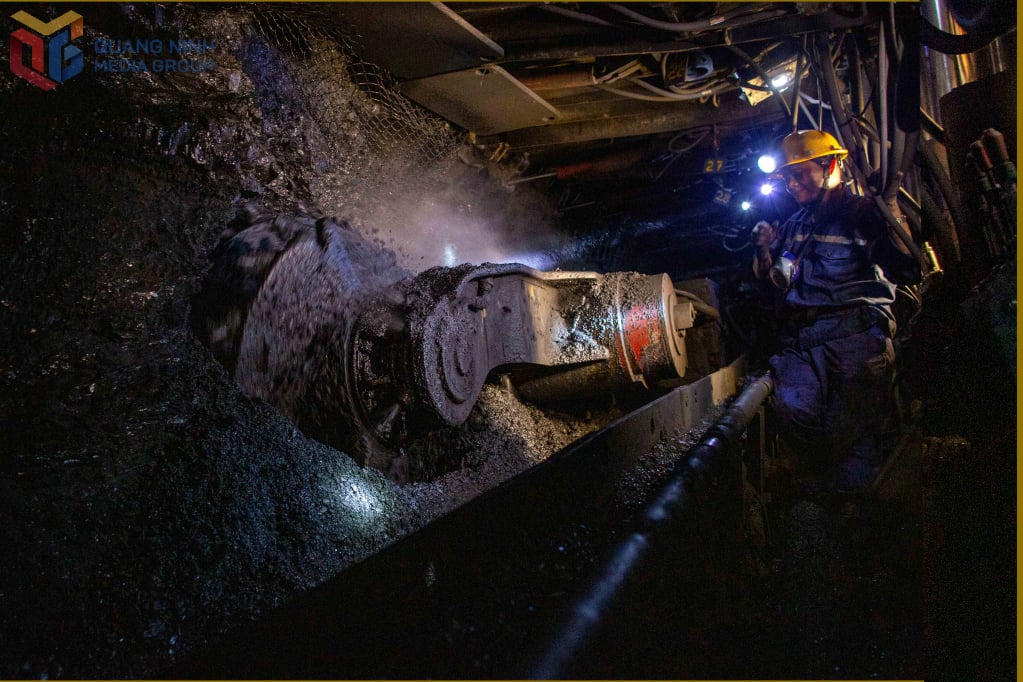
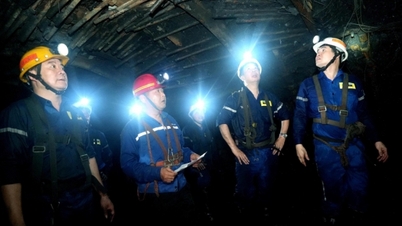
In particular, the underground coal mining sector has experienced strong development based on continuous innovation and modernization of technology. From primarily manual mining and wood-supported mining, it has gradually improved the level of mechanization and progressed towards comprehensive mechanization with advanced and modern equipment. "Underground coal production increased from 1.8 million tons in 1994 to 27 million tons in 2024, a 15-fold increase. The capacity of the mine workings has increased from 20-50 thousand tons/year to an average of 200 thousand tons." "With coal production reaching tons/year, the coal loss rate has decreased from 40-50% to 19.02%" - said Nguyen Huy Nam, Deputy General Director of TKV.
In its long-term development strategy, TKV focuses on perfecting its sustainable development orientation based on development plans for mineral exploration and exploitation; the National Energy Master Plan; and the Power Plan VIII approved by the Prime Minister. Particularly in the last two years, with the support of Quang Ninh province and the Government, TKV has strongly accelerated the implementation of many mine development projects to ensure the strategic goal of national energy security.
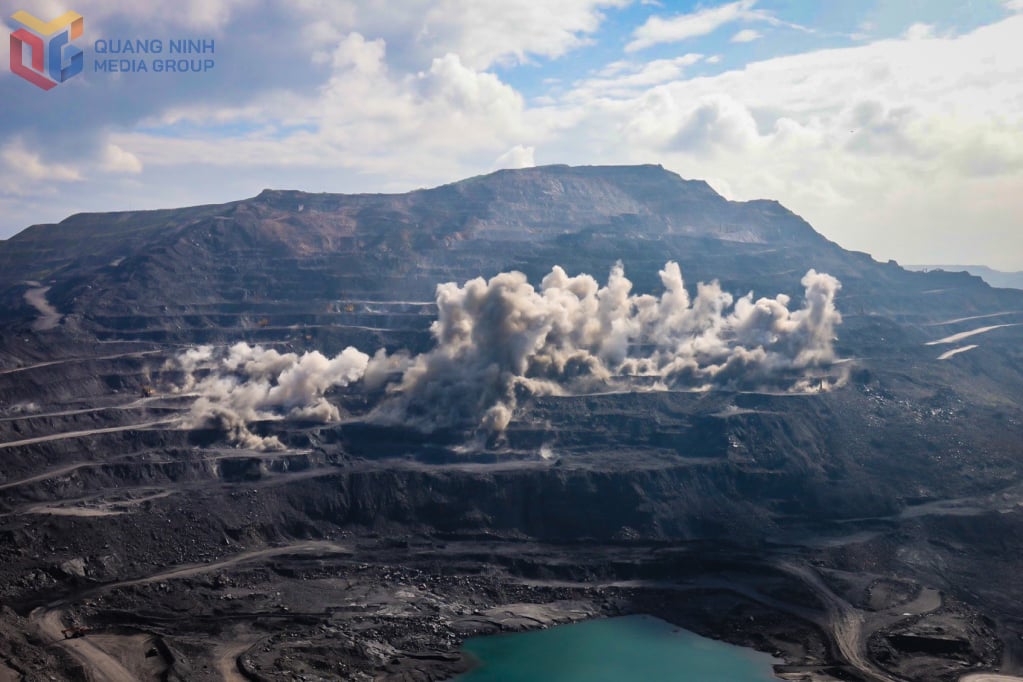
Mr. Nguyen Manh Tuong, Permanent Deputy Secretary of the Quang Ninh Coal Party Committee, emphasized: 70 years have passed since the miners raised the red flag in the Quang Ninh coal region, and the spirit of "Discipline and Unity" remains a constant source flowing in every shovel stroke and every meter of tunnel. Regardless of the stage, "Discipline and Unity" has always been the guiding principle throughout the journey of building and sustainably developing the coal industry, with generations of miners diligently and creatively working. in Through hardship, they contributed tons of black gold to make their homeland beautiful and prosperous.
Source: https://baoquangninh.vn/nganh-than-nhung-dau-an-ve-vang-3354573.html
![[Image] National Assembly discusses the implementation of the socio-economic development plan.](https://vphoto.vietnam.vn/thumb/1200x675/vietnam/resource/IMAGE/2026/04/20/1776696707422_ndo_br_img-20260420-185419-jpg.webp)

![[Photo] General Secretary and President To Lam meets with National Assembly delegates from ethnic minorities.](https://vphoto.vietnam.vn/thumb/1200x675/vietnam/resource/IMAGE/2026/04/20/1776696701056_a1-bnd-8331-3342-jpg.webp)









































































Comment (0)