

Overcoming difficulties, reaching the finish line ahead of schedule.
In the 2025 shrimp farming season, the industry faced numerous difficulties and challenges, both internal and external. Domestically, shrimp diseases continued to cause hardship for farmers during the first five months of the year; extreme weather conditions, including widespread and prolonged rain and floods, caused damage to shrimp farms and reduced localized shrimp production in the short term. Meanwhile, in the global market, trade and technical barriers increased, becoming more difficult to overcome, and competition intensified. However, with the flexible guidance and management of the Ministry of Agriculture and Environment (MARD), local leaders, relevant agencies, the adaptability of businesses, and the consistently high shrimp prices throughout the year, confidence was boosted, encouraging farmers to increase stocking and adopt advanced technologies, thus improving production and profits.
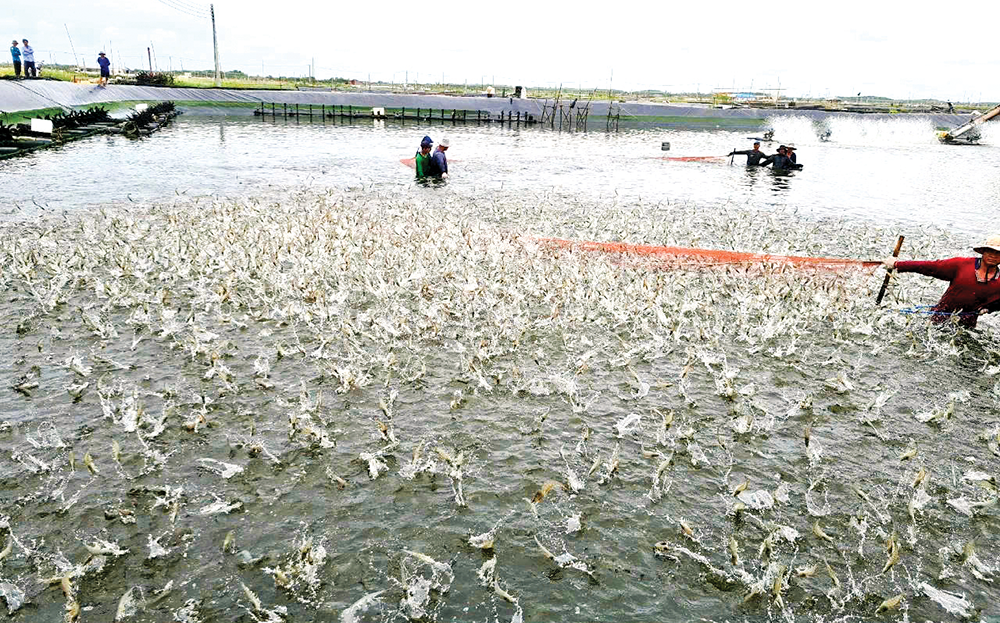
Whiteleg shrimp harvested in Can Tho City achieve high yield and quality thanks to a high-tech farming model implemented by a business. Photo: VAN THUC
According to a report by the Ministry of Agriculture and Environment, the country's shrimp production in the first 11 months of 2025 reached over 1.41 million tons, a 5.5% increase compared to the same period last year, with export revenue exceeding US$4.3 billion. It is predicted that the shrimp industry will likely set a new record with export revenue reaching US$4.6 billion by the end of the year. In particular, in key shrimp farming areas in the Mekong Delta, including Ca Mau, Vinh Long, An Giang , and Can Tho, reported figures indicate that shrimp production in 2025 will be quite high. For example, Ca Mau province, after merging with Bac Lieu, has become the province with the largest shrimp farming area and production in the country, with a total shrimp farming area of 433,532 hectares and an estimated shrimp production of 566,000 tons in 2025. Vinh Long province also made a strong breakthrough after the merger, with a total shrimp production of over 300,000 tons, rising to become the second largest shrimp producer in the country. Can Tho City is among the top 3 in the country with approximately 230,000 tons. An Giang province, where shrimp-rice farming accounts for a large proportion of the area, also has an estimated shrimp production of 155,000 tons this year… All of these are impressive figures and have great significance in the overall success of the shrimp industry in 2025.
The difficulties are far from over.
Mr. Le Van Quang, Chairman and CEO of Minh Phu Seafood Group Joint Stock Company, believes the biggest challenge is the irrational planning of shrimp farming areas, leading to complex shrimp diseases, high production costs—even 30% higher than India and double that of Ecuador—affecting competitiveness. If disease problems are resolved and farming areas are properly planned, Vietnamese shrimp could potentially become a world leader. Meanwhile, according to Ms. Le Hang, Deputy Secretary General of the Vietnam Association of Seafood Processing and Export (VASEP), geopolitical and economic instability in the global market, as well as competition from India, Ecuador, and Indonesia, pose significant challenges to the entire industry. Therefore, businesses need to proactively restructure the market, develop value-added products, invest in processing technology, and raise sustainable standards to maintain long-term growth.
To overcome the inherent limitations of the shrimp industry, Mr. Nhu Van Can, Deputy Director of the Department of Fisheries and Fisheries Inspection, said that Vietnam's fisheries sector is accelerating the restructuring of production space to adapt to climate change, reviewing aquaculture area planning, adjusting stocking densities, limiting spontaneous development, reducing pollution and natural disaster risks. Investment in key aquaculture infrastructure, automated monitoring systems, application of digital technology, and automated environmental monitoring are also key priorities. In addition, developing value chain models, increasing linkages between businesses, cooperatives, and farmers, balancing supply and demand, sharing risks, and enhancing resilience throughout the entire chain are identified as key focuses.
Deputy Minister of Agriculture and Environment Phung Duc Tien pointed out: “Severe natural disasters and persistent epidemics have clearly revealed weaknesses in the organization of aquaculture production. Therefore, the entire industry needs to maintain its growth momentum while preparing fundamental, long-term solutions to move towards safer, more adaptable, and sustainable production.”
Opening up new avenues of thought
Mr. Vo Van Phuc, General Director of Vinacleanfood Joint Stock Company, said: “Although this year's off-season crop wasn't very successful, we gained valuable experience in selecting species for farming, stocking timing, and disease prevention… In 2026, Vinacleanfood will invest heavily in farming areas to strictly comply with traceability requirements from various markets.” Accordingly, Vinacleanfood has identified three main species for farming: focusing strongly on whiteleg shrimp in the main season; and adding tiger shrimp in the off-season using a high-density farming model. Tilapia will be farmed in high salinity (10-20‰) using the company's own process to achieve both large sizes and sushi processing quality that meets the demanding requirements of markets such as Japan and the EU…
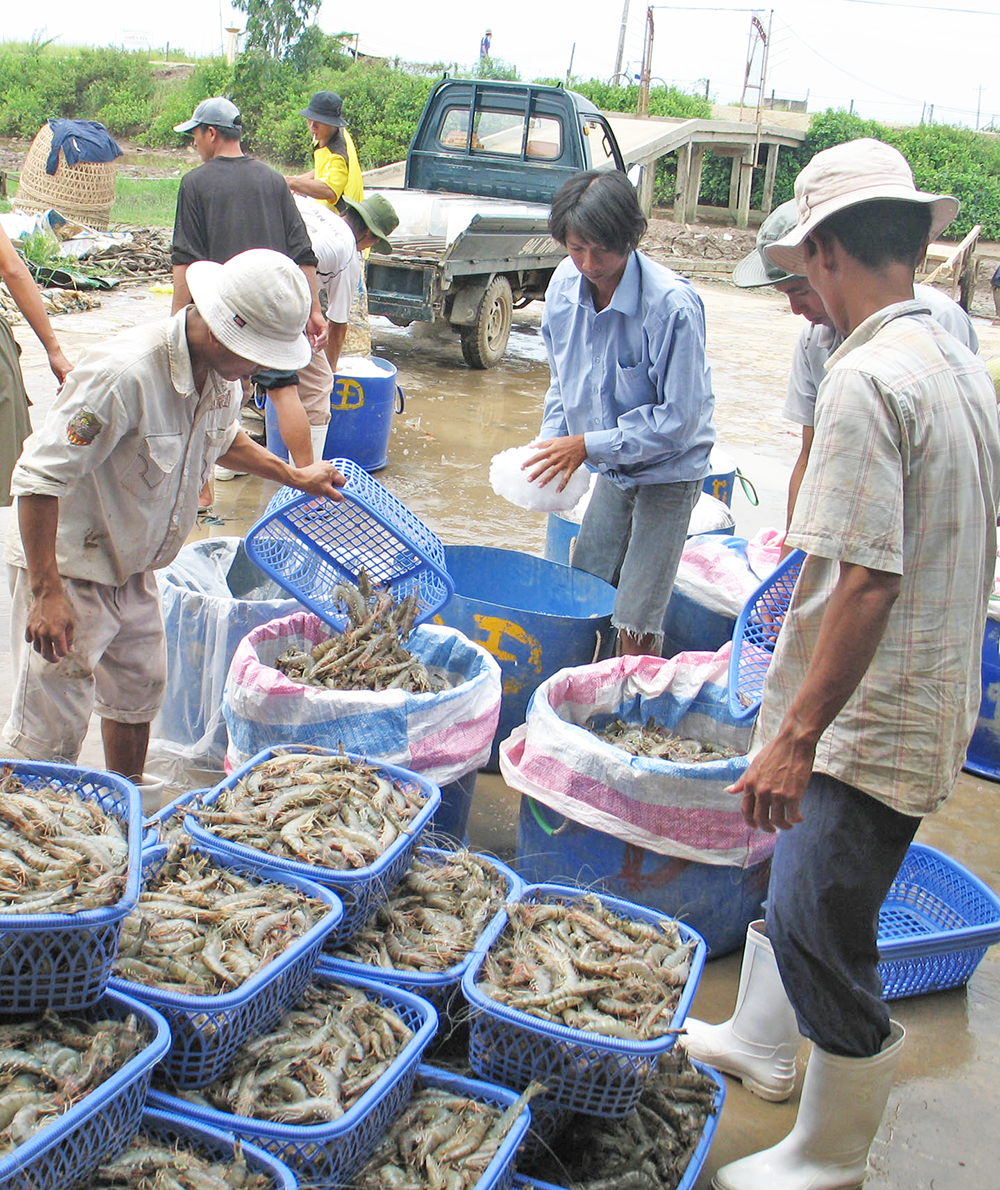
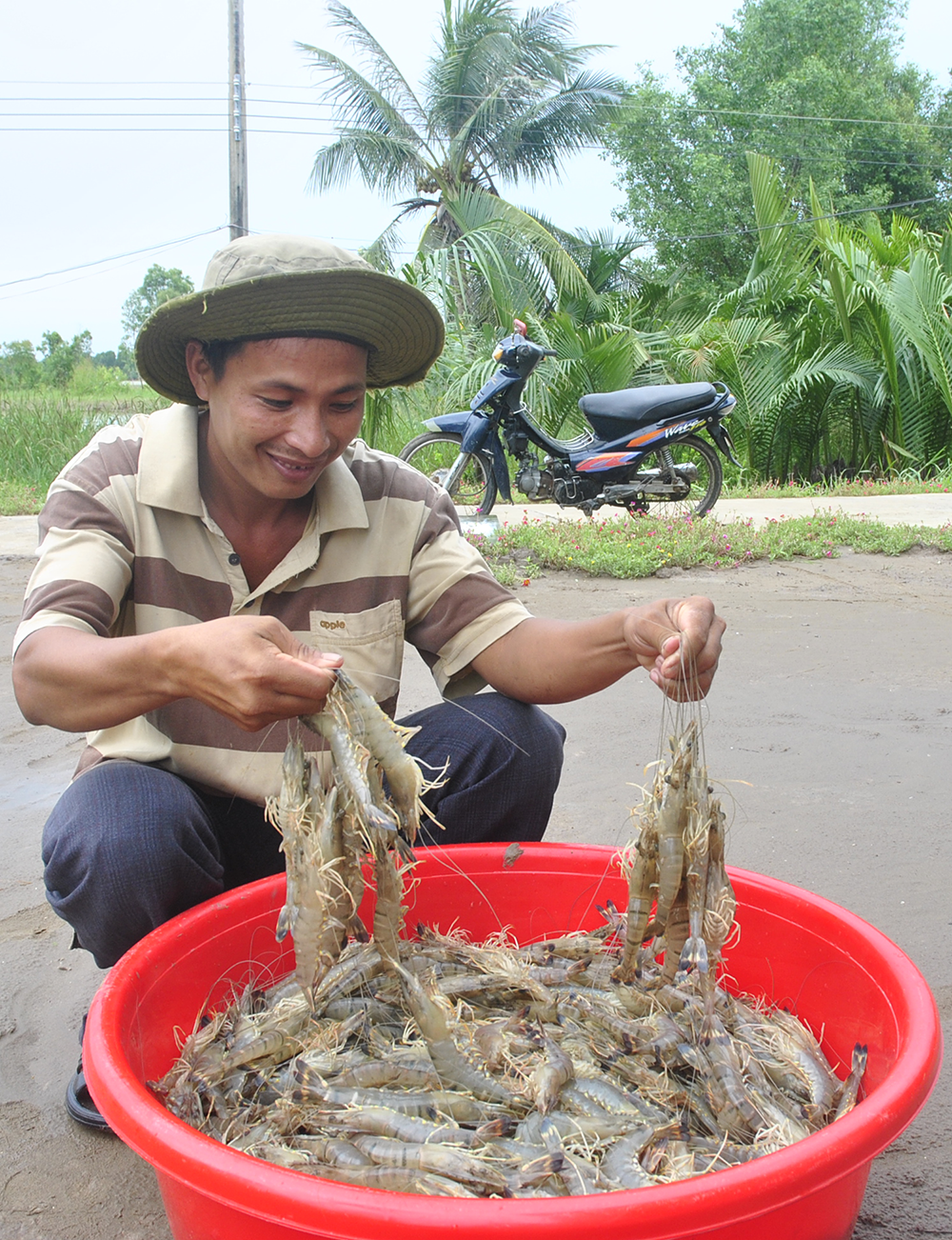
Black tiger shrimp – a promising species with the potential for a boom in farming area in the 2026 season.
Although tilapia has great potential, expanding its farming area in the short term is not easy due to fluctuating prices. In contrast, tiger shrimp, after a long period of dormancy, has made an impressive comeback in the 2025 farming season with a very high success rate, both in improved extensive farming in earthen ponds and intensive farming in lined ponds. This is thanks to a new generation of broodstock with rapid growth rates, good resistance to environmental and weather changes, the ability to be raised extensively in earthen ponds or intensively in lined ponds, and especially, almost absolute resistance to EHP disease. This promises a high probability of a boom in tiger shrimp farming area in the 2026 farming season.
Mr. Huynh Khanh Luong, who holds the record for raising tiger shrimp to a size of 12 shrimp per kilogram in Tran De commune, Can Tho city, said: “Since the beginning of the year, I have successfully raised two crops of tiger shrimp in ponds lined with tarpaulin, whereas in previous crops I raised whiteleg shrimp which often suffered from EHP disease and white feces syndrome. In the first crop, after 120 days of farming, I harvested shrimp at a size of 24-26 shrimp per kilogram. In the most recent crop, after 144 days, I harvested shrimp at a size of 12 shrimp per kilogram without any disease problems.”
Following the successful trial of the new generation of tiger shrimp, Mr. Vo Van Phuc, General Director of Vinacleanfood, affirmed: "This new generation of tiger shrimp has good resistance to EHP, good tolerance to environmental fluctuations during the rainy season, can be raised at a density of 30 shrimp/m2, and can reach a size of less than 20 shrimp/m2 in lined ponds, making it very suitable for the off-season."
Text and photos: HOANG NHA
Source: https://baocantho.com.vn/nganh-tom-vuot-thang-a196430.html
![[Photo] General Secretary and President To Lam presides over a meeting on assessing national development resources.](https://vphoto.vietnam.vn/thumb/1200x675/vietnam/resource/IMAGE/2026/05/20/1779253785852_a1-bnd-2943-8519-jpg.webp)











































































Comment (0)