

Vietnamese Ethnic Cultures Day: Honoring Identity, Strengthening National Unity

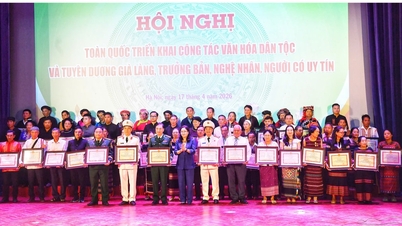
April 19th of each year is designated as the Day of Vietnamese Ethnic Cultures by Decision No. 1668/QD-TTg dated November 17, 2008, of the Prime Minister. This date is associated with a letter from President Ho Chi Minh to the Congress of Ethnic Minorities in Southern Vietnam held in Pleiku in 1946, emphasizing the spirit of solidarity and mutual assistance among ethnic groups.
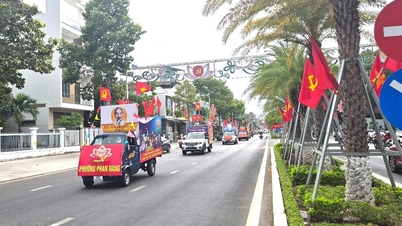
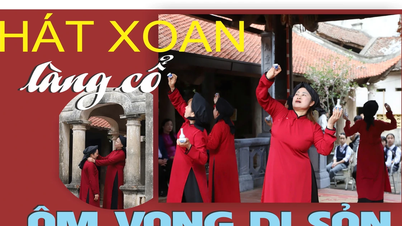
This day aims to honor the unique cultural values of the 54 ethnic groups, while affirming Vietnam's advanced culture, rich in national identity. Activities are required to be practical, economical, and in accordance with the customs and traditions of each region, avoiding formality.
In particular, implementation must be linked to socio-economic development, improving the material and spiritual lives of the people, especially in ethnic minority areas, thereby strengthening national unity.
Tran Hung Dao Mechanical Enterprise - the foundation of state-owned industry.
On April 19, 1947, the Tran Hung Dao Mechanical Engineering Enterprise was established in the Viet Bac war zone, one of the first state-owned industrial enterprises in Vietnam during the resistance war against French colonialism. The establishment of the enterprise met the urgent need for self-sufficiency in production and ensured logistical and technical support for the resistance war.
Despite numerous shortcomings, the enterprise undertook the repair and production of weapons and tools, while also training the initial workforce of technical workers. The role of this facility extended beyond production; it also contributed to the formation of a self-reliant and self-sufficient industrial mindset.
From that foundation, the mechanical engineering industry and the state-owned enterprise system gradually developed, laying the groundwork for the subsequent industrialization process.
From the ocean to outer space
On April 19, 1770, navigator James Cook first sighted the eastern coast of Australia during his voyage on the ship Endeavour . Log entries indicate this was a significant step in mapping the Pacific region, though not a "discovery" in the absolute sense.
Nearly two centuries later, on April 19, 1971, the Soviet Union successfully launched Salyut 1 – humanity's first space station. The station operated until October 1971, ushering in an era of long-duration space research, despite the initial program facing numerous technical challenges.
These two events reflect humanity's journey of expanding its exploratory horizons, from the oceans to Earth's orbit.
Clément Ader's pioneering flight tests
In some popular documents, April 19th has been associated with Clément Ader and the "invention of the airplane".
In fact, in 1890, Ader conducted experiments with the Éole flying device using a steam engine, which was said to have lifted off the ground for a short distance but lacked stable control. Subsequent experiments in the 1890s continued to encounter technical limitations.
Therefore, when associated with April 19th, the event is more appropriately recognized as commemorating the pioneering flight tests of the late 19th century, rather than as the day of the invention of the airplane.
"Bicycle Day" and Albert Hofmann's scientific observations.
On April 19, 1943, Albert Hofmann intentionally used LSD for the first time during research at the Sandoz laboratory. While cycling home, he noted significant changes in perception and sensation, becoming the first scientific description of the substance's effects on humans.
This event later became known as "Bicycle Day" and was recounted by Hofmann himself in his memoirs. It contributed to opening up avenues of research in the fields of psychiatry and pharmacology.
However, this is a scientific and personal milestone, not a universal event in the broader social sense.
Source: https://baovanhoa.vn/van-hoa/ngay-van-hoa-cac-dan-toc-viet-nam-220489.html


![[Photo] National Assembly Chairman Tran Thanh Man successfully concludes his participation in IPU-152](https://vphoto.vietnam.vn/thumb/1200x675/vietnam/resource/IMAGE/2026/04/18/1776502638199_vna-potal-chu-tich-quoc-hoi-ket-thuc-tot-dep-chuong-trinh-tham-du-ipu-152-8709975-jpg.webp)
















































































Comment (0)