

 |
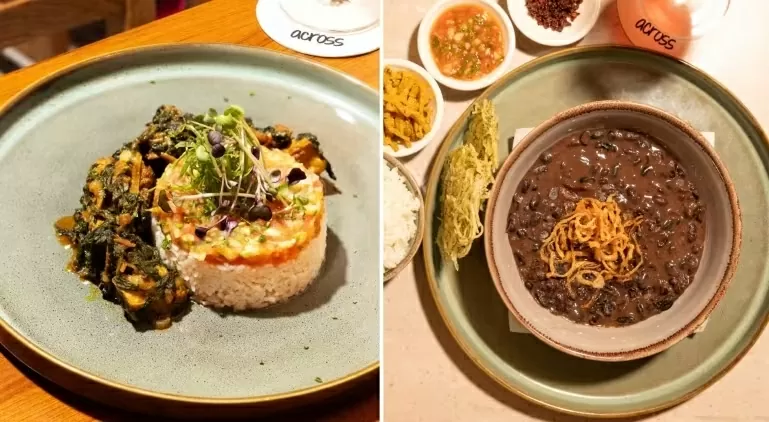
| Dishes showcasing authentic Himalayan cuisine at Across restaurant. (Source: Across) |
Perched on a cliff overlooking a winding mountain road in Himachal Pradesh (India), Naar restaurant is nestled amidst pine forests and surrounding terraced rice paddies. With only 20 seats, the restaurant opens onto the valley towards Shimla, a place where people live at a slower pace, eat according to the seasons, and rely on nature for survival.
In that setting, Himalayan cuisine is being retold by chefs in a different way. It doesn't showcase elaborate techniques, but rather relies on lifestyles that have been maintained for many years: wood-fired stoves, local ingredients, traditional preservation methods, and a way of life intertwined with the natural conditions of the mountain region.
A culinary tradition adapted to harsh conditions.
Spanning across India, Nepal, Bhutan, Pakistan, and China, the Himalayas are one of the world's harshest living environments. The rugged terrain, long winters, and difficult transportation have led the communities living there to develop a culinary tradition based on adaptation.
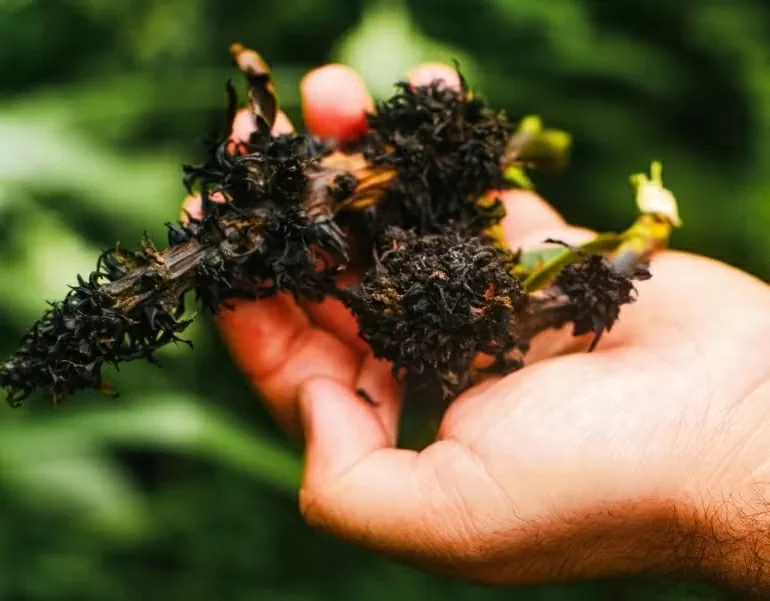 |
| A type of ingredient found in the Himalayas. (Source: Naar) |
Techniques such as foraging for food in nature and preserving it through fermentation, drying, salting, or smoking, performed manually for generations, all stem from the survival needs of the local people. Meals here prioritize efficiency, sufficient energy, and suitability to their living conditions over variety.
Familiar ingredients such as barley, millet, buckwheat, rice, potatoes, butter, yak cheese, and local bread are the main components of the meal. Seasonal vegetables, ginger, garlic, and chili peppers play an important role, both adding flavor and helping the body cope with the cold climate.
Beyond just food, Himalayan cuisine is deeply intertwined with religious rituals, Buddhism, culture, customs, and the communal lifestyle of the mountain people. Whether it's a family meal or a feast during festivals, the restrained, simple, and nature-respecting way of eating is clearly evident in the daily lives of the people here.
A fresh take on traditional dishes.
Chef Prateek Sadhu, originally from Kashmir, is one of those who pursue this approach. At his restaurant, Naar, Prateek Sadhu has experimented with showcasing Himalayan cuisine through a seasonal menu, using local ingredients and traditional techniques. Thanks to its unique and distinctive approach, Naar regularly appears on lists of Asia's 50 Best Restaurants and was named one of Time Magazine's 100 Great Destinations of 2024.
Prateek Sadhu said that he did not change the basic structure of Himalayan cuisine, but adjusted the preparation and presentation, while maintaining familiar practices such as pickling or foraging for food in nature.
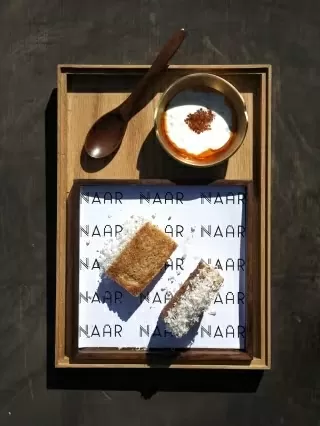 |
| Himalayan salmon and toast at Naar restaurant. (Source: Naar) |
Naar's menu clearly reflects this approach, with dishes like sunderkhala, Uttarakhand's hand-pulled noodles, or tujj—Kashmir-style grilled skewers of meat, prepared with seasonal ingredients such as river salmon, yak cheese, prickly pear, wild mushrooms, peaches, plums, baby potatoes, and wild garlic.
In addition, the menu features dishes associated with various regions of the Himalayas, from nimbu saan of Kumaon and sel roti of Nepal to sinki—fermented beetroot from Northeast India. The use of traditional preservation methods reflects how mountain dwellers prepare and consume food under harsh living conditions.
In Mumbai, India, within the Kala Ghoda arts district, the Across restaurant brings Himalayan cuisine to diners by using ingredients that are intrinsically linked to the mountainous region's living conditions. The menu includes white beans and butter from Solu Khumbu (Nepal), black beans from Mustang (Nepal), various Timur peppers harvested in Nepal, Bhutan, Tibet (China), Darjeeling and Sikkim (India), and jimbu – sun-dried Himalayan shallots. These ingredients are incorporated into dishes according to season and their actual ripeness, reflecting how highlanders select, preserve, and use food under limited farming and transportation conditions.
Chef Hussain Shahzad's Papa's restaurant in Mumbai also incorporates Himalayan ingredients into its modern menu. Chhurpi cheese and Himalayan salmon are used creatively, with dishes such as hand-rolled salmon in thin rice paper with herbs, citrus salad, and fermented chili peppers offering diners a novel experience of mountain flavors.
In Kolkata (India), Popo's restaurant showcases dishes inspired by Tibetan and Himalayan cuisine, popular in Sikkim, Darjeeling, and Kalimpong (India). The menu features mung bean noodles, churpi cheese, Timur chili (Nepal), Dalle chili (Nepal), and familiar fermented ingredients like gundruk and kinema, evoking the atmosphere of mountain family meals.
 |
| This version of the tongba was created by Yangdup Lama at The Brook, a Himalayan-themed bar in Gurgaon, northern India. (Source: The Brook) |
Expand your sphere of presence.
Bhutanese and Nepalese chefs also seek to innovate and showcase the unique aspects of their local cuisine to diners. At Amankora Bumthang (Bhutan), chef Tshering Phuntsho chooses to return to familiar family dishes, drawing direct inspiration from his mother's kitchen.
Dinners here don't aim for sophisticated techniques but focus on simple cooking methods using local ingredients, from rich roasted wheat flour soup, datshi makhu cooked with cheese and local spices, to mountain radish curry and sharchop kharang rice mixed with corn flour. This approach reflects the daily life of the highland people, where meals are formed from what is available seasonally and according to farming conditions.
In Nepal, in the Kathmandu Valley, The Nanee Hotel presents a nine-course Newari dinner recreated in a contemporary setting. From samay baji to bara wo, the dishes retain the familiar cooking methods of the Newari community, with only adjustments in presentation.
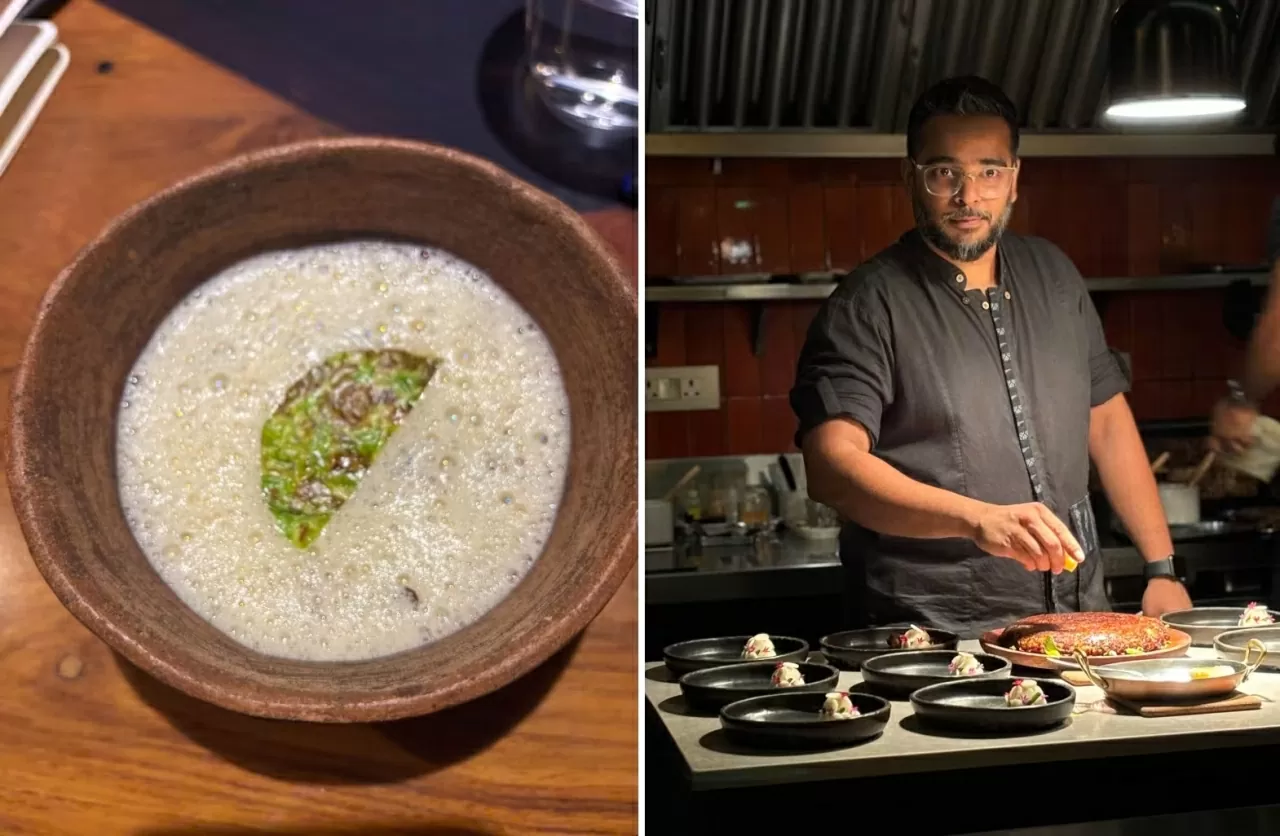 |
| Chhurpi, a Himalayan cheese, is used in a soup at Papa's restaurant in Mumbai, run by chef Hussain Shahzad. (Source: Papa's) |
Thanks to their rich flavors and distinctive ingredients, Himalayan cuisine is increasingly appearing in new settings, from restaurants and hotels to flexible dining models, gradually satisfying and winning over even the most discerning customers. From there, the culinary story, and more broadly the story of Himalayan culture, is being "told" in a very unique and distinctive way.
In Kolkata (India), Popo's restaurant showcases dishes inspired by Tibetan and Himalayan cuisine, popular in Sikkim, Darjeeling, and Kalimpong (India). The menu features mung bean noodles, churpi cheese, Timur chili (Nepal), Dalle chili (Nepal), and familiar fermented ingredients like gundruk and kinema, evoking the atmosphere of mountain family meals.
Source: https://baoquocte.vn/nghe-am-thuc-himalaya-ke-chuyen-337808.html




![[Photo] “Red Journey” 2026: Vietnamese Youth Continue Building the Bridge of Friendship Between Vietnam and China](https://vphoto.vietnam.vn/thumb/1200x675/vietnam/resource/IMAGE/2026/04/20/1776629730866_4055880775670638308-9618-4200-jpg.webp)


















































































Comment (0)