Timothy McKeon is one of the few Irish translators who have worked for many years for European Union (EU) institutions. However, the rise of AI tools, with their ability to translate text and speech in real time, has disrupted his livelihood as well as that of many of his colleagues.

AI is reducing both the workload and income of translators. (Photo: Getty Images)
Approximately 70% of Timothy's previous income has now "vanished into thin air" as translation jobs in the EU have become increasingly scarce, forcing him and his colleagues to take on additional work to make ends meet.
There are still some suitable jobs, such as fine-tuning text translated by AI, but he firmly refuses to take them because this would inadvertently train the very software that is stealing human jobs.
“When the refined text is fed back into the translation software, it picks up skills from you ,” Timothy admitted bitterly. “The more the AI learns, the more obsolete you become . ”
While translation apps like Google Translate previously reduced the need for translators, the widespread adoption of AI today is accelerating that trend.
A 2024 survey of writers, conducted by the British Authors Association, revealed that over 33% of translators felt their livelihoods were being taken away by AI. Around 43% of translators surveyed reported a decrease in their income due to this technology.
In the US, an analysis by economist Carl Frey and researcher Pedro Llanos-Paredes from Oxford University (UK) shows that, between 2010 and 2023, sectors that used Google Translate more frequently experienced slower job growth for translators.
“We estimate that around 28,000 translator jobs would have been created if machine translation hadn’t emerged ,” Frey said. “The mass replacement won’t happen immediately, but I think it will happen sooner or later.”
'The whole of America is watching Wisconsin'
Christina Green, president of the language services company Green Linguistics and a court interpreter in Wisconsin, expressed concern that her role might soon disappear.
A new state bill proposes allowing courts to use AI, or machine translation, in civil, criminal, and other cases.
Ms. Green and other language experts have been fighting the proposal since it was first submitted in May 2025. The president of Green Linguistics noted that “the whole of America is looking at Wisconsin” as a precedent, and so far, opponents of the bill have been successful in delaying it.
Although Green Linguistics retained its job at the court, it lost a major Fortune 10 client who had partnered with an AI-powered translation service provider.
Fortune 10 companies accounted for such a large proportion of the company's revenue that Ms. Green had to implement staff reductions.
"People and companies think they can save a lot of money with AI, but they have absolutely no understanding of what it is, how privacy is affected, and what the consequences will be ," Green said.
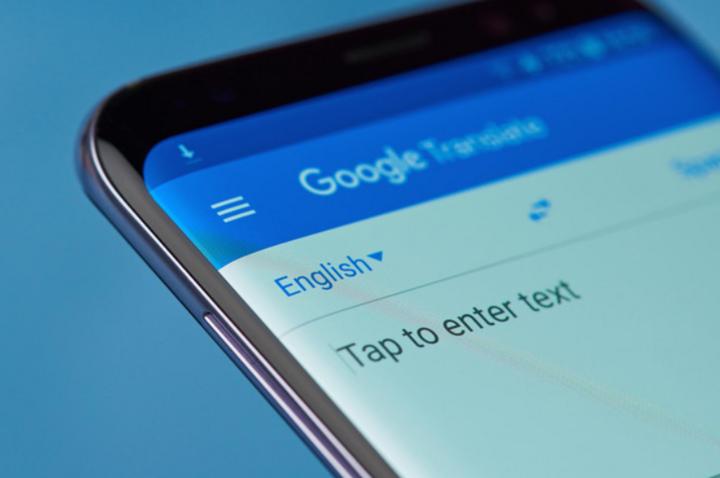
Google Translate and many other AI translation platforms are becoming increasingly popular and advanced. (Image: Shutterstock)
According to Ian Giles, chairman of the Translators' Association at the Authors' Association of the UK, many translators are actually struggling to learn new skills "because translation no longer generates the income it once did."
The situation in the US is similar, with Andy Benzo, president of the American Association of Translators, revealing to CNN that many people are leaving the profession.
International Monetary Fund (IMF) President Kristalina Georgieva acknowledged that the number of translators/interpreters at the fund has decreased from 200 to just 50 thanks to increased use of technology.
Humans are irreplaceable.

Strengthening the friendship between Vietnam and the United States.On July 3rd, as part of the Pacific Partnership - Friends of the Pacific 2026 program, the U.S. Army Pacific delegation, led by Lieutenant General Joel Vowell, Deputy Commander of the U.S. Army Pacific, paid a courtesy visit to the Quang Tri Provincial Military Command. Despite advances in machine translation, technology has yet to completely replace language professionals, especially in diplomatic , legal, financial, and medical contexts where the risks are "extremely high."
"I am both a translator and a lawyer. Both professions have unique contexts, and they (major language models) haven't yet reached that level of proficiency ," Benzo stated.
Economist Carl Frey from Oxford University emphasizes a key element that AI will never replace: human connection.
"The widespread availability of machine translation doesn't mean you can build relationships with someone in France without knowing a single word of French ," Frey said.
(Source: CNN)
Source: https://vtcnews.vn/nghe-bien-dich-chat-vat-truc-con-bao-ai-ar1000684.html