Nestled at the confluence of rivers at the headwaters of the Mekong Delta, where the waters of the Hau River and the Chau Doc River merge with the echoing chanting of prayers from ancient mosques, the traditional brocade weaving craft of the Cham people in Phum Soai hamlet (Chau Phong commune, An Giang province) is experiencing a strong revival under the skillful hands of its women.
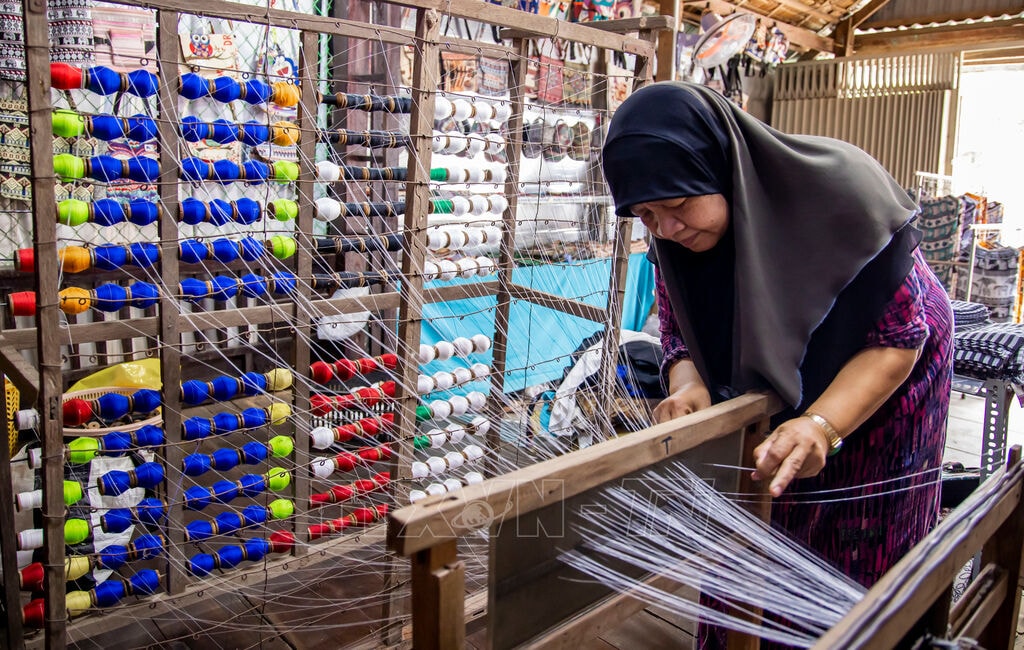
In Phum Soai, visitors are easily captivated by the sight of looms on the verandas of stilt houses, where Muslim artisans diligently weave patterns with profound cultural value. Each piece of fabric tells a story, a slice of heritage passed down from generation to generation. Ms. Sala Mah shared that she learned to weave from her mother and grandmother at the age of 15. In the past, knowing how to weave was a source of pride for Cham girls; today, weaving for tourism helps keep the tradition alive and improves family income.
According to Ms. Sala Mah, the cloud, wave, or striped patterns on the fabric are not only visually appealing but also vividly reflect the nature and history of the Cham people of An Giang. Creating a complete product requires six rigorous steps. Of these, making the vertical weave is the most difficult, demanding precise thread arrangement and color coordination. It takes artisans three days just to thread the loom, then weave in an alternating pattern to create a durable, colorfast product that becomes even more beautiful and lustrous with use.


Mr. Mohamad, owner of the Mohamach brocade weaving facility, said that the weaving craft in Chau Phong originated in the early 19th century. During its heyday, every household had several looms, and products were exported to Cambodia, Thailand, and Malaysia. Although modern life has caused the craft to decline at times, those who cherish this heritage are determined to preserve it. Currently, his facility provides a livelihood for 18 local women, with incomes ranging from 4 to 6 million VND per month.
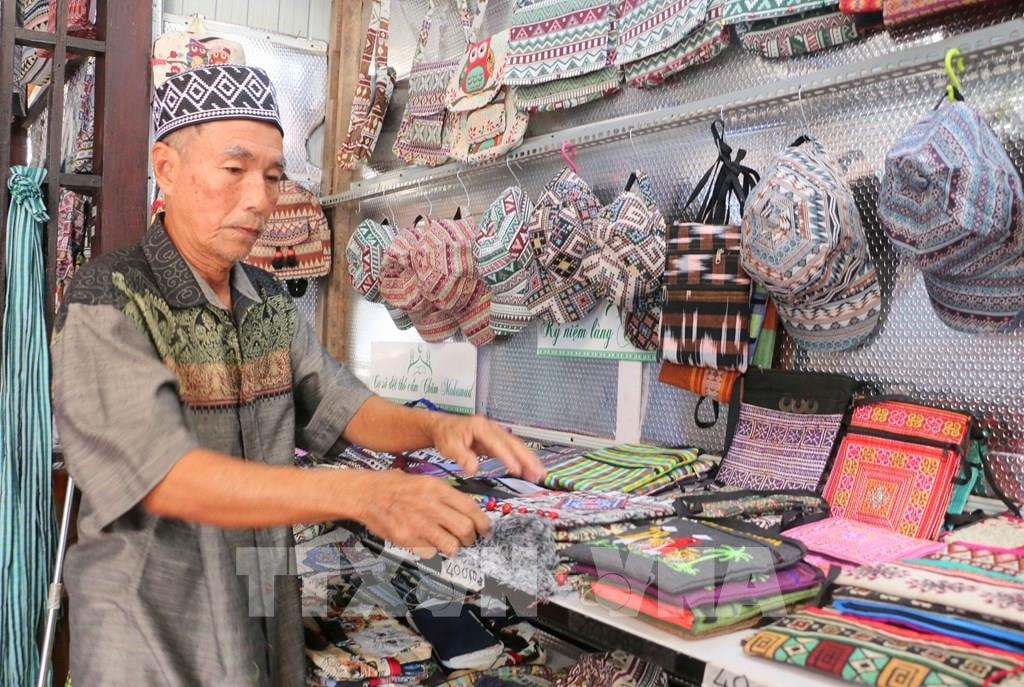
In 2024, Mr. Mohamad established the Chau Phong Cham Village Community Tourism Cooperative. Here, visitors can not only watch the weaving process but also visit the mosque, explore ancient houses, and enjoy unique local cuisine such as beef curry, tung lo mo (a type of Vietnamese sausage), and grilled beef cakes. Bruce William, a Canadian tourist, shared: “Experiencing firsthand the weaving process, transforming simple silk threads into fabric for souvenirs, was a very interesting part of my trip to An Giang.”
The products of the craft village are now not only sold directly but have also expanded to social media, e-commerce platforms, and exported to countries such as France, Germany, and Australia. On March 6, 2023, the brocade weaving craft of the Cham people in Chau Phong commune officially became a National Intangible Cultural Heritage. This is an important foundation for the local government and the people to raise awareness of preservation.


Mr. Nguyen Van Hop, Vice Chairman of the Chau Phong Commune People's Committee, affirmed that the locality always pays attention to passing on the craft to the younger generation, while also supporting tourism skills and promoting products to the international market. With unity and creativity, the brocade weaving craft at the confluence of the rivers will surely continue to thrive.
By Quy Manh (compiled)Source: https://baohaiphong.vn/nghe-det-tho-cam-cua-nguoi-cham-an-giang-532440.html