


Beyond simply beautifying the streets, the artworks appearing in squares, parks, and pedestrian areas also open up dialogues between people and history, nature, and the surrounding community, contributing to a new appeal for the cultural and tourism life of the capital city.
By 2025, public art activities and works in Hanoi will appear more frequently and their quality will be increasingly improved, showing a remarkable step forward in the creative approach to beautifying urban spaces.
Beyond its purely decorative role, public art contributes to shaping community aesthetics and provides further impetus for the development of tourism and services.
On weekends or holidays, it's not uncommon to see locals and tourists stopping in front of artworks in public spaces in Hanoi, taking photos, chatting, and interacting.
From outdoor performances to multi-faceted fusion works, art is infiltrating urban life in a more natural and intimate way than ever before.
According to many architects and cultural researchers, for a city aiming for creativity, open art spaces – where people can access and enjoy art throughout all four seasons – are considered indispensable.
The public art project "Birds chirping, what do the birds say?", launched at the end of September 2025 in Chuong Duong Forest Park (Hanoi) and Tao Dan Park ( Ho Chi Minh City), is a prime example of an initiative to enrich and beautify often overlooked destinations in the heart of the city.
Created by Vietnamese and international artists, the artwork takes the form of a colorful "treehouse" combining AI technology and an online ornithological database to create a "bird station" inviting visitors to listen to the language of hundreds of bird species present in the area's ecosystem.
Art spaces thus become havens where people can connect with nature right in the heart of the city.
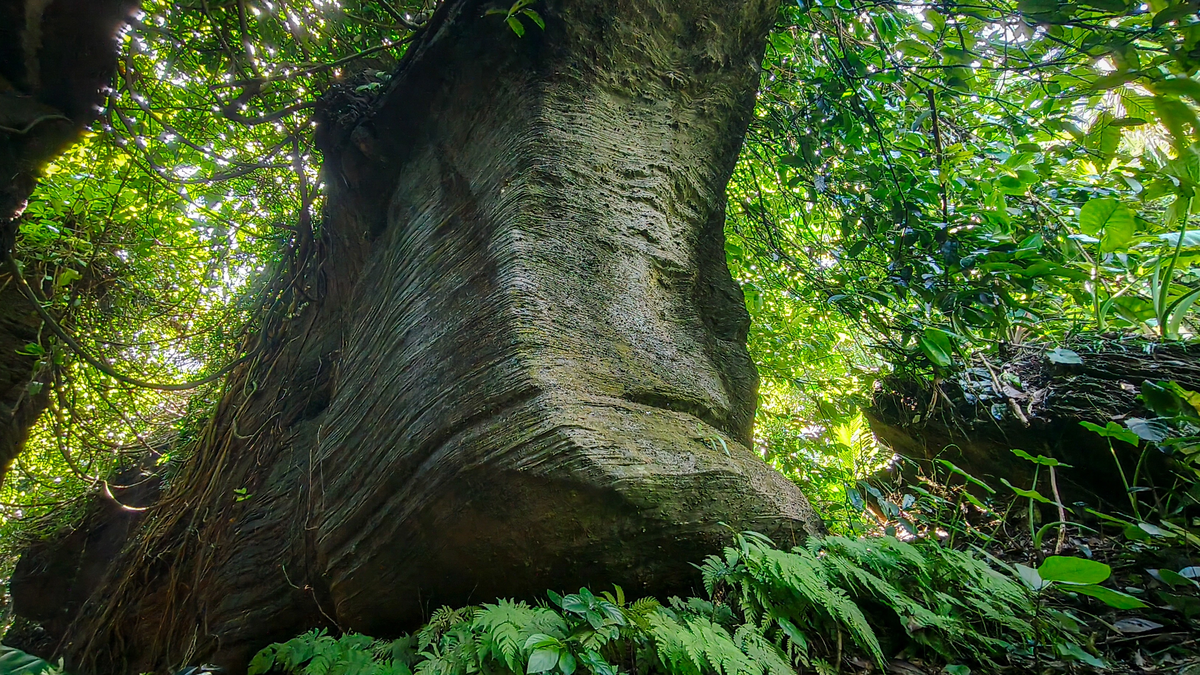
Earlier, at Co Tan flower garden, the public art piece "Resurrection" by fashion designer Tia-Thuy Nguyen evoked strong emotions from the public. The artist and her collaborators transformed a century-old mahogany tree, toppled by Typhoon Yagi (Typhoon No. 3) in 2024, into a large-scale artwork using over 6 tons of metal, completed after more than 6,000 hours of labor.
The tree canopy is recreated using thousands of steel leaves and quartz flowers, both evoking a natural appearance and conveying a message about rebirth and nature's ability to recover after natural disasters.
Furthermore, the artwork "Unity," inaugurated at the end of October in the 19-8 Flower Garden, continues to demonstrate the trend of bringing art closer to everyday life instead of confining it to museum or gallery spaces.
Dien Hong Flower Garden, with its prime location next to Hoan Kiem pedestrian street, is also a frequent venue for unique and impressive public art exhibitions…
In recent years, Hanoi has witnessed the emergence of many public art projects. One notable example is the Phuc Tan Public Art Project, undertaken by a group of 16 volunteer artists. Beyond its aesthetic value, the project also incorporates messages about environmental protection, utilizes recycled materials, and encourages the participation of local residents.
The Tran Nhat Duat pedestrian bridge, connecting the Phuc Tan project with the 22 Hang Buom Cultural and Arts Center, is also "awakened" by artistic lighting displays, becoming a vibrant highlight at night.
On Phung Hung Street, the old bridge arches have been transformed into mural spaces, recreating memories of old Hanoi and bringing art closer to the community.
Along with shifts in mindset, public art forms are becoming increasingly diverse. While sculpture once held a dominant position, installation art, light art, and digital technology are now becoming more prevalent. Works of art are no longer static displays but have become experiences connected to space, time, light, sound, and even weather.
Artists are no longer just lone creators, but play a coordinating role, inviting the community to participate through workshops, from design to construction, thereby creating a shared awareness in preserving living spaces.
However, according to architect Pham Thanh Tung (Vietnam Architects Association), for a city of 10 million people like Hanoi, the number of public art spaces is still modest.
Many projects are event-based, short-lived, and fail to meet the daily cultural needs of the people. Furthermore, many installations deteriorate after a period of time due to a lack of management mechanisms and stable maintenance funding.
This reality necessitates a long-term strategy, from planning and selecting sustainable materials to enhancing community participation and ownership. When people become part of the creation and preservation of artworks, the aesthetic lifespan of public art will be extended.
With Hanoi as a member of UNESCO's Creative Cities Network, the development of creative complexes and public arts spaces is predicted to continue to flourish in 2026.
With a large force of architects, artists, and creative communities, along with positive shifts in management thinking, public art has the opportunity to become a driving force for the creative economy, while also contributing to promoting the image of the capital city in this new development phase.
Source: https://nhandan.vn/nghe-thuat-danh-thuc-khong-gian-cong-cong-post940522.html
![[Photo] A vibrant celebration of generations of Nhan Dan Newspaper staff](https://vphoto.vietnam.vn/thumb/1200x675/vietnam/resource/IMAGE/2026/03/11/1773228432744_cb-75-nam-7-7034-jpg.webp)






![[Infographic] Stock market on March 11th: VN-Index increased by 51.61 points, market liquidity decreased.](https://vphoto.vietnam.vn/thumb/402x226/vietnam/resource/IMAGE/2026/03/11/1773245838855_screenshot-2026-03-11-220321-jpg.webp)



































Comment (0)