

Two teams, one from the Central Asian desert and the other from a tiny island nation in the vast Atlantic Ocean, tell two distinct stories, yet share a common characteristic: extraordinary resilience.
A three-decade aspiration
Having left the Soviet Union in 1991, Uzbekistan has always harbored the dream of participating in the World Cup. They have come very close to this major tournament on several occasions, such as in the 2014 qualifiers, only to be eliminated by Jordan in a heartbreaking penalty shootout.
Refusing to give up, Uzbekistan continued to invest strategically, quietly, and persistently in their World Cup journey. Uzbekistan intensified its youth football development policy from the early 2010s, upgrading its national football academy and encouraging players to compete abroad. Many young players such as Eldor Shomurodov, Jaloliddin Masharipov, and Oston Urunov have developed in this environment.
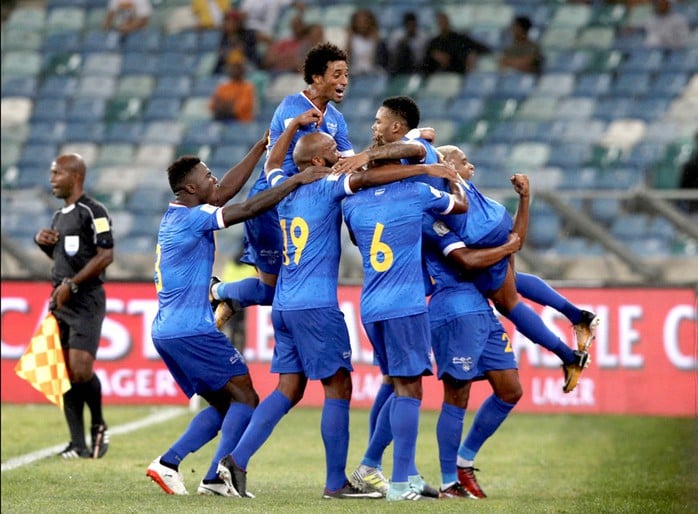
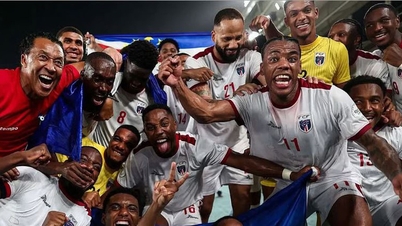
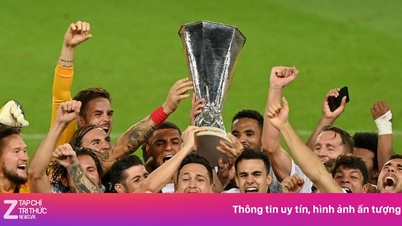
Having overcome many teams considered far superior, Cape Verde will participate in the 2026 World Cup. Photo: GULFTIMES
Entering the 2026 World Cup qualifiers, Uzbekistan showcased a cohesive, disciplined team with its own distinct identity, rather than relying on individual stars. Their success is proof of perseverance – a developing nation with limited sporting resources , yet still knowing how to gradually build upon its strengths to rise to the top. For the Uzbeks, a ticket to the 2026 World Cup is not just a sporting victory, but also an affirmation of the new status of this once-forgotten Central Asian country.
A miracle in the Atlantic
Halfway around the world, Cape Verde – a nation of just over 500,000 people – has written a colorful fairytale. For decades, this tiny island nation was known primarily for its music and its fishermen. Yet, football – once considered just a weekend pastime – has become a source of national pride.
Cape Verde doesn't have many modern stadiums, a strong league, and most of its players were born or raised in Europe. However, this expatriate community is an invaluable resource. They brought the fighting spirit of their homeland to every African qualifying match, overcoming even powerhouse Cameroon, an eight-time World Cup participant, and much stronger opponents like Libya and Angola…
When the final whistle blew in the early hours of October 14th, the entire island nation, spanning just over 4,000 square kilometers, erupted in joy. From the sandy beaches of Santiago to the capital Prairie, people poured into the streets to celebrate. For them, the World Cup was not just a sporting event, but also a dream of gaining worldwide recognition, a source of pride that a small country could achieve great things.
With the participation of Uzbekistan and Cape Verde, the 2026 World Cup will therefore not only feature giants vying for supremacy but also inspiring stories. There, the flag of the desert nation of Uzbekistan will fly over the snow-covered landscapes of North America. The cheerful folk melodies of Cape Verde, echoing with the sound of ocean waves, will also resonate across the world's football fields.
Uzbekistan qualified for the 2026 World Cup with the unwavering belief that "if you go, you'll get there," while Cape Verde reached the big stage through the miracle of national unity. A barren nation in the middle of a desert, a tiny island in the middle of the ocean – both prove that football remains the sport of dreamers, of those who refuse to surrender to adversity.
Source: https://nld.com.vn/nghi-luc-phi-thuong-cua-2-tan-binh-world-cup-196251014220254574.htm

![[Photo] Prime Minister Pham Minh Chinh receives the Chinese Ambassador to Vietnam](https://vphoto.vietnam.vn/thumb/1200x675/vietnam/resource/IMAGE/2026/04/05/1775397481797_ndo_br_dsc-5512-jpg.webp)















































![[INFOGRAPHICS] Exploiting children's personal images for profit can result in fines of up to 50 million VND.](https://vphoto.vietnam.vn/thumb/402x226/vietnam/resource/IMAGE/2026/04/06/1775442200854_1775442148.webp)













Comment (0)