


Located more than 300km from the capital city of Hanoi , the pristine and unspoiled beauty of Ngoc Chien makes it feel like an "ecological oasis" amidst the vast forest.
With a natural area of 21,219 hectares, of which forest accounts for more than 18,000 hectares, and a forest cover of approximately 87%, the nature here is preserved and protected, like a source of fresh air that nourishes every breath of human life.
Happy ecosystem
“Ngoc Chien is beautiful in every season. This land has preserved its original values, from the landscape to the local culture, which is unique and distinctive. The people are friendly, polite, and very hospitable. I believe this is the locality with the highest happiness index in our country,” the message from the Deputy Secretary of the Party Committee of Ngoc Chien commune, Bui Manh Sy, sent before our trip, was not just an invitation, but a firm affirmation. And upon setting foot in Ngoc Chien, we all felt that this was not just a feeling.
Following the directions of the Standing Vice Chairman of the Son La Provincial People's Committee, Ha Trung Chien, we chose to travel towards Yen Bai. The journey to Ngoc Chien commune is arguably one of the most beautiful routes in Northwest Vietnam, traversing National Highway 32, crossing the Khau Pha Pass and the famous terraced rice fields of Mu Cang Chai; at Kim Junction, the car turns left towards Nam Khat-Ngoc Chien, the road continuing through majestic mountain slopes and winding through highland villages.
The road leading into the commune winds its way through the Sam Sip pass. Infrastructure has been improved with clean concrete roads, making traffic convenient, but the overwhelming feeling of the vast and unspoiled nature seems to remain intact. On either side of the road are terraced rice fields interspersed with traditional stilt houses with roofs made of Pơ-mu wood and characteristic stone walls, all blending together in a beautiful and culturally rich setting.
Not only impressive for its forest cover, Ngoc Chien also boasts rare ecological features. Beneath the canopy of the primeval forest, over 1,000 hectares of ancient tea trees are preserved by the locals as a part of the mountain's memory, along with 2,650 hectares of hawthorn (wild apple) trees and hundreds of hectares of natural bonsai pine hills… creating a green, fresh, and cool space. Interspersed within this space is approximately 405 hectares of the Nam Chien hydroelectric reservoir, known locally as "Ngoc Lake," with its arched dam creating a majestic yet poetic landscape. Along with this is a system of multi-tiered, diverse waterfalls, from the hundreds-of-meters-high Pu Danh waterfall to the seven-tiered Bang Long and Bang Ang waterfalls, and the Sung stream, contributing to a complete picture of pristine yet vibrant nature, where every step offers a unique experience for visitors.
Development without compromise.
Leading us on a visit to the martyrs' cemetery and touring local cultural and historical sites, the Party Secretary of Ngoc Chien commune, Nguyen Minh Tuan, excitedly boasted: "The air here is cool all year round, with an average temperature of around 23°C. Ngoc Chien has 13 natural hot springs, with temperatures ranging from 30 to over 70°C, along with two public bathing areas. This is a very valuable tourism resource that many tourists love."
The entire commune has 15 villages, 2,345 households with 12,083 inhabitants, comprising four ethnic groups living together, of which the Thai account for 65%, the H'Mong 33%, and the rest are La Ha and Kinh. "The people still maintain their traditional way of life: eating on banana leaf trays, using red chopsticks, drinking wine from bowls, living in houses made of Pơ-mu wood, self-sufficient in wild vegetables, stream fish, mountain goats, hill chickens, and local pigs hanging outside their stilt houses," commune official Lo Thi Ngoc told us.
We had heard much about this place, but only upon arriving did we truly appreciate its incredible tranquility. In an era where success is often measured by modernity and material abundance, the pristine values of nature captivate visitors, leading them to call Ngoc Chien a land of happiness. Happiness here is present in every centuries-old wooden house made of Pơ Mu wood, with its exquisite architecture and intricate patterns. Houses with unlocked doors and no fences, motorbikes parked freely along the streets without supervision… a silent affirmation of trust between people.
Happiness also lies in how people treat nature. There are no chaotic concrete structures or noisy machinery. Mountains remain mountains, forests remain forests. Terraced rice fields wind along the mountain slopes, a harmonious intervention of humans in nature without harming it.
In Ngoc Chien, we can easily see that, despite changes and tourism development, nature is always preserved and protected, not exploited to the point of exhaustion. The hot springs flowing through the villages, warm all year round, are not used to build huge resorts, but remain a place where people bathe after a day of work. A precious resource, yet preserved as an integral part of life, not allowed to be overrun by commercialization as in many other places.
Preserve the pristine beauty of the mountains and forests.
Early in the morning, from the Viet Bac hot spring resort in Luot village, we traveled to Nam Nghep village. Throughout the journey, the whole group was surprised to see tiny hands and innocent smiles of children waving and greeting us wherever the car passed.
Leading us to the check-in point in the spacious square in front of the Nam Nghep village cultural center, the Vice Chairman of the People's Committee of Nam Nghep commune, Lo Van Thoa, gestured and introduced in a booming voice: "Located at an altitude of over 2,000 meters above sea level, Nam Nghep is known as one of the highest-altitude H'Mong villages in Vietnam. Nam Nghep also boasts the largest cluster of hawthorn trees in Vietnam, covering over 1,600 hectares. Visitors always have an unforgettable impression of the pristine local culture." Then, Mr. Thoa took us on a walking tour around the village. For generations, the people of Nam Nghep have created a stunning landscape. Their main livelihood is cultivating hawthorn, cardamom, and terraced rice fields. Recognizing that preserving the forest is crucial for their livelihood, each resident of Nam Nghep cherishes and protects every tree to create a healthy living environment.
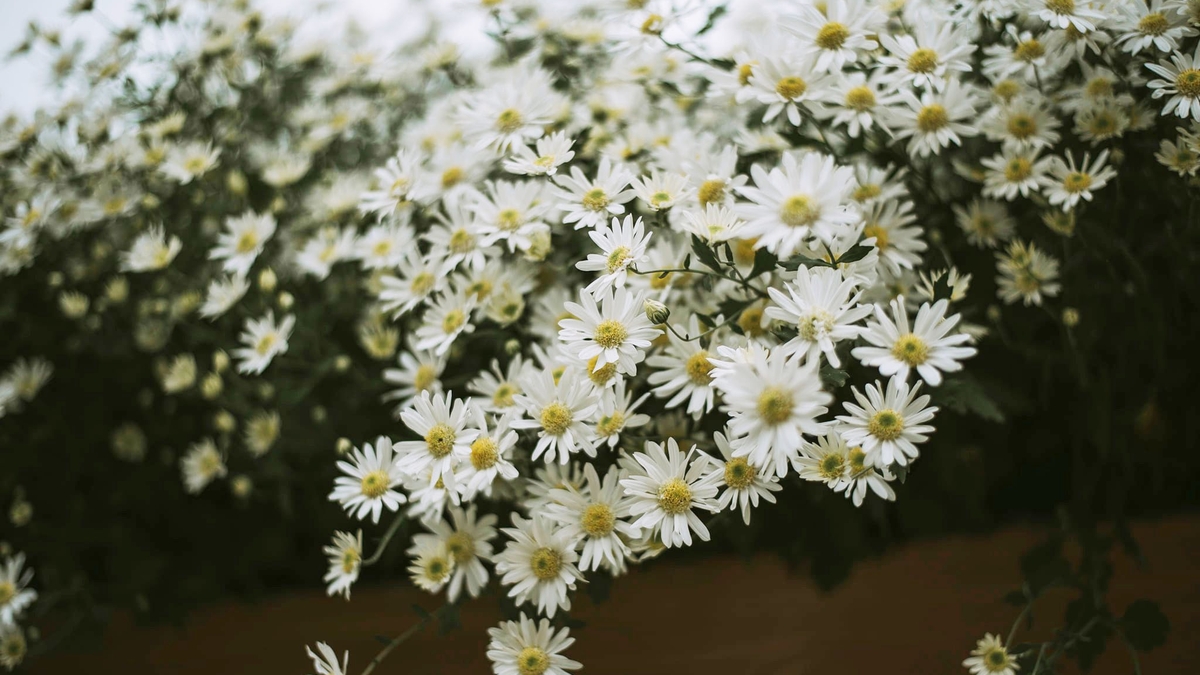
From the check-in point in Nam Nghep village, we gazed out at the forest of pristine white hawthorn blossoms. The majestic scenery of Northwest Vietnam was truly poetic. It's a wonderful place to live and a place where everyone can relax in the tranquil, breezy atmosphere of the Northwest mountains.
Mr. Lo Van Thoa took us to visit A Vang homestay, one of the well-known destinations. While waiting for lunch with dishes typical of the mountainous region, I took the opportunity to chat with the owner, Thao A Vang. Having served as the village head and Party branch secretary for 20 years, A Vang decided to step down from his administrative duties to participate in developing tourism and the local economy, creating a long-term livelihood.
A Hmong man, born in 1976, busily prepared food while recounting: Starting his homestay business in 2022, his family initially only had two traditional Hmong stilt houses, each accommodating about four guests. Although there were no concrete roads back then (they were only built in 2025), making transportation inconvenient, A Vạng homestay was consistently fully booked. Recognizing the increasing demand, this year A Vạng added two more houses with earthen walls and tiled roofs, preserving the rustic local character while adapting them to better suit current accommodation needs. In addition, A Vạng has also added tours to the summit of Ta Tao, 2,720m high – a famous trekking destination known for its pristine forests, mossy landscapes, and majestic scenery. Especially if visiting in April, tourists can immerse themselves in the dreamy atmosphere of nearly 800 hectares of rhododendron flowers blooming throughout the mountains and forests.
Coincidentally, during this trip, we met Minh Khang, a tourist from Ho Chi Minh City. He enthusiastically said, "I've traveled to many places, and the Northwest always has beautiful villages, but it's rare to find one that retains its rustic and pristine beauty like Ngoc Chien. From the people to the landscape, everything seems to have developed naturally, with little interference, isolated from the hustle and bustle of the outside world."
My colleague Ngoc Tuan led us to The Lover cafe, located on a high hillside near A Vang homestay. Sitting there, enjoying a rich, fragrant cup of coffee from Son La, savoring spicy ginger rice cakes with the sweetness of dark honey, bathed in warm sunshine and surrounded by the pristine white blossoms of the hawthorn forest, the entire Nam Nghep village unfolded before us in a truly pure and romantic setting.
“Ngoc Chien’s dream is to develop, but still maintain its identity. Hot spring tourism can be systematically invested in, but it must still be linked to the lives of the local people. Villages like Nam Nghep, Luot, Na Tau, Dong Xuong… can become destinations, but they must not lose their traditional wooden houses made of Pơ-mu wood and customs that have existed for hundreds of years. That’s not an easy problem, because development always comes with the risk of losing identity. But we will try to maintain that balance,” Secretary Nguyen Minh Tuan promised.
Source: https://nhandan.vn/ngoc-chien-mien-dat-hanh-phuc-post953324.html



![[Photo] Prime Minister Pham Minh Chinh receives the Chinese Ambassador to Vietnam](https://vphoto.vietnam.vn/thumb/1200x675/vietnam/resource/IMAGE/2026/04/05/1775397481797_ndo_br_dsc-5512-jpg.webp)







![[Photo] Prime Minister Pham Minh Chinh receives the Chinese Ambassador to Vietnam](https://vphoto.vietnam.vn/thumb/402x226/vietnam/resource/IMAGE/2026/04/05/1775397481797_ndo_br_dsc-5512-jpg.webp)
































































Comment (0)