

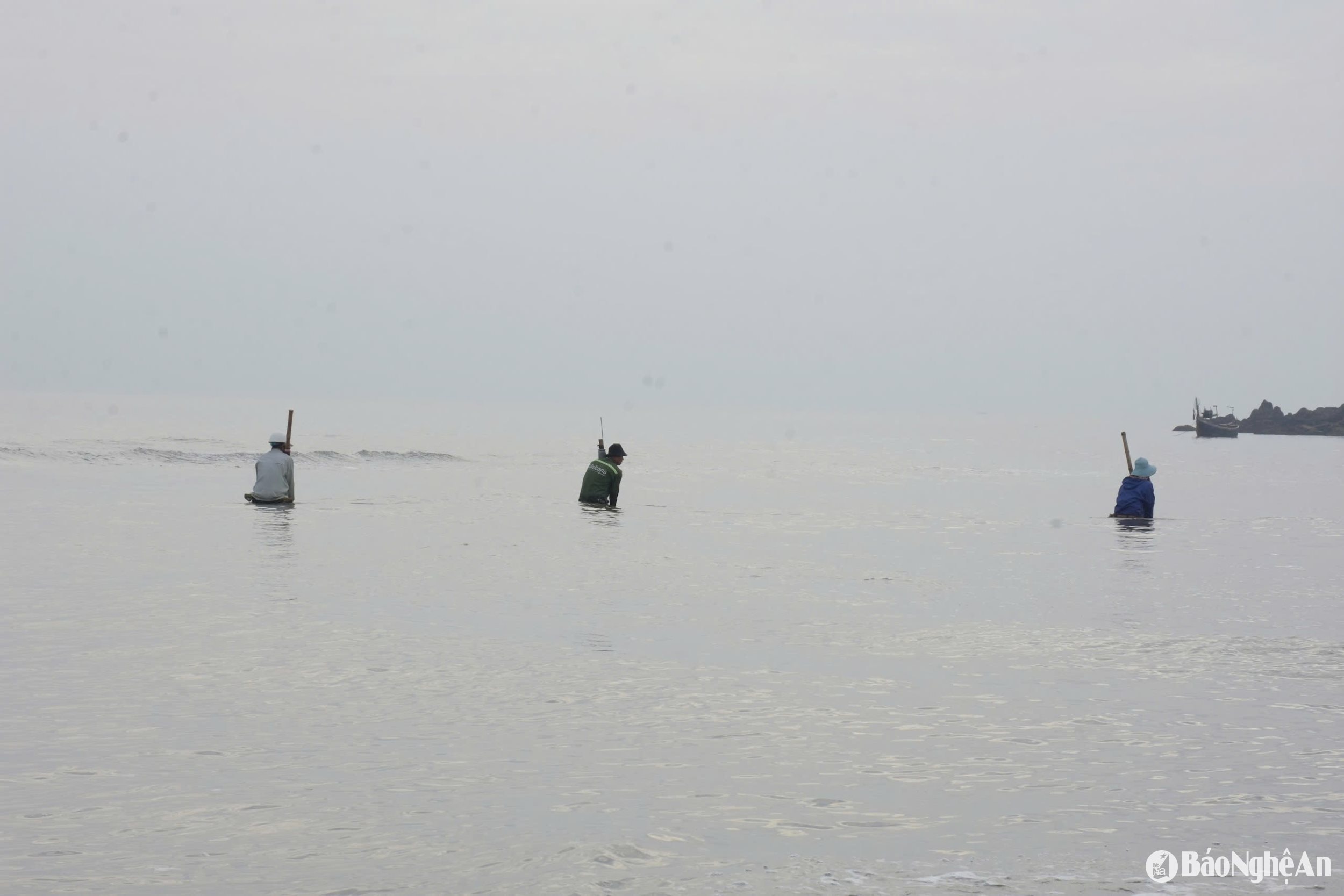
At dawn, when the tide recedes, many people in coastal communes such as Quynh Bang and Quynh Lap (Quynh Luu district) or Quynh Phuong and Quynh Lien (Hoang Mai town) diligently pull their nets on the tidal flats. With baskets slung over their shoulders and iron frames pulled by hand, they slowly and deliberately move backward to rake for clams.
Clam harvesting is a seasonal activity, starting from the end of April in the lunar calendar until around the end of August. Early in the morning, when the tide recedes, these sea clams, related to oysters and mussels, begin to move in search of food. Clams are tiny, with opaque white shells; even the largest are only about the size of an adult's thumb. Yet, for many coastal residents, they are a source of livelihood during the scorching summer months.
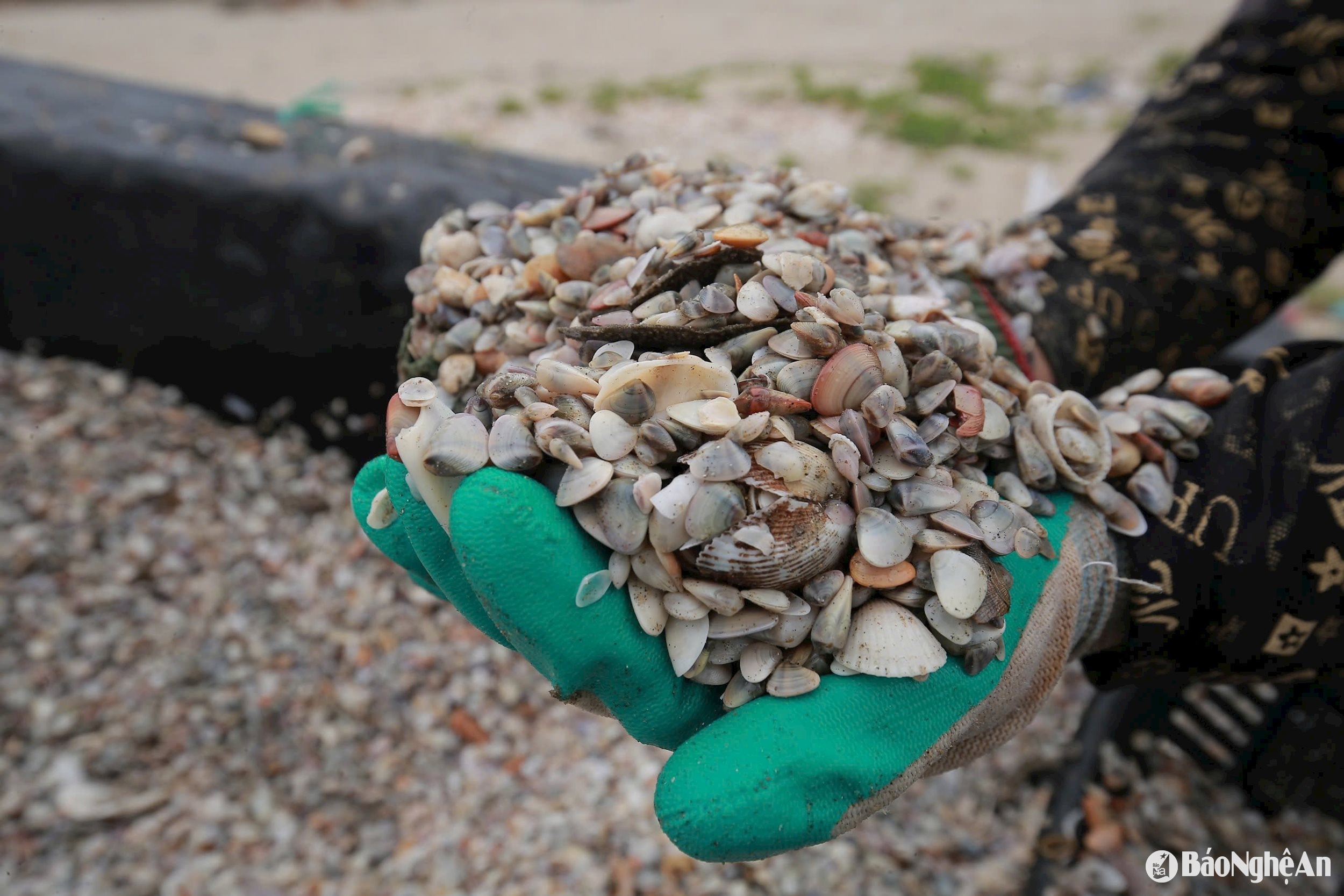
To harvest clams, people have to go to the beach at dawn. The raking tool is a rudimentary "xăm": a rectangular iron frame, about half a meter long, with a coarse wire mesh attached to the back and a bamboo handle more than a meter long attached to the front.
The raker dragged the fishing net through the wet sand, walking backward in the seawater. With a basket slung over his shoulder, his hands gripping the net handle tightly, his back constantly bent, and his feet digging deep into the sand for balance, each step was a struggle to endure the waves crashing against him, a labored breath from exhaustion, and aching back.
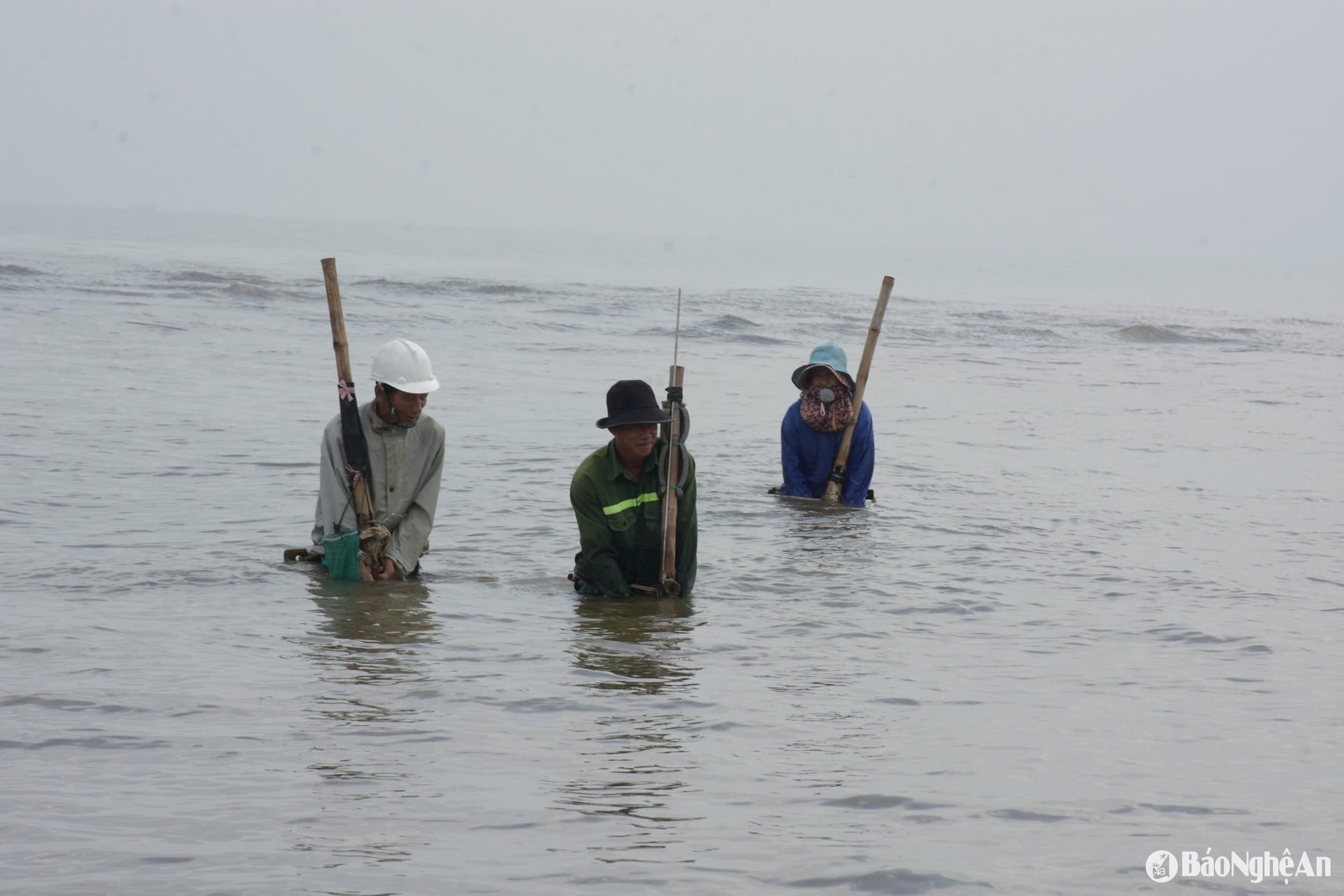
Mr. Le Van Thach, a long-time clam gatherer in Quynh Bang commune, shared: "This job looks simple, but it's very hard work. If you go out early, when the tide is at its strongest, whoever is quick gets the most. Gathering for about 2-3 hours is exhausting, but if you don't take advantage of the opportunity on any given day, you lose your income."
For the elderly, especially older women, raking for clams is one of the few options for making a living. No capital is needed, only good health and diligence; anyone can go to the tidal flats to rake for clams. But not everyone can last long. Some people give up after a few days because of back pain and knee aches; others don't know how to choose spots with plenty of clams, and after pulling for a long time, they only get a few kilograms.
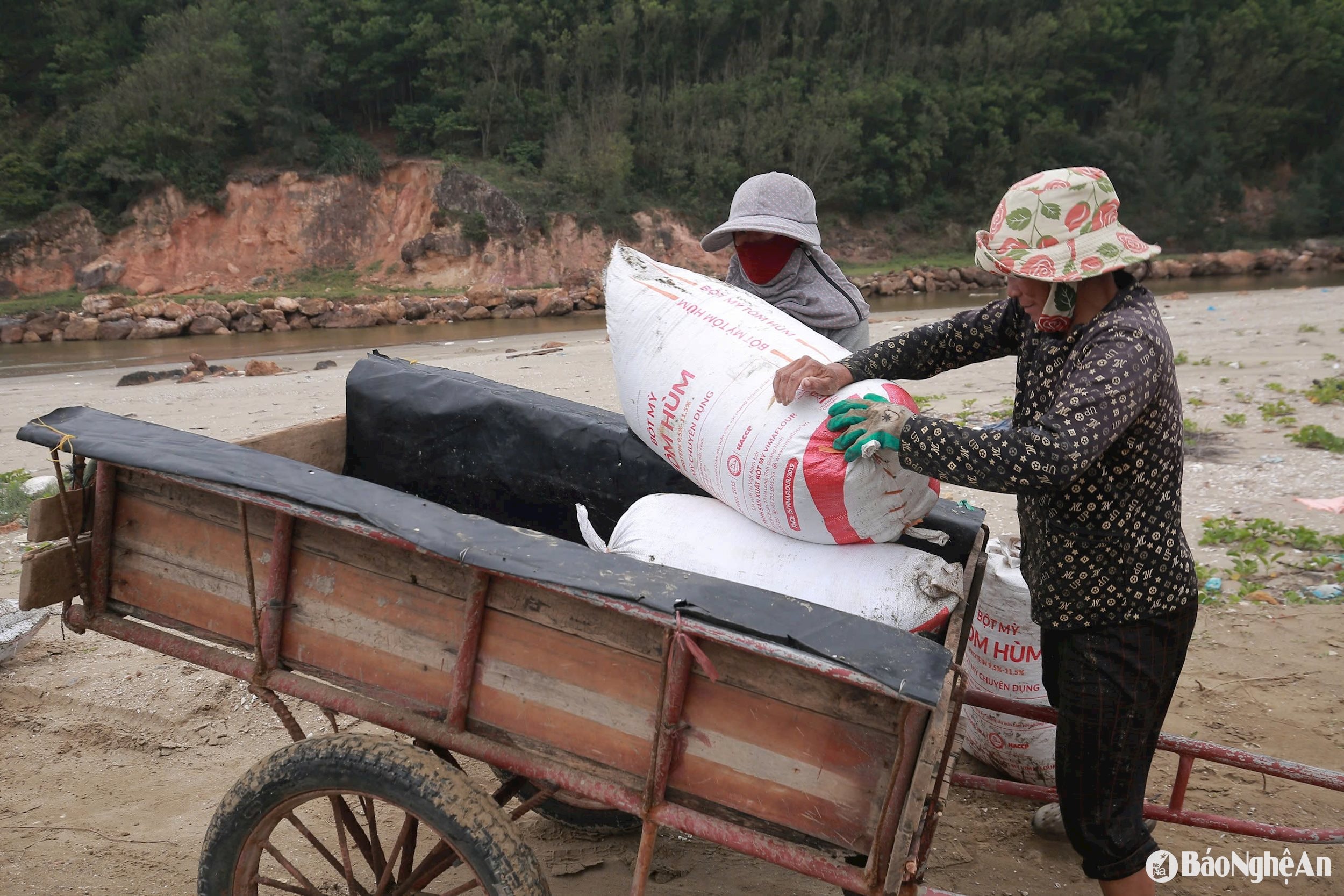
Although it's a seasonal occupation, collecting clams remains a significant source of income for many coastal households, especially for the elderly and women who cannot venture far out to sea. A diligent worker can collect 70-100 kg of fresh clams daily, earning 300,000-500,000 VND. While the price isn't high, ranging from 4,000-5,000 VND per kg, having a steady daily income is considered fortunate for many families.
After being collected, the clams are bought by traders right on the beach and transported to southern provinces such as Khanh Hoa and Phu Yen – where lobster and crab farms use them as feed. Another portion is steamed, the intestines are removed, and they are processed into food products. Small-scale businesses specializing in processing clam intestines also help provide employment for unemployed workers.
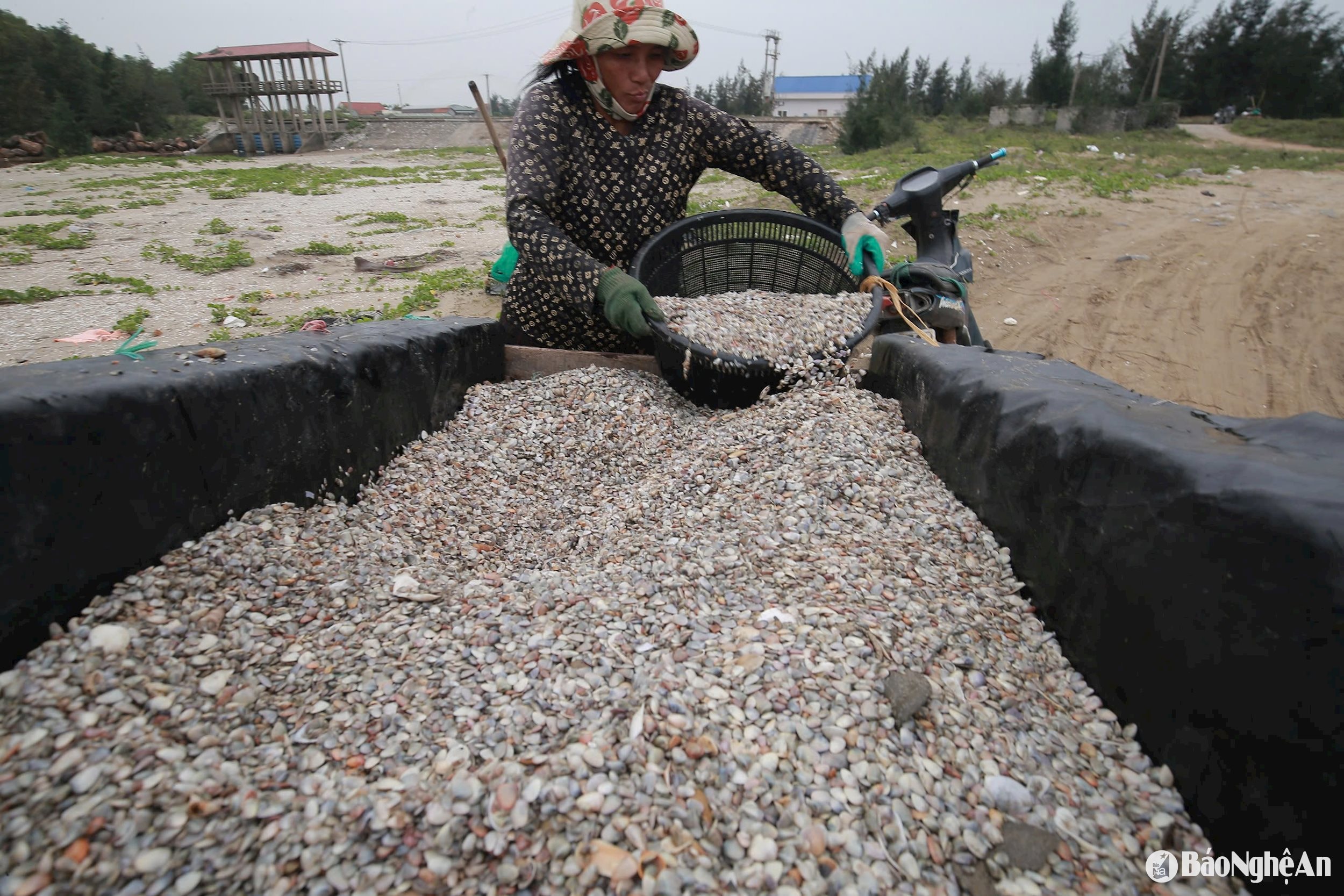
Even after the shells are removed, they are not wasted. Every year, when the sea is rough or the seasons change, a lot of rocky shells wash ashore, forming layers of opaque white shells that cover the sandy beach. Locals take advantage of this to collect them, dry them in the sun, and then sell them to businesses that use them as decorative materials and for making flower pots. A truckload of several hundred kilograms of shells can bring in millions of dong.
Although the job of trawling for shellfish is arduous, demanding endurance and hard work, and is a last resort when there are no other options, it is the very source of livelihood for many coastal fishermen…
Source: https://baonghean.vn/ngu-dan-nghe-an-vao-mua-cao-dat-bien-10295364.html

















































































Comment (0)