

The above case involves an 18-year-old male patient from Vinh Phuc province who came for examination at Medlatec General Hospital ( Hanoi ).
During a consultation with the doctor, the patient reported that about two weeks prior to admission, he had a high fever of 39-40°C, a nodule appeared on the scrotum which later developed into an ulcer, along with painful swollen lymph nodes in the left groin, headache, body aches, and watery diarrhea. He had sought medical attention at a nearby facility, where he was diagnosed with a urinary tract infection and prescribed antibiotics. However, after five days of medication, his symptoms did not improve.
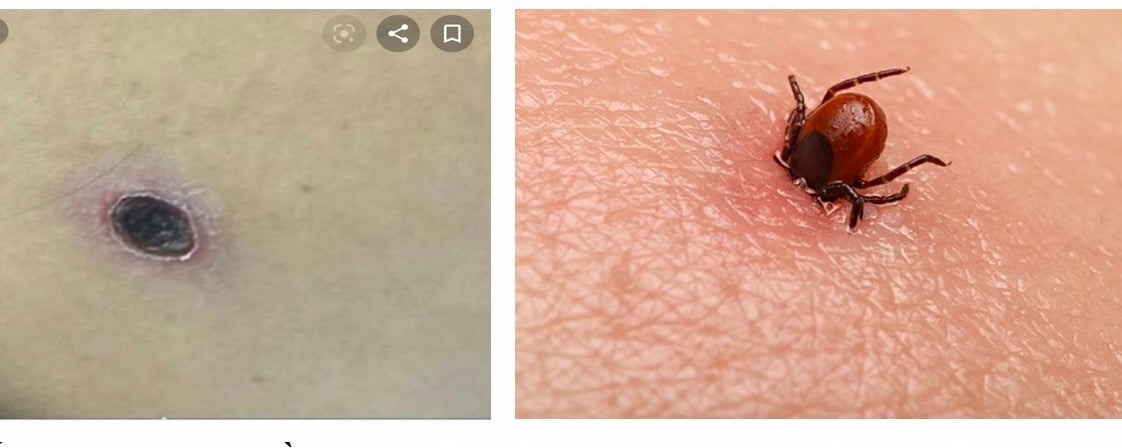
Typical sores in scrub typhus patients (left) and an image of a tick bite, which can transmit scrub typhus.
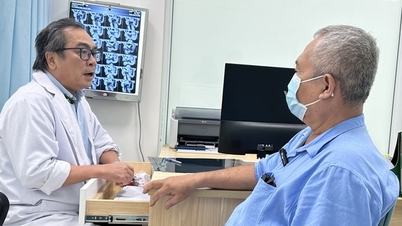
At Medlatec General Hospital, Dr. Tran Tien Tung, a specialist in infectious diseases, directly treated the patient. He stated that the patient had mild skin congestion, dry lips, two lymph nodes approximately 1 cm in size in the left groin area, and mild tenderness upon palpation. There was also an ulcer in the left subscrotal area approximately 1 cm in size, with a pink base and no discharge. The patient underwent tests to differentiate from other common infections. The PCR test result was positive for Rickettsia, the bacteria causing scrub typhus. Rickettsia are obligate intracellular parasites (living within cells). Based on the confirmed diagnosis and professional expertise, the doctor prescribed medication for scrub typhus, and the patient's fever completely subsided after 3 days.
According to Dr. Ngo Chi Cuong, an infectious disease specialist at Medlatec Hospital, this is a case where the cause of high fever was accurately identified and successfully treated. If not detected and treated promptly, scrub typhus can worsen, spreading to the brain and lungs, causing encephalitis and pneumonia.
Causes of scrub typhus
According to infectious disease experts, scrub typhus is also known as Rickettsia tsutsugamushi. The disease is transmitted to humans through the bites of lice, ticks, mite larvae, and fleas. In most scrub typhus patients, ulcers are the typical symptom of the disease.
Dr. Tran Tien Tung advises: If people have epidemiological risk factors and develop unusual skin ulcers, they should get checked to determine if the cause is scrub typhus. With scrub typhus, the characteristic skin ulcer is usually oval-shaped, 0.5-2 cm in size, with a black scab or a scab that has peeled off, forming a raised ulcer that does not ooze fluid. The ulcers are usually painless and localized in soft skin areas or folds such as the armpits, chest, neck, groin, abdomen, and scrotum. Cases diagnosed with scrub typhus must adhere to the 14-day treatment regimen, because if treatment is stopped midway after the fever subsides, the disease risks recurring.
To prevent scrub typhus, the following measures should be taken: clear bushes around the house, remove weeds; spray insecticide to kill mite larvae; and eliminate rats and other rodents. When going into mountainous or densely forested areas, wear long pants, long-sleeved shirts, and gloves to cover your body completely. Do not lie on grass or damp ground. Do not hang clothes to dry on the grass to avoid mite larvae attaching to them.
Scrub typhus (also known as mite larval fever) is a disease transmitted to humans through an insect vector – the mite larva; mites are both the host and the vector of the disease; people become infected when bitten by a mite larva. Infected individuals are not capable of transmitting the disease to others.
The characteristic sores of scrub typhus usually appear on soft, moist skin areas such as the genitals, anus, groin, armpits, neck, etc., sometimes in unexpected locations such as the earlobes, navel, and eyelids (easily mistaken for a stye).
The ulcer is painless and non-itchy; patients usually have only one ulcer, rarely two or three; it is round/oval with a diameter of 0.1-2 cm; the initial blister gradually develops into a cloudy fluid on a red papular base, and after 4-5 days it ruptures into a lesion with a light or dark brown scab depending on the skin area; after a while, the scab peels off to reveal a shallow, pale pink ulcer with no pus or discharge.
Ulcers are found in 65-80% of cases. Approximately over 30% of scrub typhus patients do not have clearly defined ulcers.
If treated with appropriate antibiotics, the fever will subside quickly. If intervention is delayed or ineffective, complications such as myocarditis, septic shock, pneumonia, respiratory failure, and encephalitis/meningitis may occur. Recurrence usually happens after 5-14 days because the pathogen remains in the lymph nodes.
(Source: Department of Preventive Medicine, Ministry of Health )
Source link


![[Image] National Assembly discusses the implementation of the socio-economic development plan.](https://vphoto.vietnam.vn/thumb/1200x675/vietnam/resource/IMAGE/2026/04/20/1776696707422_ndo_br_img-20260420-185419-jpg.webp)


![[Photo] General Secretary and President To Lam meets with National Assembly delegates from ethnic minorities.](https://vphoto.vietnam.vn/thumb/1200x675/vietnam/resource/IMAGE/2026/04/20/1776696701056_a1-bnd-8331-3342-jpg.webp)






























































































Comment (0)