

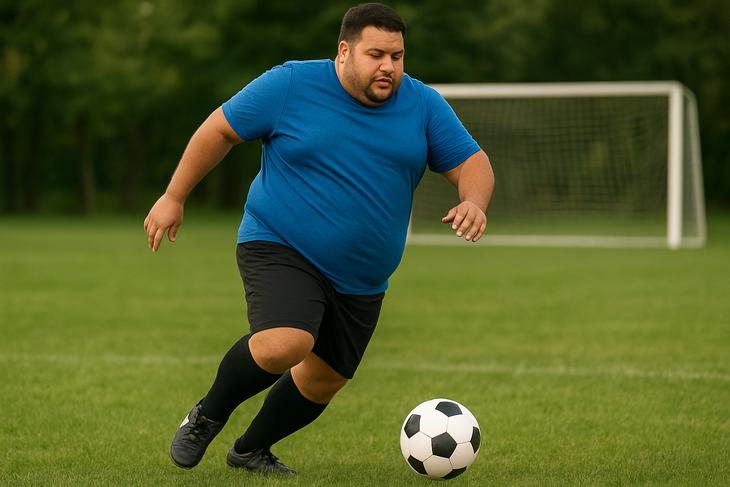
Overweight and obese individuals should exercise caution when participating in high-intensity sports - Photo: AI
When overweight people prefer to choose high-intensity sports
In recent years, mini-football and futsal courts have become popular hangouts for office workers, many of whom are overweight or obese. They come to the courts hoping to lose weight and improve their health, but inadvertently put their bodies under excessive strain.
The increased weight makes every step, turn, or collision a challenge for the musculoskeletal system. When the body exceeds the ideal weight, the pressure on the knee joints and spine can increase 3-4 times compared to a normal person.
Strenuous physical activity, especially in competitive environments like futsal, can lead to ligament injuries, joint degeneration, or fractures. Furthermore, in many cases, obese individuals may face cardiovascular disorders or circulatory collapse due to excessive energy expenditure.
The worrying thing is that many people often skip the adaptation period, choosing to "go straight to the field" after a long period of inactivity. Sudden exercise doesn't allow the body time to adjust, easily leading to dehydration, electrolyte imbalance, or prolonged muscle pain.
Some individuals, due to negligence, neglect regular health check-ups, posing a potential life-threatening risk if they have underlying cardiovascular conditions or high blood pressure.
Undeniably, sports offer numerous physical and mental benefits, but they are only truly meaningful when practiced correctly. Without a clear plan, the journey to improving health can easily turn into a dangerous race against one's own body.
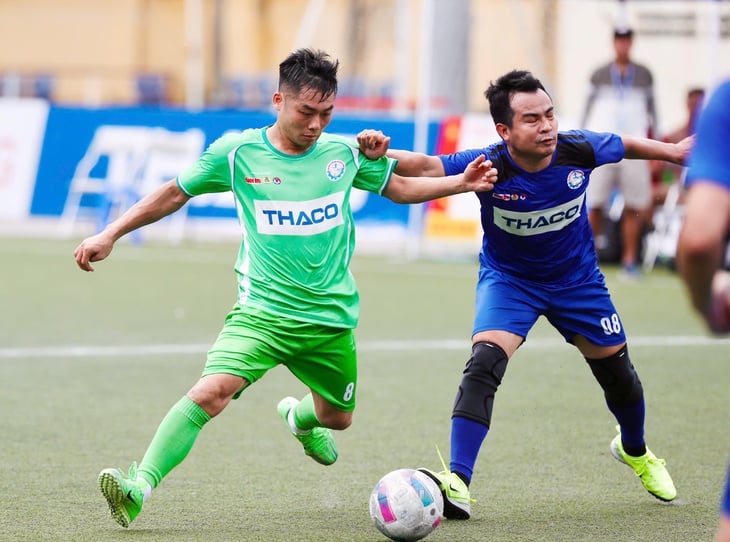
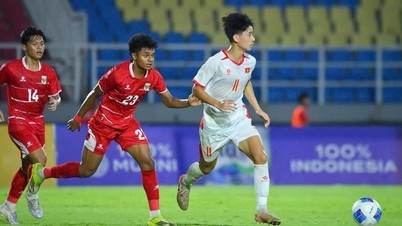
Football is a sport loved by many people - Photo: NAM TRAN
How should overweight people exercise?
According to Dr. Do Huu Luong, Head of the Sports Medicine Department ( Military Hospital 175 ), the most important thing before starting is a health screening. People with a BMI between 35 and 40 need to be thoroughly examined for underlying conditions such as cardiovascular, respiratory, blood pressure, or diabetes.
Understanding one's health status helps individuals choose suitable sports and avoid risks during exercise. Instead of jumping into contact sports, doctors encourage overweight individuals to start with gentle exercises such as walking, aerobics, cycling, or swimming.
These activities help the body gradually adapt to movement, reduce pressure on the joints, and still effectively improve weight. For the first 8 weeks, maintaining a regular schedule of 4-6 sessions per week, each lasting 15-30 minutes, will help the body adapt safely.
Once accustomed to the intensity of the training, trainees can alternate short football sessions, about 10-15 minutes, followed by adequate rest. From weeks 5-8, the duration can be increased to 20-25 minutes per session, but it is important to make frequent substitutions to avoid overtraining.
Any increase in physical activity should be based on what your body feels; you shouldn't push yourself beyond your limits.
Alongside exercise, nutrition plays a crucial role. Many people think that simply exercising a lot and eating less will lead to weight loss, but this is a misconception. Obese individuals expend a large amount of energy maintaining fat tissue, so a lack of proper nutrition can easily lead to exhaustion, hypoglycemia, or electrolyte imbalance.
A proper diet needs to ensure sufficient energy, especially water and minerals. Supplementing protein, reducing saturated fat, and limiting refined carbohydrates helps maintain endurance without causing weight regain. More importantly, exercisers must listen to their bodies and stop when they notice unusual signs such as shortness of breath, chest pain, or dizziness.
Dr. Luong also emphasized that sports are a suitable way to lose weight, but this method must be used effectively and without overuse. On the other hand, perseverance and a scientific approach are key to helping overweight individuals achieve their weight loss goals safely and avoid unfortunate accidents.
Source: https://tuoitre.vn/nguoi-thua-can-beo-phi-co-nen-choi-da-bong-20251007152624257.htm
![[Photo] General Secretary and President To Lam meets with National Assembly delegates from ethnic minorities.](https://vphoto.vietnam.vn/thumb/1200x675/vietnam/resource/IMAGE/2026/04/20/1776696701056_a1-bnd-8331-3342-jpg.webp)




![[Image] National Assembly discusses the implementation of the socio-economic development plan.](https://vphoto.vietnam.vn/thumb/1200x675/vietnam/resource/IMAGE/2026/04/20/1776696707422_ndo_br_img-20260420-185419-jpg.webp)






















































































Comment (0)