 |
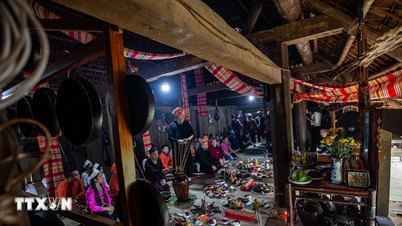
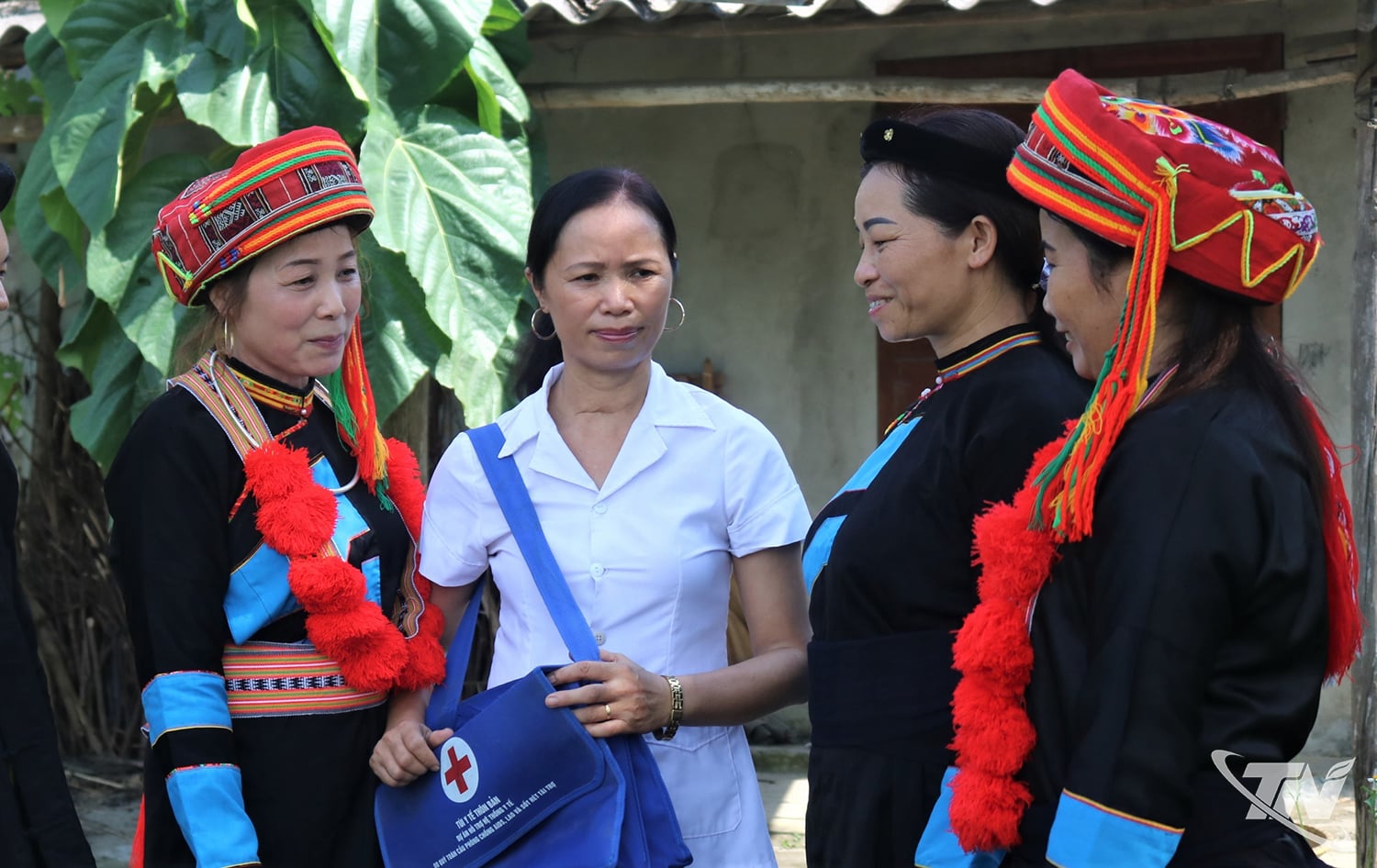
| Ms. Dang Thi Hoa (village health worker in Suoi Boc hamlet, Yen Trach commune) and local residents. |
Suoi Boc hamlet has 98 households, with nearly 400 inhabitants, almost 95% of whom are Dao ethnic people. The hamlet is divided into two areas: Suoi Boc and Khe Nhe. Traveling from Suoi Boc to Khe Nhe requires passing through several neighboring hamlets; walking takes almost three hours of continuous stride.
For decades, the people in the region have been familiar with the image of a petite woman, carrying a bag of medicine on her shoulder, containing the "essence" of modern medicine and traditional folk knowledge. Besides providing primary healthcare to the people, she is also the Vice-Chair of the Dao ethnic group's cultural and artistic club; and a member of the Then singing and Dan Tinh playing club in Yen Trach commune.
Born and raised in the Dao ethnic community, she has a deep understanding of their customs, traditions, and way of thinking. This has become an advantage for her in her role as a healthcare worker, actively participating in primary healthcare activities for the community.
From health education and disease monitoring to maternal and child health care and family planning advocacy, she carried out all these tasks with dedication.


Besides providing medical care, she actively guided the local people in maintaining environmental hygiene, from clearing bushes around their houses; sleeping under mosquito nets to avoid malaria; cleaning livestock and poultry sheds; digging wells, building bathrooms and toilets, and preventing animal waste from being scattered on the roads... "Slow and steady wins the race," and the people's awareness of disease prevention gradually changed and improved.
 |
| When delivering traditional medicine to patients' families, Ms. Dang Thi Hoa (on the right) always instructs them on how to prepare the medicine and ensures the patients take their medicine on time. |
Recalling events from a few years ago, Mrs. Hoa recounted: "In this area, there are still some families who believe in spiritual matters. When they are sick, they still invite shamans to perform rituals, slaughtering pigs and chickens to 'drive away evil spirits.' Faced with this reality, I didn't impose or deny it, but chose a flexible approach. I visited and monitored the patient's condition, waited for the family to complete the rituals, and then gently encouraged them to use additional medication."
Her flexibility and respect for local culture made her advice easily accepted by the people. She understood that changing perceptions couldn't happen overnight, but required perseverance, understanding, and support.
Using traditional herbal medicine, she can cure many different diseases, focusing on bone and joint problems, liver diseases, stomach ailments, etc. Many poor and elderly people have been cured of their illnesses by her herbal remedies without charging any fee.
Approachable, sincere, and possessing effective traditional herbal remedies, she is beloved by the people in the region. Many who were previously complacent about disease prevention have realized the importance of it after hearing her explanations, changing their behavior and encouraging their children and grandchildren to participate in health programs such as expanded immunization; disease prevention; family planning; and proactively reporting any signs of an outbreak.
Evidence shows that in recent years, most children of eligible age have received all necessary vaccinations from their parents; pregnant women proactively visit medical facilities for check-ups and pregnancy monitoring. Many outdated customs are gradually being eradicated.
Source: https://baothainguyen.vn/xa-hoi/net-dep-doi-thuong/202604/nguoi-vai-mang-2-tui-thuoc-77b28a3/