

However, health experts warn that this trend is dangerous and unhealthy, as consuming these eggs carries a high risk of food poisoning. To ensure food safety, the best approach is for people to eat fresh and clean eggs.
Eggs can be contaminated with disease-causing bacteria.
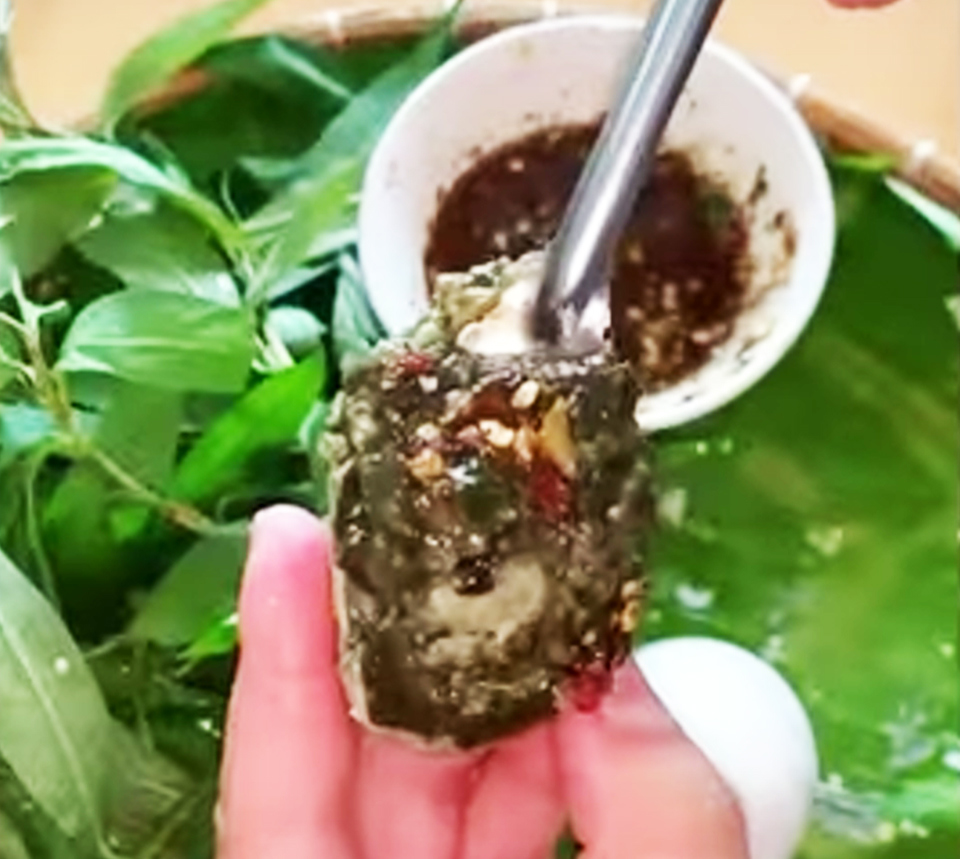
Recently, a TikTok account named MBTNA posted a video sharing how someone eats rotten eggs, attracting millions of views. The videos show eggs that have changed color, even turning black, yet they are advertised as "the rottener the eggs, the tastier they are."
Observations show that each "mukbang" video featuring rotten eggs has received numerous comments and conflicting opinions. Many argue that rotten eggs are a waste product in animal husbandry, usually discarded, but are popular due to their rich, fatty taste, and are believed to cure headaches and even improve male sexual health. However, many others express concern, claiming this is a harmful trend that is detrimental to health.
Expressing surprise that many people eat rotten eggs and praise their taste, Associate Professor Dr. Nguyen Thi Lam - former Deputy Director of the National Institute of Nutrition - said that when eggs are rotten, the nutrients have been transformed and are no longer good. The eggs may be contaminated with certain pathogenic bacteria, leading to spoilage.

Therefore, Associate Professor Dr. Nguyen Thi Lam warns that people should absolutely not eat rotten eggs. If people eat rotten eggs, not only will the nutritional value be reduced, but they may also contract bacterial infections causing digestive disorders, either acute or chronic.
Associate Professor Dr. Nguyen Duy Thinh - former lecturer at the Institute of Food Technology, Hanoi University of Science and Technology - said that rotten eggs (partially incubated eggs) are eggs that have been incubated but, due to various reasons, have not hatched. The incomplete incubation process damages the embryo inside, leading to changes in the color, smell, and quality of the egg.
Associate Professor Dr. Nguyen Duy Thinh noted that eggs contaminated with bacteria spoil and produce toxins, including H2S gas, which is harmful to the body. Many people believe that eating spoiled chicken eggs can boost vitality, improve health, and cure headaches... However, this is a misconception.
Experts warn that in spoiled eggs, nutrients are almost completely lost because the embryo and protein have been destroyed. Furthermore, the eggshell no longer provides protection, allowing bacteria, including parasites and typhoid bacteria, to easily penetrate the egg, producing toxins that are very dangerous to the body. Due to the effects of bacteria, those with sensitive stomachs may experience bloating, abdominal pain, vomiting, diarrhea, digestive disorders, and even a high risk of food poisoning.
Associate Professor Dr. Nguyen Duy Thinh advises that people should not eat rotten eggs or any food showing signs of spoilage. Families should only eat fresh, clean food that is within its expiration date to ensure their own health.
Medical experts also say that for a long time, there have been several theories that rotten eggs contain hydrogen sulfide (H2S) gas, which may have some effect on the walls of the cavernous blood vessels (of the penis) to help maintain erection. However, this is only a theory, and there have been no formal studies to prove it.
Regarding this issue, Associate Professor Dr. Tran Dang - former Director of the Food Safety Department, Ministry of Health - affirmed that to date there is no scientific evidence to suggest that rotten eggs have any effect on reducing headaches; on the contrary, eating rotten eggs will harm health.
Therefore, experts advise that people should absolutely not believe online advertisements, otherwise they risk getting sick. To ensure food safety and protect their health, the best way is to eat fresh and clean eggs.
The best way to cook eggs
According to the National Institute of Nutrition, the protein absorption rate of eggs is 100%, equivalent to the protein in milk if prepared correctly. Many people like to eat poached eggs (prepared by dipping the egg in boiling broth until the egg white slightly solidifies, then removing it immediately while the yolk is still undercooked); or fried eggs (the egg white has solidified but the yolk is still undercooked).
According to the National Institute of Nutrition, eating undercooked eggs not only carries the risk of bacterial infection, but the absorption and digestion rate is only 40%. In contrast, boiled eggs achieve 100% absorption and digestion, medium-cooked fried eggs 98.5%, overcooked fried eggs 81%, sunny-side-up eggs 85%, and steamed eggs 87.5%.

However, eggs are warned to be among the foods at high risk of causing food poisoning if contaminated with salmonella bacteria. In fact, many cases of egg-related food poisoning have been reported to be linked to this type of bacteria.
Eating raw or undercooked eggs carries a risk of food poisoning because chicken reproductive tracts contain many bacteria, so both the inside and outside of chicken eggs can be contaminated, especially with salmonella - a major cause of food poisoning.
Many people worry that eating eggs will increase blood cholesterol, raising the risk of cardiovascular disease. However, numerous studies have shown that eggs can be part of a healthy meal. For those wanting to lose weight, eating eggs for breakfast can effectively support weight loss.
According to the Vietnam Institute of Applied Medicine, several studies conducted on overweight women indicated that eating eggs instead of bagels helped them feel fuller. Furthermore, these women consumed fewer calories over the following 36 hours. The explanation is that the high protein content in eggs reduces appetite, leading to a longer-lasting feeling of fullness.
Source: https://kinhtedothi.vn/mukbang-trung-ung-thoi-nguy-co-ngo-doc-cao.html


![[Image] Hanoi's urban life under the challenge of a "scorching hot" environment](https://vphoto.vietnam.vn/thumb/1200x675/vietnam/resource/IMAGE/2026/05/25/1779706979265_nang-nong-t5-2026-minh-duy-7-4636-jpg.webp)




































































































Comment (0)