

After two consecutive quarters of growth, Japan's GDP reversed course and declined in the third quarter, due to weak consumer spending and business investment.
Data released on November 15 showed that Japan's GDP contracted by 2.1% in the third quarter, larger than expected. In the second quarter, Japan still grew by 4.5%.
Japan's GDP declined due to falling consumption and exports. This further complicates the Bank of Japan's (BOJ) efforts to gradually ease monetary policy as inflation accelerates.
GDP figures also show that persistently high inflation is putting pressure on household consumption. Inflation is also affecting manufacturers, amid slowing global demand for goods.
"Without a growth engine, I wouldn't be surprised if the Japanese economy continues to contract this quarter. The risk of recession cannot be ruled out. Weak growth could cause the BOJ to delay ending negative interest rates," said Takeshi Minami, chief economist at the Norinchukin Research Institute.

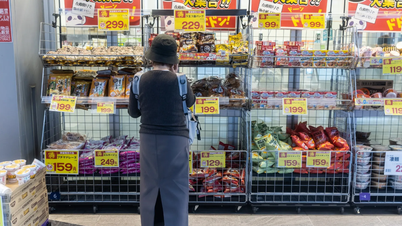
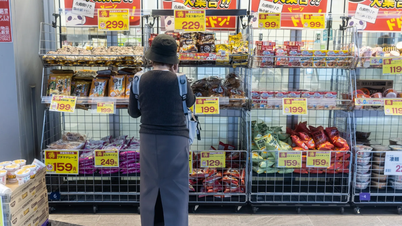
People shop at a store in Tokyo, Japan. Photo: Reuters
Japanese officials had hoped that domestic consumption would offset the decline in demand from China and other countries. However, consumption remained almost stagnant in the third quarter, after a 0.9% decline in the previous quarter. This figure contradicted analysts' forecasts of a 0.2% increase.
Business investment also fell 0.6% in the third quarter. This marks the second consecutive quarter of decline, contrary to the BOJ's expectations that strong investment would support growth.
"The disappointing figures for the third quarter are a warning that Japan is not yet out of the tunnel," said Stefan Angrick, an economist at Moody's Analytics.
He argued that increased exports, driven by the automotive and tourism sectors, had helped bolster growth in the second quarter. "But now, that trend has ended, exposing weakness in domestic demand," Angrick said.
The Japanese economy has recovered rather slowly since reopening after the pandemic. While the weak yen has helped export companies increase profits, wages have not risen enough to offset inflation. Real income adjusted for inflation fell 2.4% in September compared to the same period last year, marking the 18th consecutive month of decline.
Japanese Prime Minister Fumio Kishida has repeatedly urged companies to raise wages. Japan also recently announced a support package for citizens during a period of inflation. However, analysts remain skeptical about the effectiveness of these policies in stimulating the economy.
Ha Thu (according to Reuters)
Source link














































































































Comment (0)